10 Massages and Stretches for a Frozen Shoulder
June 15, 2023
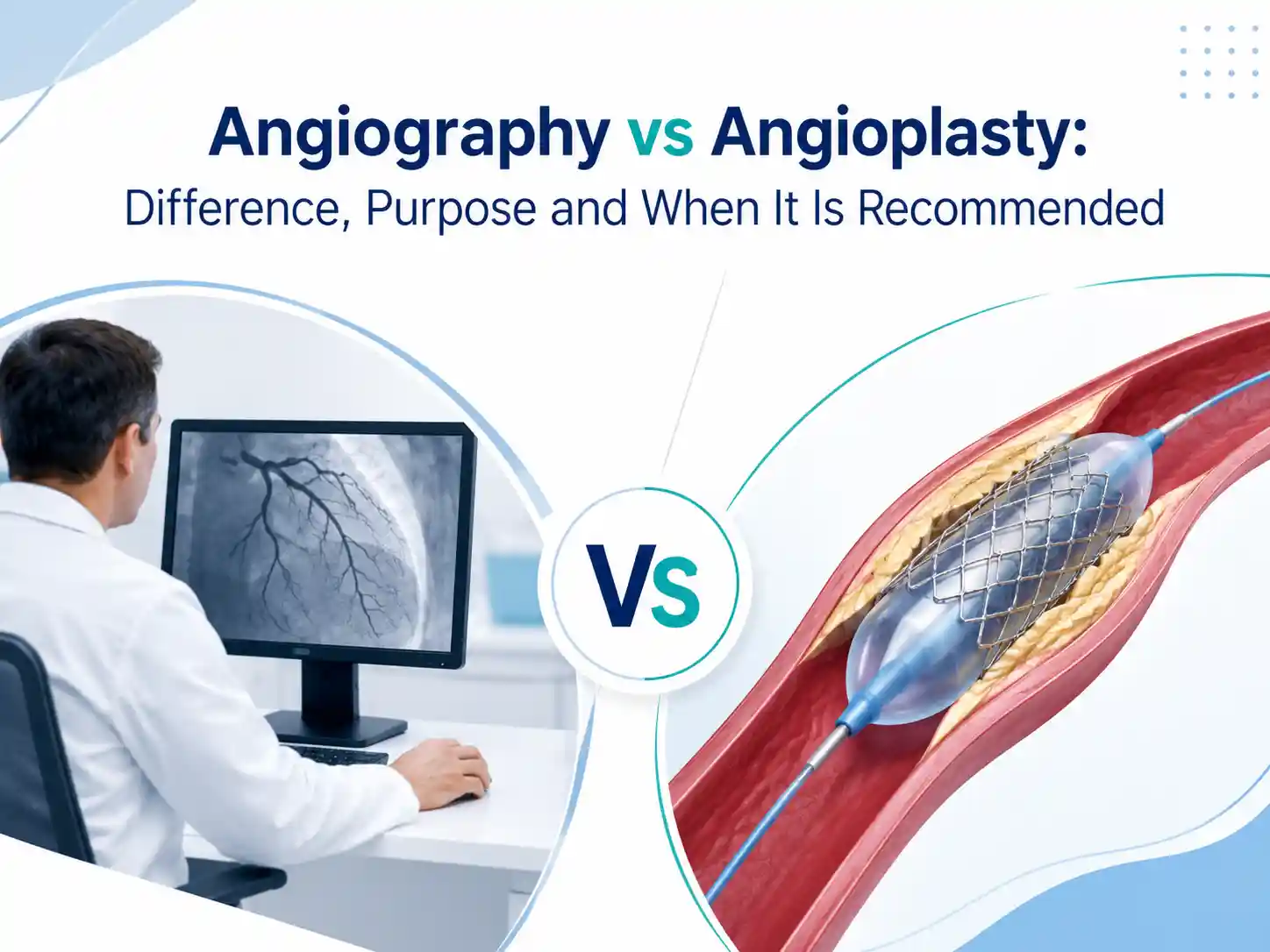
Heart-related medical terms can sometimes create confusion, especially when two procedures sound similar. Many patients searching for a cardiology hospital in Hyderabad often ask one common question: “Are angiography and angioplasty the same?” The answer is no. Both are related to the heart’s blood vessels, but their purpose is different.
In simple terms, angiography is mainly a diagnostic test, while angioplasty is a treatment procedure. Angiography helps the cardiologist see whether there is narrowing or blockage in the coronary arteries. Angioplasty is done when a significant blockage needs to be opened to improve blood flow to the heart.
For patients in Hyderabad, especially those from Attapur, Rajendra Nagar, Mehdipatnam, Tolichowki, Langar Houz, Nanal Nagar, Karwan, Kismatpur, Bandlaguda Jagir, and nearby areas, understanding this difference can help reduce fear and support better decision-making before a cardiology consultation.
Angiography, also called a coronary angiogram or CAG, is a diagnostic procedure used to examine the blood vessels that supply the heart. These blood vessels are known as coronary arteries. When these arteries become narrow due to plaque or cholesterol deposits, the heart may not receive enough oxygen-rich blood.
During angiography, a thin tube called a catheter is usually inserted through an artery in the wrist or groin and guided towards the heart. A special contrast dye is injected so that the coronary arteries can be seen clearly on X-ray imaging. This helps the cardiologist identify whether the artery is normal, narrowed, or blocked.
Angiography does not automatically mean surgery. It is mainly used to confirm the condition of the arteries and decide the next step in treatment.
Angioplasty is a treatment procedure used to open a narrowed or blocked coronary artery. It is also known as coronary angioplasty or percutaneous coronary intervention, commonly called PCI.
In angioplasty, the cardiologist passes a small balloon through a catheter to the blocked area of the artery. The balloon is inflated to widen the artery and restore better blood flow. In many cases, a small metal mesh tube called a stent is placed inside the artery to keep it open.
Angioplasty may be recommended when angiography shows a serious blockage, especially if the patient has chest pain, breathlessness, reduced blood flow, or signs of a heart attack.
If you have chest pain, breathlessness, sweating, dizziness, or repeated discomfort in the chest, do not delay evaluation. Schedule a consultation with the cardiology team at Germanten Hospital, Attapur, Hyderabad, for timely diagnosis and treatment guidance.
The easiest way to understand the difference is this:
Angiography finds the blockage. Angioplasty treats the blockage.
Angiography is performed to diagnose the problem. Angioplasty is performed to correct the problem when required. Both may happen in the same sitting if the cardiologist finds a significant blockage and the patient’s condition, consent, and medical factors support immediate treatment.
A cardiologist may recommend angiography when symptoms or test results suggest that the heart may not be receiving enough blood supply. It is usually advised after a proper clinical evaluation.
Common reasons for angiography may include:
Angiography helps the cardiologist understand the location, number, and severity of blockages. This is important because every patient does not need angioplasty. Some patients may be managed with medicines, lifestyle changes, and regular follow-up.
Angioplasty is recommended when the artery blockage is significant enough to affect blood flow to the heart muscle. It may also be done in an emergency during a heart attack to quickly restore blood supply.
A cardiologist may advise angioplasty in situations such as:
The final decision depends on the patient’s age, medical history, diabetes status, kidney function, number of blockages, heart pumping function, and overall health condition. In some complex cases, bypass surgery may be discussed instead of angioplasty.
Yes, in some cases. If angiography shows a clear and treatable blockage, the cardiologist may proceed with angioplasty in the same session. This is often called ad hoc angioplasty.
However, this depends on several factors. The doctor will consider the severity of the blockage, patient stability, consent, kidney function, bleeding risk, and whether angioplasty is the best treatment option. For planned cases, the doctor may discuss the findings with the patient and family before proceeding.
In an emergency heart attack situation, angiography and angioplasty may be performed quickly because time is critical. Restoring blood flow early can help reduce damage to the heart muscle.
If your doctor has advised angiography or you are confused between angiography and angioplasty, book an appointment with Germanten Hospital’s cardiology team in Hyderabad. A proper consultation can help you understand your reports, risks, and treatment options clearly.
Before the procedure, the cardiology team usually checks your medical history, current medicines, allergies, kidney function, blood sugar, blood pressure, and previous heart reports. You may be asked about diabetes, blood thinners, previous surgeries, and contrast dye allergy.
Some patients may need tests such as:
Patients should always inform the doctor about any ongoing medicines, especially blood thinners, diabetes medicines, and kidney-related medicines.
During angiography, the patient is usually awake but comfortable. Local anaesthesia is given at the wrist or groin area. A catheter is inserted into the artery and guided towards the heart. Contrast dye is injected, and X-ray images are taken to see the coronary arteries.
The cardiologist studies the images to identify whether there are blockages and how severe they are. Based on the findings, the doctor may suggest medicines, angioplasty, bypass surgery, or further follow-up.
Angioplasty is similar in access method because it also uses a catheter. Once the blockage is located, a balloon is moved to the narrowed area and inflated. This opens the artery. In most cases, a stent is placed to support the artery and keep it open.
After angioplasty, the patient is monitored closely. Medicines are prescribed to prevent clot formation and support long-term heart health. Follow-up visits are important after angioplasty because the procedure treats the blockage, but heart disease needs ongoing care.
Angioplasty improves blood flow and can relieve symptoms, but it is not a permanent cure for coronary artery disease. The patient still needs lifestyle changes, medicines, regular follow-up, and risk factor control.
Long-term care usually includes:
Skipping medicines after angioplasty can be risky, especially when a stent has been placed. Patients should never stop cardiac medicines without consulting their cardiologist.
Coronary artery disease can affect anyone, but some people have a higher risk. You should be more careful if you have:
In Hyderabad, many working professionals delay heart evaluation because symptoms are mistaken for acidity, stress, fatigue, or muscle pain. This delay can be dangerous, especially if chest discomfort happens during walking, climbing stairs, or emotional stress.
Germanten Hospital, Attapur, provides cardiology care for patients who need heart evaluation, diagnosis, cardiac testing, interventional cardiology guidance, and post-procedure follow-up. At Germanten Hospital, we bring German precision and innovation to India, STATE-OF-THE-ART GERMAN TECHNOLOGY.
The cardiology department is supported by diagnostic services such as ECG/EKG, echocardiography, Holter monitoring, event monitoring, stress testing, and cardiac rehabilitation. Patients can consult experienced cardiology specialists for symptoms like chest pain, palpitations, high blood pressure, breathlessness, fatigue, and suspected coronary artery disease.
Dr. Mohammed Wasif Azam, Chief Consultant Cardiologist at Germanten Hospital, Hyderabad, has 33+ years of experience in cardiology and interventional cardiology. His areas of expertise include coronary interventions, angioplasty, pacemaker implantation, heart rhythm management, and minimally invasive cardiac procedures.
If you are searching for a cardiology hospital near Attapur, Rajendra Nagar, Mehdipatnam, Tolichowki, Langar Houz, or nearby Hyderabad areas, consult Germanten Hospital for expert cardiac evaluation and treatment guidance.
Do not wait for an appointment if you have symptoms that may suggest a heart attack. Visit emergency care immediately if you experience:
Heart symptoms should never be ignored. Early evaluation can save heart muscle and reduce complications.
Angiography and angioplasty are closely related, but they are not the same. Angiography is used to diagnose blockages in the heart arteries, while angioplasty is used to treat significant blockages by opening the artery and often placing a stent.
If your doctor has advised angiography, it does not always mean you will need angioplasty. The decision depends on the findings, symptoms, risk factors, and overall heart condition. The best approach is to consult an experienced cardiologist who can explain your reports clearly and guide you with the right treatment plan.
If you have chest pain, breathlessness, palpitations, high BP, abnormal ECG, or have been advised angiography or angioplasty, book a consultation with Germanten Hospital’s cardiology team in Attapur, Hyderabad.
Consult Dr. Mohammed Wasif Azam, Chief Consultant Cardiologist, for expert evaluation and personalised treatment guidance.
Angiography is a diagnostic test used to check whether there are blockages in the heart arteries. Angioplasty is a treatment procedure used to open a narrowed or blocked artery. In simple words, angiography detects the blockage, while angioplasty treats the blockage.
No. Angiography does not always lead to angioplasty. If the blockage is mild or manageable with medicines, the cardiologist may suggest medical treatment and lifestyle changes. Angioplasty is usually recommended when the blockage is significant and affects blood flow to the heart.
In some cases, yes. If angiography shows a serious blockage that can be treated safely, angioplasty may be done in the same session. In other cases, the doctor may discuss the report with the patient and family before planning the next step.
You should consult a cardiologist if you have chest pain, breathlessness, abnormal ECG, abnormal stress test, high-risk diabetes, repeated palpitations, or symptoms suggesting reduced blood flow to the heart. A cardiologist will decide whether angiography is required.
Angioplasty is not open-heart surgery. It is a catheter-based interventional procedure used to open blocked arteries. However, it is still a serious cardiac procedure and should be performed in a proper hospital setup by an experienced interventional cardiologist.
Yes, heart disease can progress if risk factors are not controlled. In some cases, narrowing can occur again. This is why medicines, follow-up visits, cholesterol control, diabetes management, BP control, diet, and lifestyle changes are very important after angioplasty.
Patients should choose a cardiology hospital in Hyderabad with experienced cardiologists, diagnostic support, cardiac monitoring, interventional cardiology facilities, emergency support, and follow-up care. Germanten Hospital, Attapur, provides cardiology services for patients across Hyderabad and nearby areas.
References
https://www.mayoclinic.org/tests-procedures/coronary-angiogram/about/pac-20384904
https://www.heart.org/en/health-topics/heart-attack/diagnosing-a-heart-attack/coronary-angiogram
https://www.nhs.uk/tests-and-treatments/coronary-angioplasty/