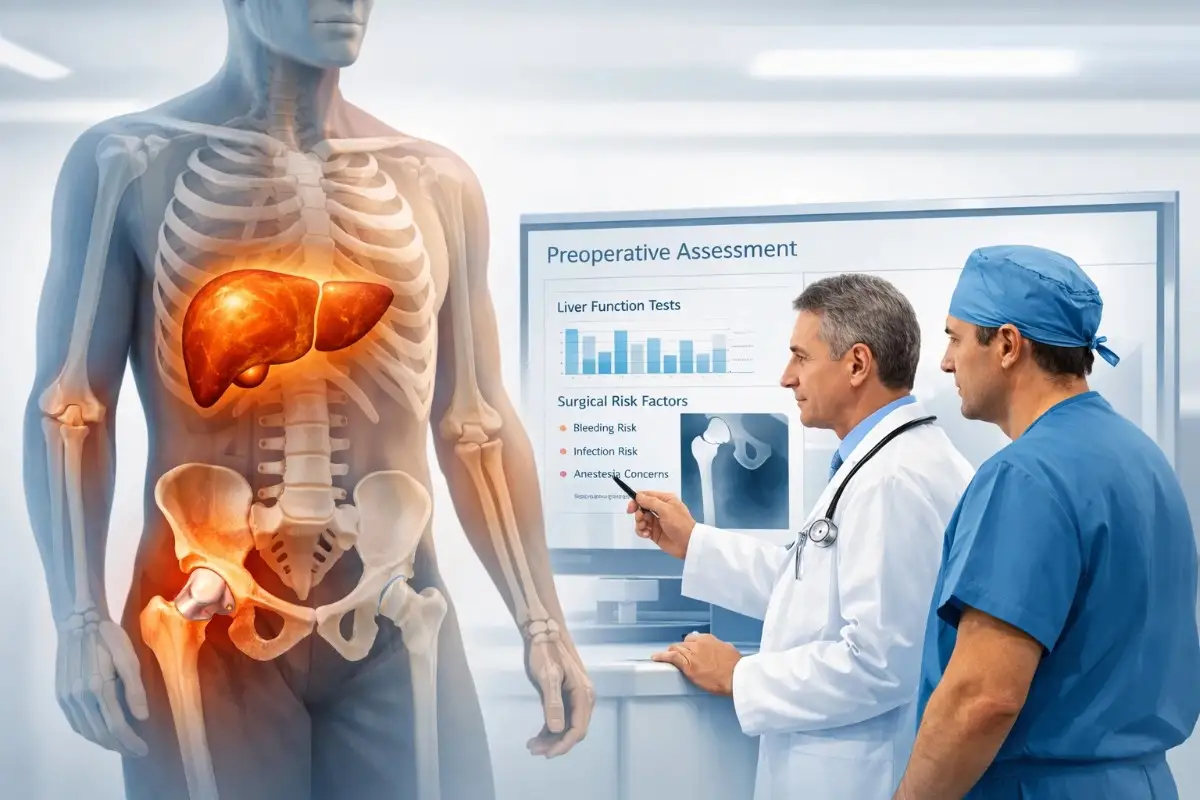
If you or a loved one are living with cirrhosis and facing the prospect of orthopedic surgery -
whether for a fractured hip, severe knee arthritis, or spinal complications - you're likely
wondering: "Is surgery safe for me?" The honest answer is: it's complicated, but not impossible. The
reality is that patients with liver cirrhosis face significantly elevated surgical risks during
orthopedic procedures, but with meticulous preoperative optimization and expert perioperative
management, these risks can be substantially mitigated.
This comprehensive guide explores why cirrhotic patients experience higher complications during joint
replacement and trauma surgeries, what goes wrong during the perioperative period, and most
importantly, how specialized hospitals like Germanten can optimize your safety before, during, and
after your orthopedic procedure.
Why Cirrhosis Creates an "Orthopedic Surgery Crisis" for Patients
The Shocking Statistics: What the Data Reveals
Imagine facing a situation where undergoing necessary orthopedic surgery doubles your risk of
life-threatening liver failure in the following 90 days. This isn't hypothetical - it's clinical
reality.
Research demonstrates that patients with cirrhosis undergoing orthopedic surgery experience a
2.05-fold increased risk of hepatic decompensation compared to cirrhotic patients who don't have
surgery. Here's what this means in practice:
- Within 90 days of orthopedic surgery, 12.8% of cirrhotic
patients develop hepatic decompensation compared to only 4.9% of cirrhotic patients not
undergoing surgery
- 55% of these complications occurred after emergency
(non-elective) procedures, highlighting that elective surgery with proper planning is
safer
- Cirrhotic patients experience 2.61-fold higher rates of
periprosthetic joint infection after joint replacement
- Mortality rates are nearly triple those of non-cirrhotic
patients undergoing the same procedures
- Hospital stays are 1.8 days longer, with higher
readmission rates (up to 45% within 30 days)
But why does cirrhosis create such extraordinary surgical risk?
The Physiology: How Cirrhosis Sabotages Surgical Recovery
Cirrhosis doesn't just damage the liver - it fundamentally compromises every bodily system necessary
for surgical healing:
1. Coagulation Dysfunction and Bleeding Complications
The cirrhotic liver manufactures clotting factors (prothrombin, factors V, VII, IX, X). As liver
function declines, production of these proteins plummets. This creates a paradoxical situation:
cirrhotic patients look "bleeding risks" on paper, yet many don't bleed excessively, while some
hemorrhage catastrophically.
For orthopedic procedures, this is particularly dangerous:
- Major orthopedic surgery (knee replacement, hip
replacement, spine fusion) involves substantial blood loss
- Cirrhotic patients require 34.6% transfusion rates for
spine procedures - double non-cirrhotic rates
- Bleeding not only prolongs anesthesia time but triggers
cascading organ dysfunction
2. Albumin Depletion and Protein Malnutrition
The cirrhotic liver cannot synthesize adequate albumin, the protein responsible for maintaining
oncotic pressure, carrying medications, and providing nutritional substrate for wound healing. Each
0.5 g/dL decrease in serum albumin increases hepatic decompensation risk by 49% after surgery.
This manifests as:
- Poor wound healing and increased infection risk
- Ascites (fluid accumulation) worsening
postoperatively
- Reduced drug metabolism, causing anesthetic
complications
- Sarcopenia (muscle wasting), compromising
rehabilitation
3. Portal Hypertension and Hemodynamic Instability
Cirrhosis causes increased vascular resistance in the liver, forcing blood to seek alternative routes
(portal hypertension). This triggers splanchnic vasodilation and systemic hypotension - a dangerous
combination for surgery.
During orthopedic procedures:
- Anesthesia further reduces hepatic blood flow by
30-40%
- Surgical positioning and retraction can compress hepatic
blood vessels
- Blood loss triggers vasoconstriction, but the cirrhotic
liver cannot compensate effectively
- Result: acute hepatic ischemia and perioperative hepatic
failure
4. Renal Failure Risk and Hepatorenal Syndrome
Cirrhotic kidneys are exquisitely sensitive to volume shifts and hypotension. Orthopedic surgery
triggers:
- Blood loss leading to hypotension leading to renal
hypoperfusion
- Fluid shifts from ascites drainage or anesthesia-induced
vasodilation
- Increased susceptibility to hepatorenal syndrome
(functional kidney failure despite normal kidney pathology)
Post-operative acute kidney injury occurs in 15-25% of cirrhotic surgical patients and dramatically
worsens outcomes.
5. Immunosuppression and Infection
The cirrhotic liver normally filters bacteria from portal blood via reticuloendothelial cells.
Cirrhosis impairs this mechanism:
- Spontaneous bacterial peritonitis (SBP) risk is high
postoperatively
- Periprosthetic joint infection (PJI) rates are 2.61-fold
higher after joint replacement
- Pneumonia, urinary tract infections, and wound infections
are common
- Sepsis cascades rapidly toward multi-organ failure in
cirrhotic patients
6. Hepatic Encephalopathy Risk
Post-operative pain, medications, constipation, and protein load can precipitate hepatic
encephalopathy - altered mental status from ammonia accumulation. This complicates recovery and
increases falls and complications during rehabilitation.
Risk Stratification: Identifying Your Personal Surgical Risk
Not all cirrhotic patients face identical surgical risk. Advanced cirrhosis carries exponentially
higher danger than compensated cirrhosis. Germanten Hospital uses validated risk stratification
tools to counsel patients honestly:
The Child-Turcotte-Pugh (CTP) Score
This scores cirrhosis severity from Class A (mild) to Class C (severe) based on:
- Bilirubin and albumin levels
- INR (prothrombin time)
- Ascites presence and severity
- Encephalopathy presence
Surgical Mortality by CTP Class:
- Class A: 1-4% perioperative mortality
- Class B: 5-12% perioperative mortality
- Class C: 25-50% perioperative mortality
The Model for End-Stage Liver Disease (MELD) Score
Calculated from bilirubin, creatinine, and INR, MELD predicts 90-day mortality. Each 5-unit MELD
increase above 10 correlates with sharply rising surgical complications. A MELD score of 10 or
greater carries the highest risk for orthopedic surgery complications.
Additional Risk Factors Specific to Orthopedic Surgery
Research specifically examining cirrhotic orthopedic patients identified critical risk determinants:
- Low serum albumin (less than 3.5 g/dL): 1.49-fold
increased decompensation risk per 0.5 g/dL decrease
- High Charlson Comorbidity Index (diabetes, COPD, kidney
disease): 1.11-fold increased risk per point
- Non-elective (emergency) procedures: 2.5-fold higher
decompensation than elective surgeries
- High blood-loss procedures: 78% of post-surgical
decompensation cases involved moderate-to-high blood loss procedures
- Thrombocytopenia (low platelets less than 100,000):
Correlates with portal hypertension severity
At Germanten Hospital, Dr. Mir Jawad Zar Khan and our multidisciplinary team conduct comprehensive
preoperative risk assessment, integrating these markers with imaging (ultrasound for portal vein
patency, ascites severity) to create personalized surgical plans.
Preoperative Optimization: The Evidence-Based Strategy
Here's the critical insight: Most cirrhotic orthopedic surgery complications are preventable through
meticulous preoperative optimization. This isn't optional - it's the difference between successful
recovery and life-threatening hepatic decompensation.
Phase 1: Medical Optimization (4-8 Weeks Pre-Surgery)
Ascites Management
Large-volume ascites creates multiple dangers:
- Increased intra-abdominal pressure compromises hepatic
blood flow
- Difficult anesthesia induction (risk of aspiration)
- Increased infection risk
Strategy:
- Diuretics (spironolactone + furosemide): Reduce ascites
gradually (no more than 0.5-1 kg daily) to avoid electrolyte depletion and acute kidney
injury
- Sodium restriction (less than 2g daily): Maximize diuretic
effectiveness
- Large-volume paracentesis: If ascites is
tense/symptomatic, drain 4-6 liters at a time (with albumin replacement: 6-8g per liter
drained)
- TIPS (Transjugular Intrahepatic Portosystemic Shunt): In
select cases with refractory ascites, TIPS performed by interventional radiologists in Delhi
can dramatically reduce post-operative ascites complications
Germanten Hospital can arrange patient consultation with leading hepatologists in Delhi including
specialists at Institute of Liver and Biliary Sciences (ILBS), Indraprastha Apollo Hospital's Liver
Transplant Centre, and Medanta The Medicity for complex ascites management prior to your orthopedic
procedure.
Hepatic Encephalopathy Control
If you experience mental fog, confusion, or asterixis (flapping tremor) preoperatively, these must be
controlled:
- Lactulose or lactitol: Reduce ammonia levels; titrate to
2-3 bowel movements daily
- Rifaximin: A nonabsorbed antibiotic that reduces
ammonia-producing gut bacteria; often combined with lactulose
- Dietary protein optimization: NOT protein restriction, but
ensuring adequate branched-chain amino acid (BCAA) intake to support muscle and ammonia
metabolism
- L-ornithine L-aspartate (LOLA): In specialized centers,
reduces ammonia levels
- Avoid triggers: Constipation, infections, NSAIDs,
excessive dietary protein
Nutritional Optimization and Sarcopenia Management
Malnutrition is perhaps the strongest modifiable risk factor for poor surgical outcomes in cirrhosis.
A multidisciplinary approach is essential:
- Registered Dietician Consultation: Calculate adequate
energy (25-35 kcal/kg body weight daily) and protein (1.2-1.5g/kg), with emphasis on
BCAA-enriched products
- Nutritional supplements: Specialized cirrhosis-specific
formulas (if tolerated) containing BCAAs, vitamins (thiamine, folate, fat-soluble
vitamins)
- Prehabilitation Exercise Program: This is transformative.
Studies show that structured aerobic and resistance exercise before surgery reduces
post-operative complications, hospital stays, and mortality
- Aerobic exercise: 30 minutes walking 4-5 days
weekly, gradually increasing intensity
- Resistance training: 2 sessions weekly (modified
to avoid Valsalva, which increases portal pressure)
- Physical therapist guidance is essential to
prevent injury
This is where Germanten's dedicated Physiotherapy and Neuro-Physiotherapy Department plays a critical
role. Our therapists design pre-surgical conditioning programs specifically for cirrhotic orthopedic
patients, preparing muscles and cardiovascular systems for the surgical stress ahead.
Infection Prevention and Antibiotic Prophylaxis
- Screen for active infections: Treat urinary tract
infections, dental infections, skin lesions before elective surgery
- Spontaneous Bacterial Peritonitis (SBP) Prophylaxis: If
ascites present and albumin less than 1.5 g/dL or high MELD score, prophylactic antibiotics
(cefotaxime, norfloxacin, or TMP-SMX) reduce SBP risk
- Endoscopy for Variceal Assessment: If cirrhosis severity
suggests variceal risk, endoscopy to screen; if varices present, ensure adequate
beta-blockade (propranolol, carvedilol) preoperatively
Correcting Metabolic Derangements
- Electrolyte balance: Hyponatremia (low sodium),
hypokalemia (low potassium) are common and must be corrected gradually
- Renal function: Baseline creatinine, BUN, calculation of
estimated glomerular filtration rate
- Glucose management: Cirrhotic patients can develop
hypoglycemia; ensure stable glycemic control
- Coagulation assessment: INR, prothrombin time, platelet
count; discuss fresh frozen plasma or prothrombin complex concentrate needs with
anesthesia
Phase 2: Anesthetic Planning and Intraoperative Coordination
Germanten's anesthesia team (specialists with experience managing complex orthopedic cirrhotic
patients) coordinates with surgeons:
- Minimize hepatic blood flow reduction: Avoid
vasoconstrictors (phenylephrine) when possible; maintain normothermia and normocapnia
- Judicious fluid management: Maintain intravascular volume
while avoiding overload (risk of pulmonary edema, variceal rupture)
- Regional anesthesia preference: Spinal/epidural anesthesia
when feasible reduces general anesthesia exposure and hepatic ischemia
- Careful drug selection:
- Propofol-based induction (but use cautiously in
severe liver disease; may cause significant hypotension)
- Remifentanil preferred opioid (metabolized by red
cell esterases, not liver)
- Avoid morphine and codeine (delayed
elimination)
- Minimize volatile anesthetics (sevoflurane
preferred over isoflurane)
- Coagulation monitoring: Consider rotational
thromboelastometry (ROTEM) or thromboelastography (TEG) for real-time coagulation
monitoring, especially in high-blood-loss procedures
- Transfusion strategy: Cell salvage, restrictive
transfusion protocols, consideration of prothrombin complex concentrate instead of
FFP
Dr. Mir Jawad Zar Khan and his surgical team at Germanten employ minimally invasive surgical
techniques when feasible (arthroscopic procedures vs. open surgery, robotic-assisted precision) to
reduce blood loss, operative time, and tissue trauma - critical for cirrhotic recovery.
Phase 3: Postoperative Vigilance (Days 1-90)
The 90-day post-operative period is critical. This is when hepatic decompensation most commonly
strikes:
- Daily monitoring: Liver function tests (bilirubin,
albumin, INR), renal function, electrolytes, platelets
- Infection surveillance: Fever, wound changes, ascites
characteristics (cultures if infection suspected), respiratory status
- Volume management: Strict fluid balance monitoring;
diuretics may be reintroduced if ascites reaccumulates
- Encephalopathy prevention: Laxatives continued, protein
intake maintained, sedation minimized
- Rehabilitation pacing: Physical therapy begins early but
carefully, avoiding excessive exertion that triggers decompensation
- Communication: Multidisciplinary rounds involving orthopedic
surgeons, hepatologists (ideally in consultation), anesthesia, critical
care, and physical therapists
Taking the Next Step: Consultation at Germanten Hospital
If you have cirrhosis and are considering orthopedic surgery - whether for joint replacement, trauma
repair, spine surgery, or other procedures - Germanten Hospital is equipped to manage your complex
needs safely.
Our approach combines:
- Dr. Mir
Jawad Zar Khan's 25 years of orthopedic expertise and 10,000+
surgeries
- German-standard robotic surgical technology for precision
and safety
- Multidisciplinary perioperative optimization tailored to
cirrhotic patients
- Coordination with India's leading liver specialists in Delhi (ILBS,
Apollo, Fortis, SGRH)
- Dedicated prehabilitation programs for conditioning before
surgery
- 24/7 postoperative cirrhosis-specific monitoring to
prevent decompensation
Contact Germanten Hospital, Hyderabad today to schedule a comprehensive preoperative evaluation. Our
team will assess your individual risk profile, coordinate with hepatologists if needed, and develop
a personalized surgical optimization plan.
Your recovery is our priority. With expert care, your cirrhosis should not prevent you from regaining
joint function, mobility, and quality of life.