10 Massages and Stretches for a Frozen Shoulder
June 15, 2023

Priya was 43 years old when she first heard it. A quiet Tuesday evening, she got up from her office chair after a long meeting, and her right knee let out a loud, sharp pop. Her colleague looked up. She froze. That night, she spent two hours on her phone, reading the most alarming things about knee damage, arthritis, and surgery. She barely slept.
Her doctor, three days later, told her it was probably just gas bubbles in the joint fluid releasing. Nothing structural. Nothing serious. She exhaled for what felt like the first time all week.
Priya's story is not unusual. Every day, thousands of people hear their knees pop, click, crack, or grind and immediately imagine the worst. Some of those people are right to be worried. Most are not. The real skill lies in knowing the difference.
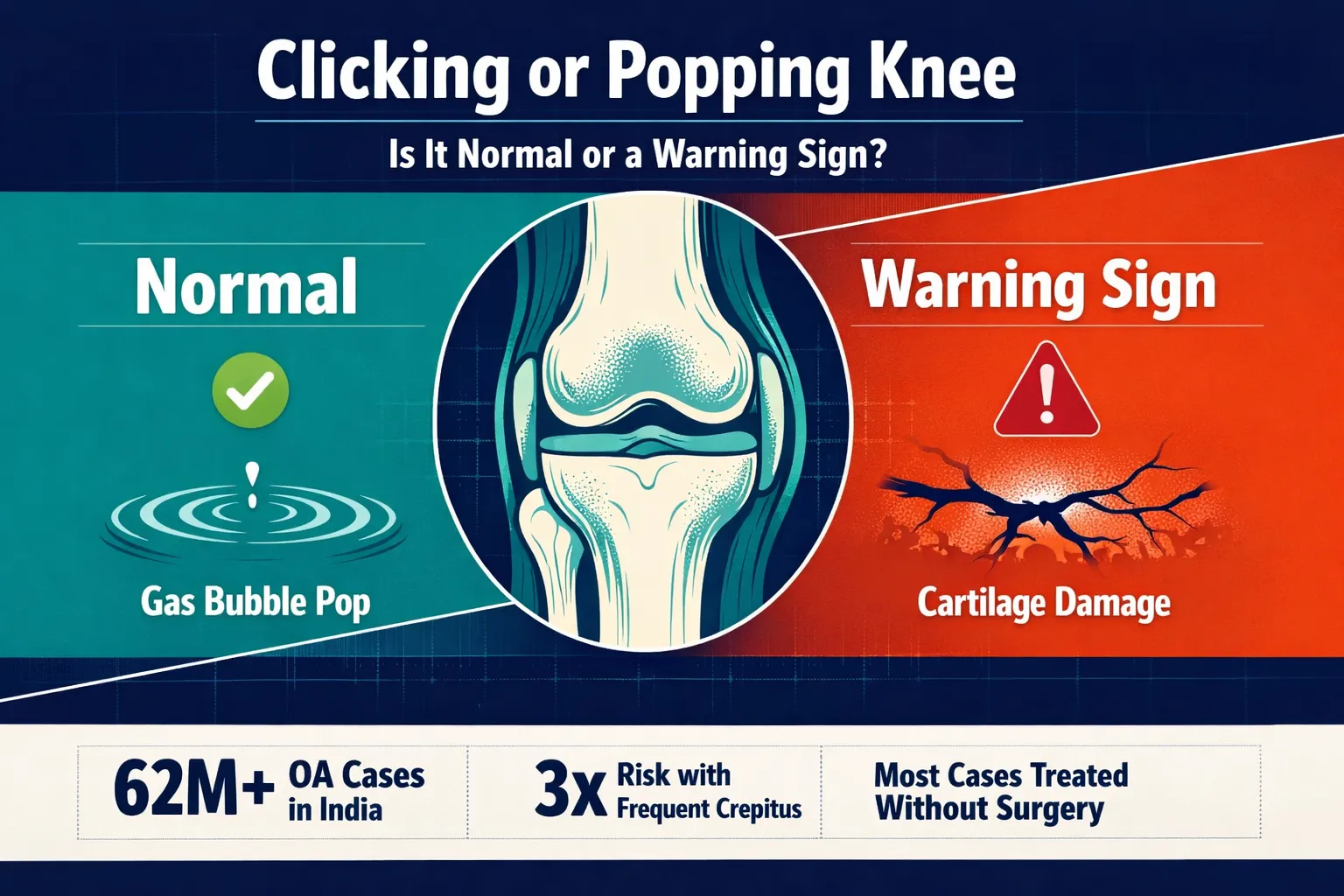
Knee clicking or popping, medically called crepitus, refers to any audible or palpable noise produced during knee movement. It ranges from a single harmless pop to a persistent grinding that signals real structural trouble.
This article explains exactly what that sound means, when to relax, and when to act. It also covers things that most knee health articles never mention, including why certain Indian lifestyle habits raise your risk, what a 2015 real-time MRI study actually found inside your knee when it pops, and why even painless clicking deserves more attention than you think.
Your knee is not a simple hinge. It is a complex joint where the femur (thigh bone), tibia (shin bone), and patella (kneecap) all work together, cushioned by cartilage, lubricated by synovial fluid, and held together by ligaments and tendons. With that much going on inside one joint, sounds are almost inevitable.
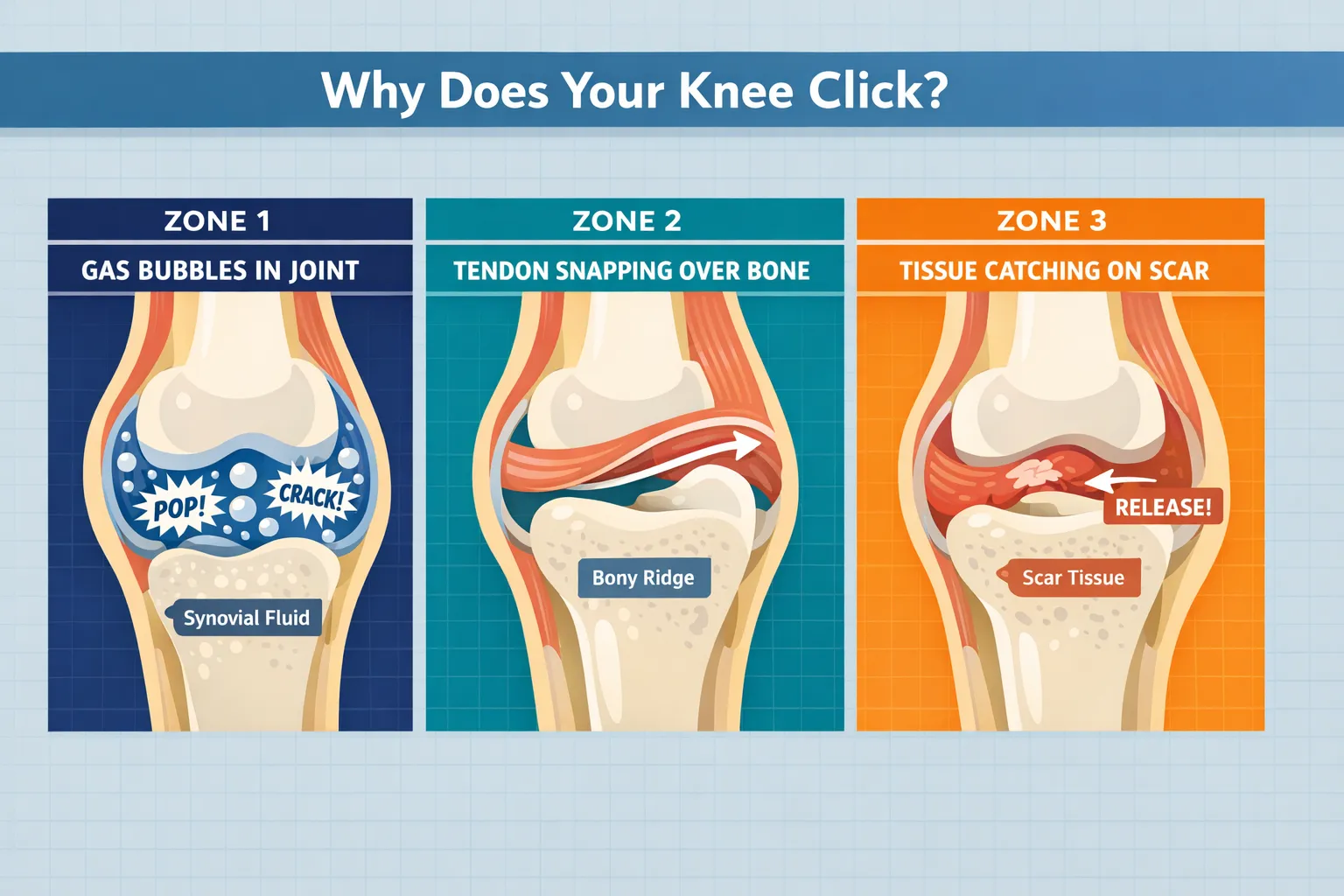
1. Gas bubble release (cavitation): Your knee joint is filled with synovial fluid, a thick liquid that reduces friction. This fluid contains dissolved gases. When pressure inside the joint changes during movement, small gas bubbles form and then collapse rapidly, creating a popping sound. A landmark 2015 study using real-time MRI imaging actually captured this moment on camera for the first time. Researchers watched as a gas cavity formed in the joint at the exact moment the pop occurred. This type of clicking is completely painless and is not linked to any injury or disease. It is the same process as cracking your knuckles.
2. Tendon or ligament snapping: Tendons and ligaments cross the knee joint and shift position slightly when the knee bends. If a tendon slides over a bony prominence and then snaps back, it creates a click or snapping sensation. A well-known example is the iliotibial (IT) band, a thick band of tissue running along the outer thigh. It can snap over the bony lateral femoral epicondyle as the knee moves, especially during activities like squatting, climbing stairs, or cycling. This is generally painless and not a sign of damage.
3. Soft tissue catching on scar tissue: Sometimes tendons or soft tissues briefly catch on old scar tissue or uneven surfaces inside the joint, then release. The release creates a click. This is very common after knee surgery, as noted below, and is also natural in otherwise healthy joints.
Here is the key point: the presence of a sound alone means very little. What matters is whether that sound comes with pain, swelling, instability, or mechanical catching.
Use this table to understand what your knee sound may mean. Remember, this is not a substitute for a professional medical assessment.
Here is the surprising truth about painless clicking: a VA-led study analyzing nearly 3,500 participants from the NIH-funded Osteoarthritis Initiative found that people who reported crepitus as occurring "always" faced a threefold increased risk of developing symptomatic knee osteoarthritis within the following year, even when they had no pain at the time. So "painless now" does not necessarily mean "painless forever."
When knee clicking comes with pain, swelling, catching, locking, or instability, it may point to one of the following conditions. The earlier these are caught, the better the outcome.
Most knee health articles spend exactly one line on plica syndrome. But for active Indians between 20 and 45, it may be the most common undiagnosed source of knee clicking.
The plica is a fold of synovial tissue inside the knee joint, a remnant from fetal development. In most people, it causes no trouble at all. But when it becomes irritated due to overuse, repetitive knee flexion, or direct impact, it thickens and starts catching on the femoral condyle during movement, creating a medial knee snap or click.
Classic plica syndrome symptoms include clicking or snapping on the inner side of the knee, worsening pain after long periods of sitting, cycling, or stair climbing, and tenderness when pressing just above and inside the kneecap. It is frequently misdiagnosed as a meniscal tear or runner's knee.
Treatment starts with physiotherapy focused on strengthening the quadriceps and reducing IT band tightness. In persistent cases, knee arthroscopy to resect the plica is highly effective.
Global knee health articles are written largely with Western lifestyles in mind. They miss some critical factors that are deeply relevant to people in India.
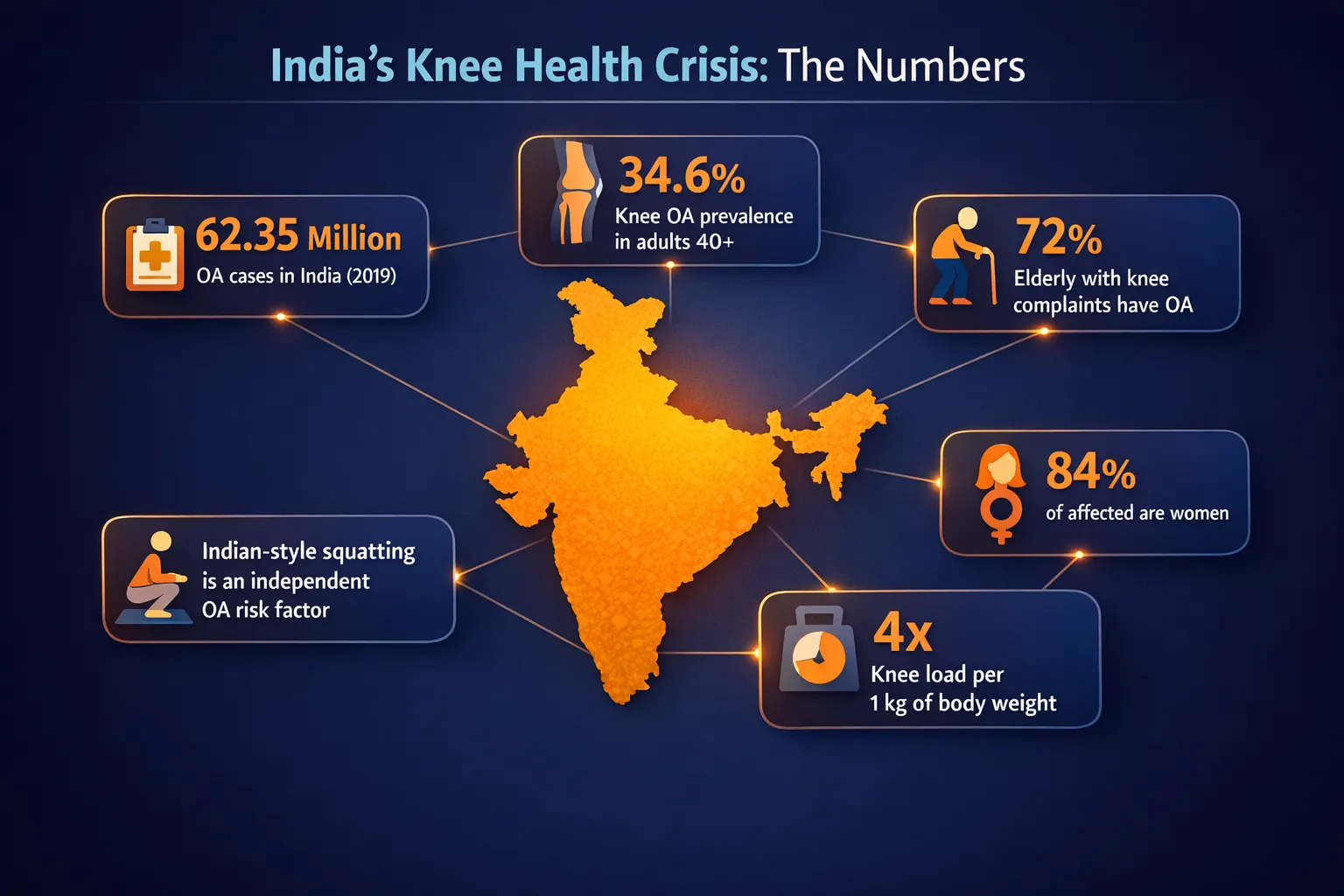
• Indian-style toilet use: A 2024 PMC study on knee OA in rural South India found that Indian toilet use was a statistically significant predictor of developing knee osteoarthritis, because the deep squat position places extreme compressive load on joint cartilage.
• Sitting cross-legged (padmasana) for extended periods: Common during religious practices, mealtimes, and floor sitting, this position consistently compresses and rotates the knee beyond its ideal range.
• Vitamin D and calcium deficiency: India has one of the highest rates of vitamin D deficiency in the world. Without adequate vitamin D, bone mineral density suffers, which increases the structural load on knee cartilage.
• Obesity rates and sedentary work: The same 2024 study identified obesity and sedentary lifestyle as key predictors of knee OA. Every extra kilogram of body weight adds approximately 4 kilograms of load across the knee joint during normal walking.
• Delayed care-seeking: Many Indian women attribute knee pain to "normal aging" or overwork from household duties. This means conditions like early OA or meniscal tears are often caught far later than necessary.
India's knee OA burden is staggering and growing. According to Global Burden of Disease Study 2019 data published in ScienceDirect, India had approximately 62.35 million people living with osteoarthritis in 2019, up from 23.46 million in 1990. That is nearly a 170% increase in three decades. A 2024 community study in rural South India (PMC) found that 34.6% of adults aged 40 and above had diagnosable knee OA. And a 2025 systematic review and meta-analysis (ResearchGate/PMC) found that among older Indians presenting with knee complaints, 72% had osteoarthritis, 84% of them women.
These numbers mean that the clicking knee you hear today may be an early conversation your body is trying to have with you about what is coming in the next decade.
If you have had a knee procedure in the past year and are now hearing clicking sounds, you are not alone and you are almost certainly not experiencing a failure of the surgery.
Knee clicking is extremely common in the first 6 to 12 months after any knee surgery, including knee replacement, ACL reconstruction, or arthroscopy. The causes include soft tissue swelling during healing, formation of early scar tissue that temporarily thickens certain structures, and altered biomechanics as muscles relearn their patterns.
The solution in most cases is targeted soft tissue massage and physiotherapy designed to reduce the thickness of healing tissue. The clicking typically resolves on its own as recovery progresses.
However, post-surgical clicking that comes with new pain, fresh swelling, or instability that was not there during recovery is a different story. That combination warrants a return consultation with your surgeon.
Knowing you need to see a doctor is one thing. Knowing what to expect when you get there removes a lot of anxiety.
• A physical exam covers your knee's range of motion, patellar tracking, and stability. The doctor will likely perform specific tests like the McMurray test for meniscal tears and patellar compression testing for chondromalacia.
• X-rays are ordered to assess joint space narrowing, bone spurs, and OA staging using the Kellgren-Lawrence scale.
• An MRI provides detailed imaging of soft tissue structures including the meniscus, cartilage layers, ligaments, and the plica.
• Functional questionnaires like the KOOS (Knee Injury and Osteoarthritis Outcome Score) and WOMAC help quantify pain, stiffness, and daily function.
Go urgently (within 24-48 hours) if:
• A loud pop occurred during physical activity, followed by immediate swelling and inability to bear weight fully.
• Your knee locked and will not fully straighten.
• There is visible rapid swelling (hemarthrosis) within a few hours of the sound.
Book a routine appointment if:
• Clicking is persistent and comes with dull or intermittent pain.
• You hear grinding that feels like resistance or roughness rather than just a pop.
• Painless clicking has been frequent for several weeks or months.
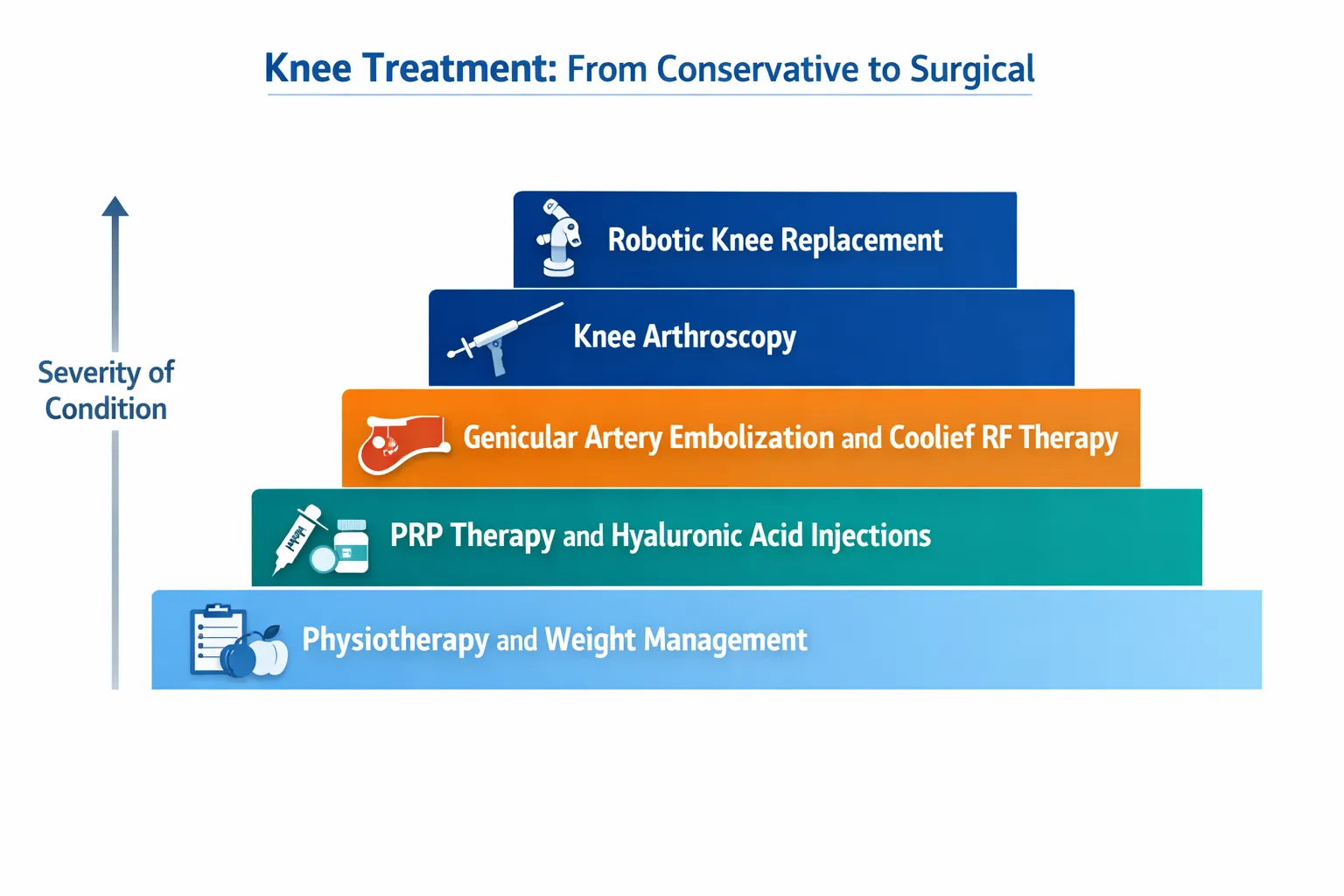
What most people do not realize is that the overwhelming majority of knee clicking cases, even those with an underlying cause, are treated without surgery. The treatment ladder looks like this:
• Targeted physiotherapy: Strengthening the quadriceps reduces load on the patellofemoral joint, while hip abductor strengthening stabilizes knee alignment. Research consistently shows physiotherapy as the most effective long-term strategy for patellofemoral pain and mild OA.
• Weight management and lifestyle change: Losing 5 to 10% of body weight reduces knee load significantly and slows OA progression.
• PRP (Platelet-Rich Plasma) therapy: Concentrated growth factors from your own blood are injected into the knee to support cartilage repair and reduce inflammation.
• Hyaluronic acid (visco supplementation) injections: Replaces depleted joint fluid to restore lubrication and reduce friction-related noise and pain.
• Genicular Artery Embolization (GAE): A minimally invasive procedure that reduces blood supply to inflamed knee tissue. It is highly effective for OA-related pain and is not widely available in India.
• Coolief RF therapy and shockwave therapy: Advanced pain-management and tissue-repair options for patients who have not responded to conventional treatment.
• Knee arthroscopy for meniscal repair, plica resection, or cartilage smoothing.
• Partial or total knee replacement for advanced OA.
• Robotic-assisted knee replacement, which uses computer navigation to achieve millimeter-level precision in implant positioning, improving long-term outcomes and reducing recovery time.
Whether your knee clicking turns out to be harmless or early-stage OA, these steps will serve you well regardless.
• Strengthen your quads: Wall sits, straight leg raises, and terminal knee extensions build the muscle most responsible for protecting the knee joint. Aim for 3 sessions per week.
• Choose low-impact exercise: Swimming and cycling create far less joint load than running on hard surfaces. If you enjoy running, trails are better than concrete.
• Manage your weight: Even modest weight loss reduces knee pain scores significantly in people with early OA.
• Correct your vitamin D and calcium levels: Get a blood test. India's high rates of deficiency are directly linked to bone and joint fragility.
• Modify floor-level habits: Reduce prolonged sitting cross-legged or squatting in full flexion, especially if you already notice clicking with some discomfort.
• Warm up before activity: Cold, stiff joints are far more likely to click and catch. Five minutes of light movement before exercise makes a real difference.
Most knee clicking is harmless, caused by gas bubbles releasing in joint fluid, tendons snapping over bony structures, or soft tissue briefly catching and releasing. None of these require treatment.
The combination of clicking plus pain, swelling, instability, or locking is the combination that requires professional evaluation. Noise alone is not the alarm. Noise with symptoms is.
India faces a growing knee health crisis, with tens of millions living with osteoarthritis, and millions more at risk due to lifestyle, diet, and activity patterns. Catching early warning signs and acting before pain becomes severe can mean the difference between physiotherapy and surgery.
Priya, from our opening story, was fine. But she made one smart decision that day: she actually went to see a doctor instead of just reading about it online. That visit took 20 minutes and gave her three years of peace of mind. More importantly, her doctor gave her an exercise program that she still follows.
If you are hearing your knee speak and you are not sure what it is saying, the smartest next step is to have it assessed by an orthopedic surgeon in Hyderabad who can tell you, clearly and quickly, whether your knee needs treatment or just reassurance. At Germanten Hospitals, our team of best orthopedic doctors in Hyderabad uses advanced diagnostics and a full spectrum of surgical and non-surgical options to help you understand and protect your knee health for the long term.
Have you been hearing knee sounds for a while and wondered whether they need attention? Drop your question in the comments below or talk to one of our specialists directly. Your joint health is worth the conversation.
1. Real-time MRI during knuckle cracking (2015), PLOS ONE
2. VA Research: Knee popping and arthritis risk (2017), U.S. Department of Veterans Affairs
3. Burden of osteoarthritis in India 1990-2019 (2022), ScienceDirect / Osteoarthritis & Cartilage
4. Community prevalence of knee OA in rural South India (2024), PMC / Cureus
6. Knee clicking: Normal or sign of injury? (2026), OSIFTL / Orthopedic Specialists
7. Knee crepitus explained (2024), Healthline
8. Is it bad if your knees crack? (2024), Houston Methodist Hospital