10 Massages and Stretches for a Frozen Shoulder
June 15, 2023
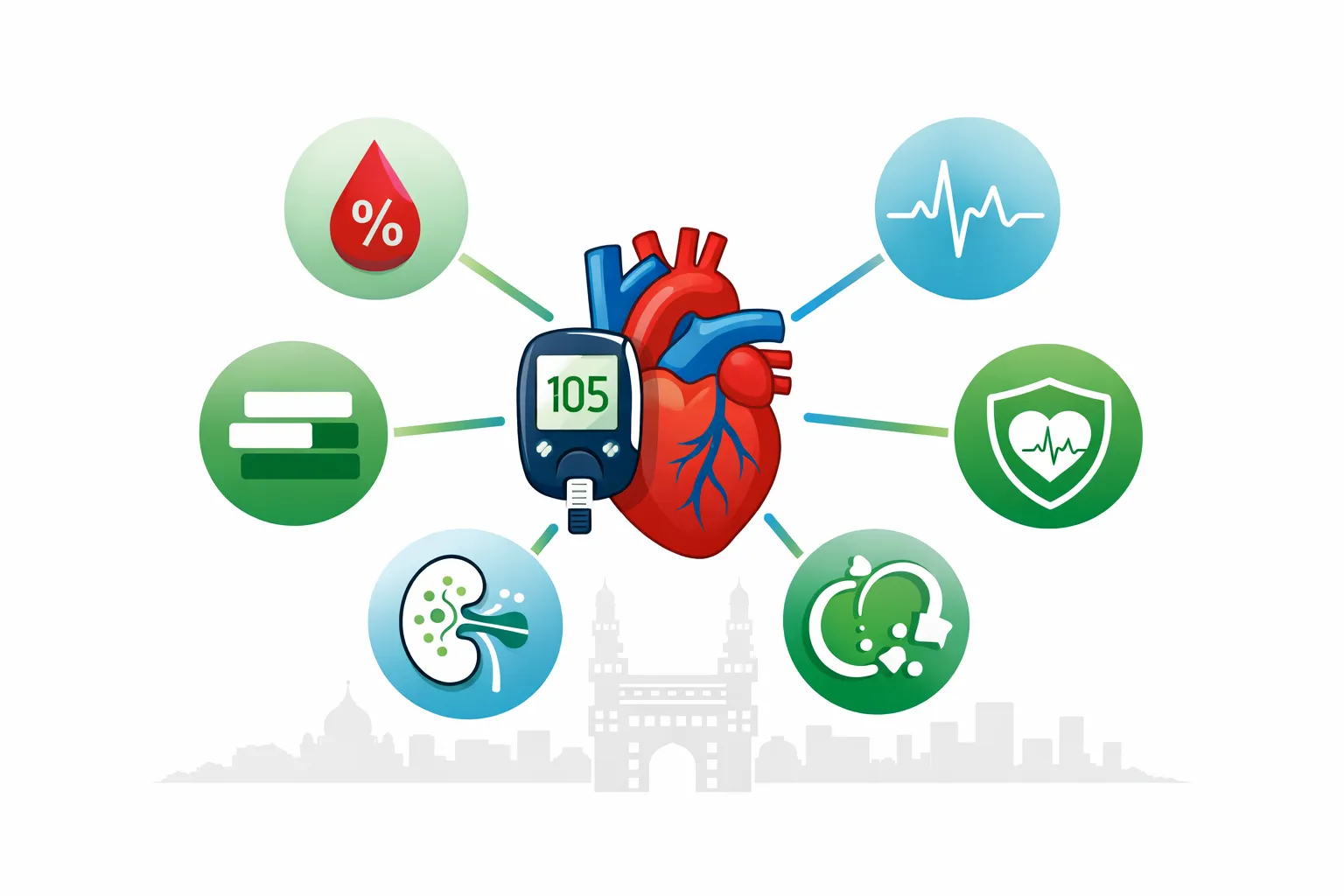
Sandesh is 52. He works in IT at HITEC City. He has managed his diabetes for eight years. He checks his fasting sugar every morning. He visits his doctor every three months. His numbers look fine. His HbA1c hovers around 7.2%. He thinks he is doing everything right.
Then one Tuesday afternoon, during a project review meeting, his left arm goes numb. His colleague calls an ambulance. At the hospital, the ECG shows something terrifying. Sandesh has already had two heart attacks. Not one. Two. He never felt either of them.
How is that even possible? A heart attack without chest pain?
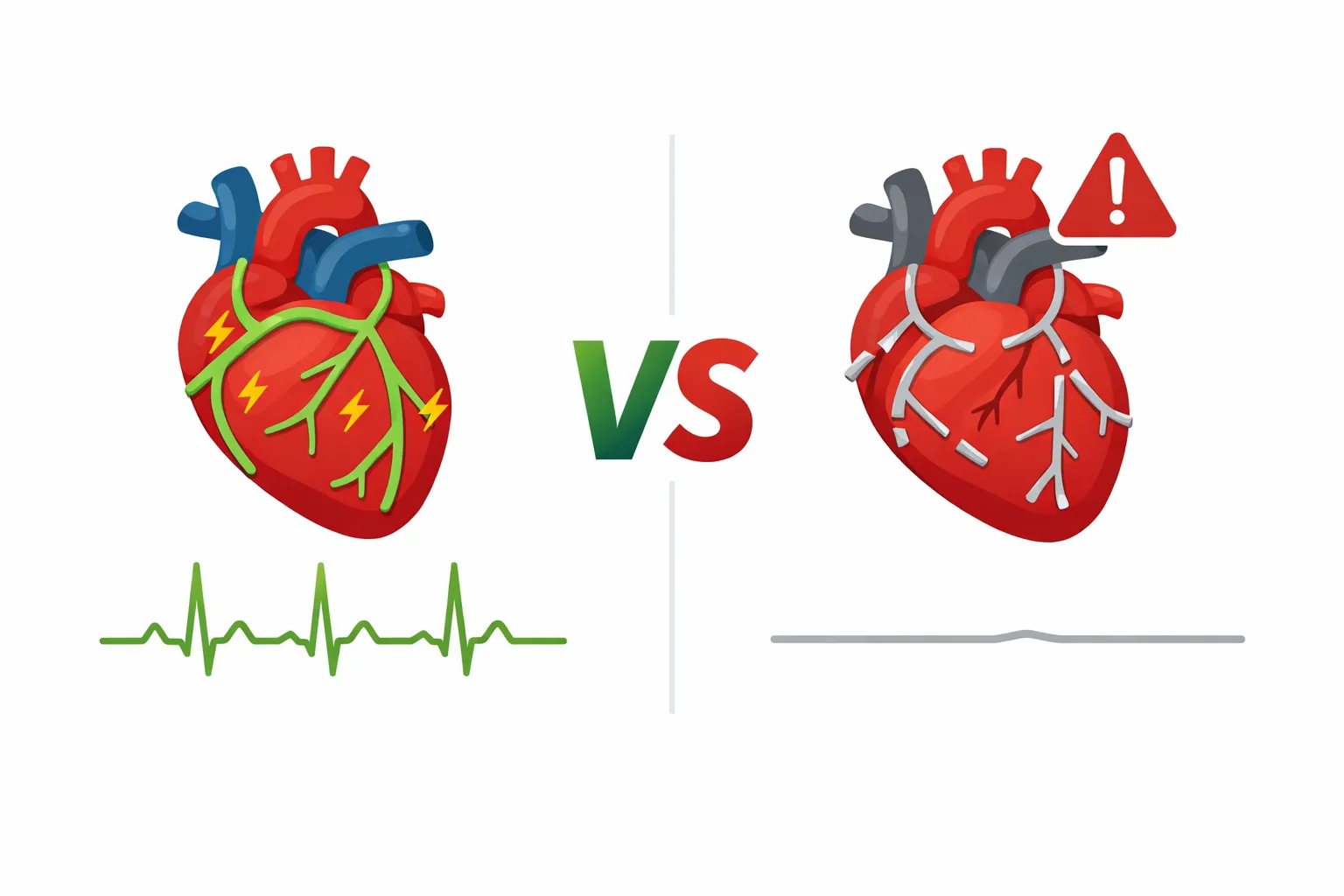
It happens more often than you think. Diabetes damages the nerves around the heart. Those nerves carry pain signals. When they stop working, your heart can be in serious trouble and your body sends no warning. Doctors call this a silent heart attack. And diabetics are far more likely to have one.
Here is the good news. Five simple tests, done once a year, can catch the damage before it turns dangerous. Most diabetics in Hyderabad only track their blood sugar. That is not enough. Your heart needs its own annual checkup. This guide will show you exactly which tests to ask for, what the numbers mean, and why waiting could cost you more than money.
.webp)
Let us start with a fact that surprises most people. Heart disease, not kidney failure or blindness, is the number one killer of diabetics worldwide. The ADA Standards of Care 2025 confirms that cardiovascular disease causes more deaths in diabetes patients than any other complication. It mainly shows up as heart failure or heart attack.
Think of your blood vessels as smooth water pipes. Now imagine sugar crystals constantly scraping the inside walls. That is what high blood sugar does to your arteries every single day. It creates tiny wounds. Your body tries to fix those wounds with cholesterol patches. Over months and years, those patches grow into thick plaques. The arteries get narrow and stiff. Blood flow drops. Your heart works harder. Eventually, something gives.
The CDC puts it plainly: people with diabetes have twice the risk of heart disease compared to people without diabetes. And the longer you have diabetes, the higher that risk climbs. Even if your sugar is well-controlled.
Now here is what makes this worse for people in Hyderabad and across Telangana. A 2025 study published in Nature Scientific Reports found that 56.7% of adults above 45 in Telangana are at high risk of developing type 2 diabetes. That is more than half the older adult population. Add the sedentary IT work culture, high-fat diets, late-night eating, and daily stress, and you have a recipe for heart trouble that starts quietly and hits hard.
.webp)
If you are a diabetic, your annual checkup should include more than a sugar test and a blood pressure reading. Below are five tests that every heart specialist in Hyderabad would recommend. Most of them are affordable, widely available, and can save your life.
Test 1: HbA1c - The 3-Month Report Card for Your Arteries
You probably already know this test. But do you know what it tells you about your heart?
HbA1c measures your average blood sugar over the past two to three months. The American Diabetes Association recommends a target of below 7% for most adults with diabetes. But here is what most people miss: every percentage point above 7% raises your risk of cardiovascular events. HbA1c is not just a diabetes number. It is a heart number.
When your HbA1c stays high, sugar molecules stick to proteins in your blood and form harmful compounds. These compounds damage the inner lining of arteries. They trigger chronic inflammation. They make cholesterol plaques grow faster. That is why controlling HbA1c is one of the most powerful things you can do to protect your heart.
How often: Every 3 months if you are not at target. Every 6 months if your numbers are stable.
Test 2: Advanced Lipid Profile - Beyond Good and Bad Cholesterol
A basic cholesterol test tells you four numbers: total cholesterol, LDL (bad), HDL (good), and triglycerides. But diabetics need to look deeper.
Diabetes creates a specific cholesterol pattern called diabetic dyslipidemia. It shows up as high triglycerides, low HDL, and a type of LDL that is small and dense. These small LDL particles are especially dangerous because they slip through artery walls easily and form plaques faster than regular LDL.
Here is a stat that should concern every Indian: the ICMR-INDIAB study published in The Lancet found that dyslipidemia affects 81.2% of India's population, mainly driven by low HDL cholesterol at 66.9%. That means 8 out of 10 Indians already have unhealthy cholesterol levels. Now add diabetes on top, and you have a serious problem.
Targets for diabetics: LDL below 100 mg/dL. Below 70 mg/dL if you already have heart disease. Triglycerides below 150 mg/dL. HDL above 40 mg/dL for men, above 50 for women.
How often: At least once a year. More often if you are on statins or if your last results were abnormal.
Test 3: Resting ECG + Blood Pressure - Listening for the Silent Heart Attack
This is the test that could have saved Sandesh from that terrifying afternoon in the office.
A resting ECG (electrocardiogram) measures the electrical activity of your heart. It can pick up signs of a previous heart attack, irregular rhythms, and thickening of the heart muscle. For diabetics, this test is critical because of something called cardiac autonomic neuropathy (CAN).
CAN is a condition where diabetes damages the nerves that control your heart. A 2024 review in the journal Diabetologia reports that CAN affects roughly 20% of all people with diabetes. When these nerves stop working properly, you lose the ability to feel chest pain during a heart attack. That is why it is called a silent heart attack.
The numbers are alarming. Data from the National Registry of Myocardial Infarction shows that 33% of heart attack patients had no chest pain at all. Among those painless cases, 32% were diabetic. A meta-analysis of 15 studies found that the mortality risk for diabetics with CAN is 3.65 times higher than for those without it (Methodist DeBakey Cardiovascular Journal).
A yearly ECG, combined with regular blood pressure checks (target: below 130/80 mmHg), is one of the best ways to catch problems early. Any best cardiologist in Hyderabad will tell you that this simple, painless test takes less than five minutes and can reveal damage that you would never feel on your own.
How often: ECG at least once a year. Blood pressure at every doctor visit.
Test 4: UACR + eGFR - Your Kidneys Are Warning Your Heart
Most people think kidney tests belong in a nephrologist's office. But if you are a diabetic, your kidney numbers are some of the best early-warning signals for heart disease.
UACR stands for Urine Albumin-to-Creatinine Ratio. It checks for tiny amounts of protein leaking into your urine. This protein leak, called microalbuminuria, means two things: your kidneys are starting to struggle, and your blood vessels are already damaged. That same blood vessel damage is happening in your heart.
eGFR (Estimated Glomerular Filtration Rate) measures how well your kidneys filter waste from your blood. If it drops below 60, you are in chronic kidney disease territory. And chronic kidney disease is directly tied to cardiovascular disease.
The NIDDK at the National Institutes of Health states that diabetic kidney disease affects about 40% of people with diabetes. The ADA 2025 guidelines now use a new term, cardiorenal metabolic disease, to reflect the deep connection between the heart, kidneys, and metabolism.
Think of it this way: when your kidneys send a distress signal, your heart is listening.
Targets: UACR below 30 mg/g. eGFR above 60 mL/min.
How often: At least once a year. Every 3 to 6 months if results are abnormal.
Test 5: NT-proBNP - The Heart Failure Test Your Doctor Might Not Mention Yet
Here is the surprising truth about diabetes and heart failure. Most diabetics do not know that they are already classified as being at risk.
The ADA Standards of Care 2024 and 2025 introduced a recommendation that most Indian hospitals have not adopted yet: screen asymptomatic adults with diabetes for heart failure using a blood test called NT-proBNP (N-terminal pro-B-type natriuretic peptide).
NT-proBNP is a protein released by your heart when it is under strain. Elevated levels mean your heart muscle is working harder than it should, even if you feel perfectly fine. This test can detect heart failure in its earliest stage, long before symptoms like breathlessness or swollen ankles show up.
What most people do not realize is that the ADA now classifies all adults with diabetes as having Stage A heart failure, meaning they are at increased risk simply by having diabetes. NT-proBNP helps doctors figure out if you have moved to Stage B, where structural changes are already happening inside your heart.
If the test comes back elevated, your cardiologist near Attapur Hyderabad can recommend an echocardiogram for confirmation and start protective medications like SGLT2 inhibitors, which protect both the heart and kidneys.
According to the IDF Diabetes Atlas 2024, people with type 2 diabetes have an 84% higher risk of heart failure than those without the condition. That alone makes NT-proBNP worth asking about.
How often: Once a year as a baseline screen for diabetics. More often if elevated.
Save this table. Share it with your family. Take it to your next doctor's visit.
Hyderabad is a city of contrasts. It has world-class hospitals and a booming tech industry. It also has some of the highest diabetes rates in the country. And certain things about life here quietly push that risk even higher.
First, the work culture. Hyderabad is one of India's biggest IT hubs, with over 1,500 IT companies and 5.8 lakh professionals. A 2025 study in Nature Scientific Reports found that the IT sector's sedentary lifestyle, physical inactivity, and changing dietary habits directly increase the risk of metabolic diseases including diabetes and cardiovascular disease.
Second, the food culture. Hyderabadi cuisine is rich, flavorful, and often loaded with saturated fat and refined carbs. Late-night biryani dinners, fried snacks during meetings, sugary chai breaks: these habits add up. Combined with the Indian genetic tendency toward central (abdominal) obesity, which raises cardiovascular risk even at a normal BMI, the result is a population that develops heart complications from diabetes faster and younger than global averages.
Third, stress. Long commutes, demanding work hours, and financial pressures raise cortisol levels. Cortisol directly increases blood sugar and blood pressure. Both damage the heart.
If you live in Hyderabad and have diabetes, you are not just managing a sugar problem. You are managing a full-body risk that needs regular monitoring by a heart doctor in Attapur Hyderabad or a qualified cardiology hospital in Hyderabad that understands the complete picture.
The American Diabetes Association updates its guidelines every year. The 2025 Standards of Care brought several changes that directly affect how diabetics should be screened for heart disease:
•Screen for heart failure using NT-proBNP in asymptomatic diabetic adults. This is new and most clinics in India have not started doing it yet.
•Screen for peripheral artery disease (PAD) using ankle-brachial index testing in diabetics over 50 or those with 10+ years of diabetes.
•Use SGLT2 inhibitors and GLP-1 receptor agonists not just for blood sugar but for their proven heart and kidney protective benefits.
•Adopt an interprofessional team approach where diabetologists, cardiologists, nephrologists, and nutritionists work together.
These are not optional suggestions. They are evidence-based standards supported by large clinical trials. If your current care plan does not include these screenings, it is time to have a conversation with your doctor.
Let us bring this full circle.
Diabetes is not just a sugar disease. It is a blood vessel disease. A nerve disease. A heart disease. And the damage it causes often happens without any pain or warning.
The five tests in this guide give you and your doctor a clear picture of your cardiovascular health. They catch problems in their earliest stages, when treatment is most effective and least expensive. And most of them are simple blood or urine tests that take less than 30 minutes.
Here is a quick recap:
•HbA1c tells you if your sugar is silently damaging your arteries.
•Lipid profile reveals if cholesterol is building dangerous plaques.
•ECG and blood pressure catch silent heart attacks and strain you cannot feel.
•UACR and eGFR turn your kidneys into an early-warning system for your heart.
•NT-proBNP detects heart failure before you feel a single symptom.
If Sandesh had taken these five tests a year earlier, his doctors would have caught the damage. He would have started protective medication. He would not have lost two silent heart attacks before anyone noticed.
You have that chance right now.
At Germanten Hospital, Hyderabad, the cardiology department is equipped with a state-of-the-art dual tube cathlab and is led by experienced cardiologists who understand the diabetes-heart connection inside and out. As a NABH-accredited cardiology hospital in Hyderabad, Germanten offers comprehensive cardiac screening programs designed specifically for diabetic patients, available at the Attapur and Kukatpally centers.
So here is the question: when was the last time your heart got its own checkup?
Do not wait for your body to send a warning it may never send. Book your annual cardiac screening today. Call +91 9000909073 or visit germantenhospitals.com/book-an-appointment to schedule your visit.
Your heart has been carrying you through every meeting, every late night, every family celebration. It is time to return the favor.
• ADA Standards of Care in Diabetes 2025 - Diabetes Care Journal
• CDC - Diabetes and Your Heart (Updated November 2024)
• IDF Diabetes Atlas, 11th Edition (2024)
• ICMR-INDIAB Study - The Lancet Diabetes & Endocrinology (2023)
• NIDDK (NIH) - Diabetes, Heart Disease, and Stroke
• NIDDK Blog - Changes to Standards of Care 2025
• Nature Scientific Reports - Diabetes Risk in India (February 2025)
• Nature Scientific Reports - MASLD Among IT Employees, Hyderabad (March 2025)
• Diabetologia - Cardiovascular Autonomic Neuropathy Update (2024)
• Methodist DeBakey Cardiovascular Journal - CAN in Diabetes
• ADA - Key Medical Screenings for Diabetes
• ADA Standards of Care 2025 - Cardiovascular Disease (PubMed)