10 Massages and Stretches for a Frozen Shoulder
June 15, 2023
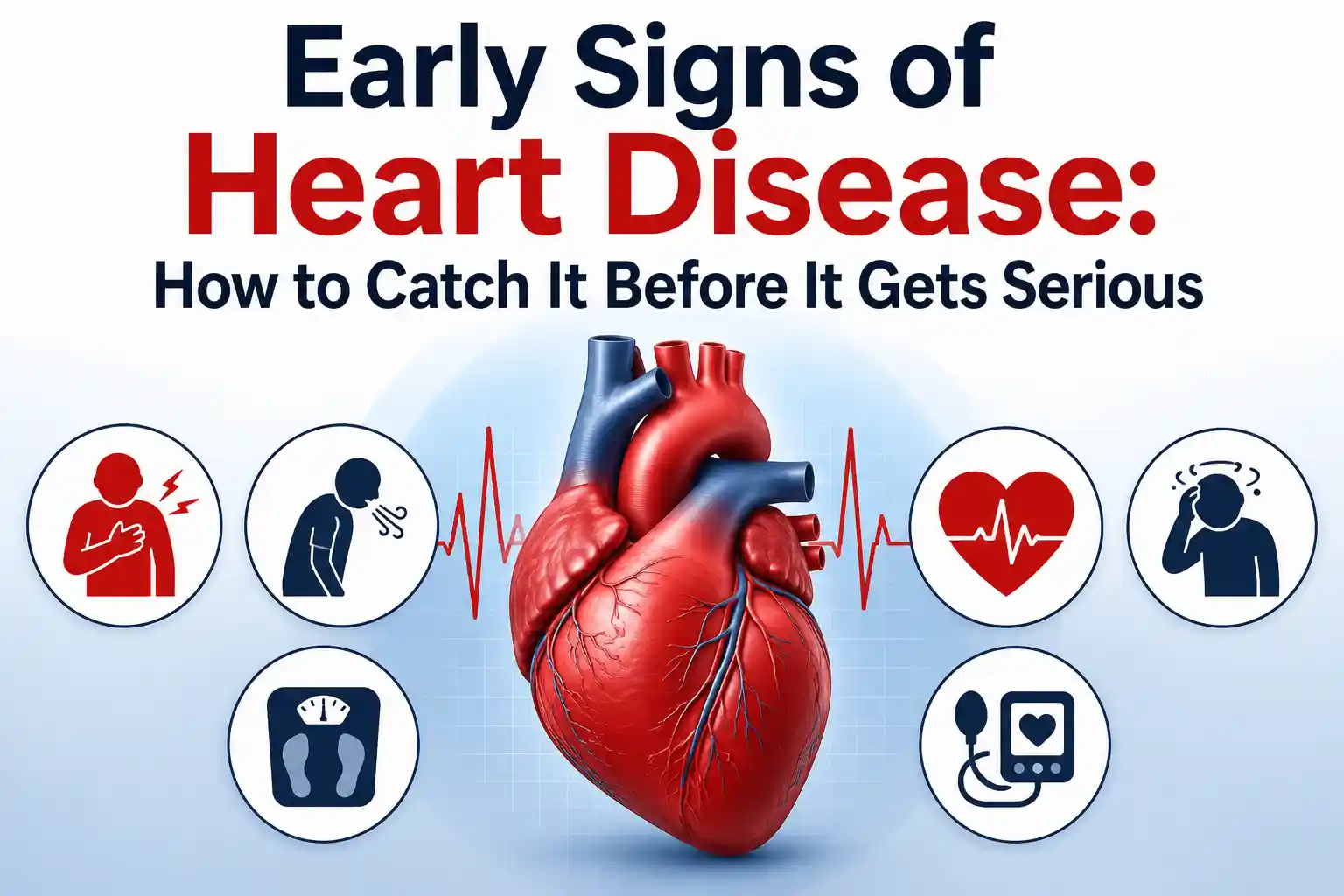
Your heart rarely fails without warning. It whispers long before it shouts. Most people picture a heart attack as a sudden, dramatic event, yet the early signs of heart disease often show up quietly, weeks or even months earlier. A little breathlessness on the stairs. A flutter in the chest after coffee. Feeling tired even after getting a full night’s sleep . These small clues are easy to brush aside, especially when life in Hyderabad moves fast. But catching them early can be the difference between a simple lifestyle change and an emergency in the cath lab. As a cardiologist treating patients across Attapur, Rajendra Nagar, Mehdipatnam, and Tolichowki, I have seen how early action protects hearts. If your symptoms feel familiar, speaking with the best cardiologist in Hyderabad sooner rather than later is one of the smartest decisions you can make for your long-term health.
So what is heart disease? It is not a single illness. It is an umbrella term for several conditions that affect how your heart works. The most common is coronary artery disease, where fatty deposits narrow the arteries that feed the heart muscle. Other types include heart failure, where the heart cannot pump blood as well as it should, arrhythmia, which is an irregular heartbeat, and valve disease. Each type behaves a little differently, but they share something important. They usually develop over years, which gives your body plenty of chances to warn you. The trick is knowing which warnings to take seriously.
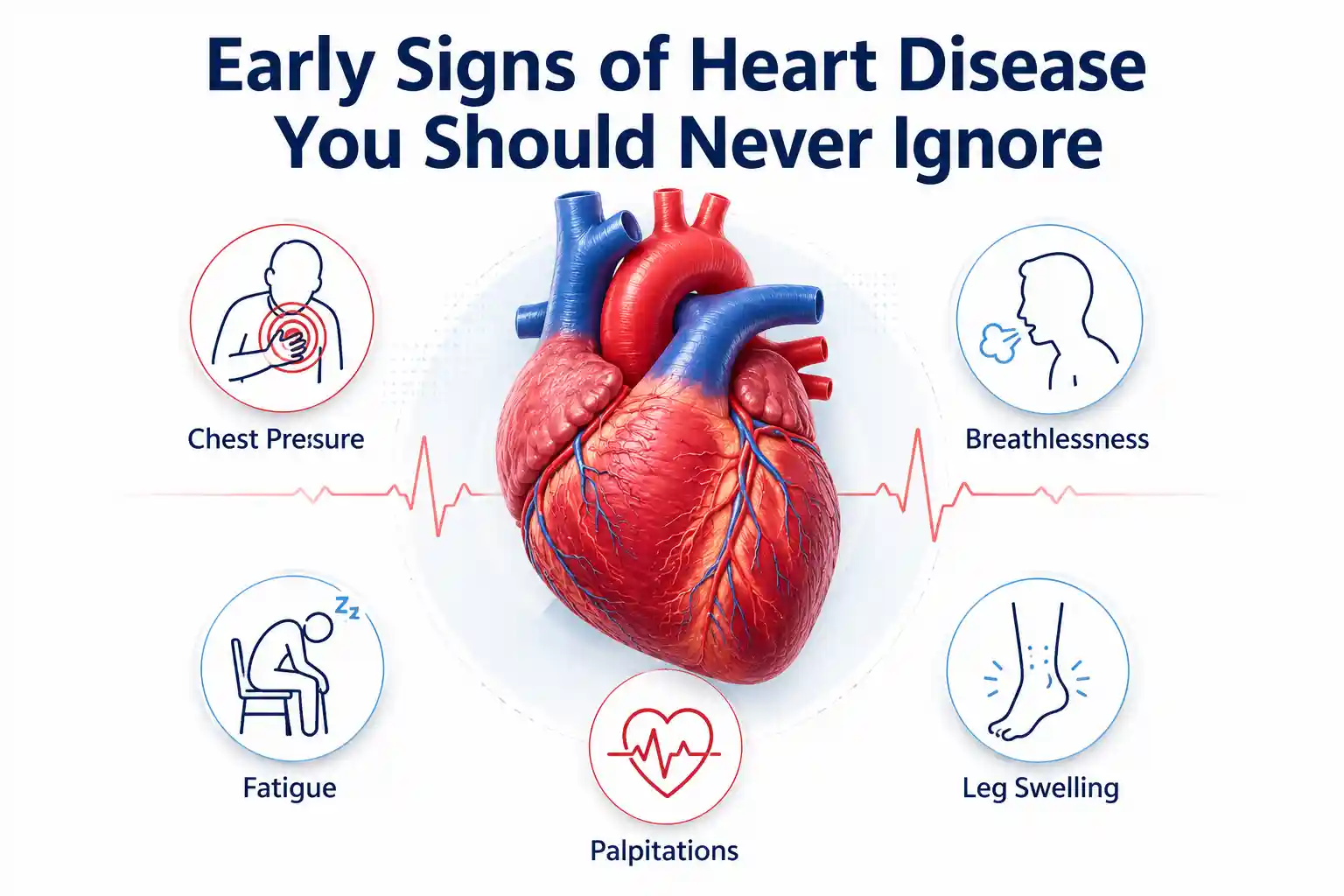
Early signs of heart disease are often hard to notice. They come and go, and they rarely arrive all at once. Here are the symptoms I tell my patients in Hyderabad to watch closely.
This is the classic warning, yet it is often misread. Many people expect crushing pain, but early chest trouble can feel like tightness, heaviness, or a dull ache that appears during exertion and eases with rest. If your chest feels squeezed when you climb stairs or walk quickly, do not wait it out.
Feeling winded after a single flight of stairs or while getting dressed can point to a heart that is struggling to keep up. When the heart pumps less efficiently, fluid can back up into the lungs, leaving you short of breath even at rest.
Everyone gets tired. But sudden, unexplained exhaustion that lingers despite good sleep can be a red flag, especially in women. When the heart works harder to circulate blood, your energy levels often drop without a clear reason.
An occasional skipped beat is usually harmless. Frequent fluttering, racing, or pounding, however, may signal an arrhythmia that deserves an ECG. Pay extra attention if palpitations come with dizziness or breathlessness.
When the heart cannot move blood properly, fluid pools in the lower body. Persistent swelling, also called oedema, is one of the more overlooked early signs of heart failure and should be checked promptly.
Some of the most dangerous warnings are the quiet ones. The silent signs of heart disease can mimic everyday aches, which is exactly why they get ignored. Discomfort that spreads to the jaw, neck, back, or left arm is a common example. So is a burning sensation in the upper stomach that feels like indigestion but does not respond to antacids. Cold sweats, dizziness, and sudden nausea may be signs of a heart problem, not just a stomach issue. These silent symptoms are especially common in people with diabetes, where nerve changes can dull the usual pain signals. If you live with diabetes or high blood pressure, treat any new, unexplained discomfort seriously.
Coronary heart disease deserves special attention because it is the leading cause of heart attacks. The signs and symptoms of coronary heart disease usually appear when narrowed arteries limit blood flow to the heart. The hallmark is angina, a pressure or tightness in the chest that flares during physical effort or stress and settles with rest. You may also notice breathlessness, a racing heart, or pain radiating to the shoulder and arm. As the blockage worsens, symptoms can show up during lighter activity or even while sitting still. Recognising these signs of coronary heart disease early gives us the best chance to open the artery before a full blockage occurs.
Heart failure does not mean the heart has stopped. It means it is no longer pumping as strongly as it should. The early signs of heart failure tend to build slowly. Watch for breathlessness that worsens when you lie flat, often forcing you to prop up on extra pillows at night. Look out for swelling in the ankles, rapid weight gain from fluid retention, a persistent dry cough, and a clear drop in how much activity you can comfortably handle. Many patients tell me they simply felt they were ageing faster than usual. When these clues cluster together, a simple echocardiogram can reveal what is happening inside the heart.
Understanding heart disease causes, symptoms, and treatment helps you take control of your health. Most heart disease grows out of risk factors that quietly build pressure on the arteries over time.
Treatment depends on how far the disease has progressed. Early stages often respond well to lifestyle changes, a heart-friendly diet, regular movement, and medication to control blood pressure, cholesterol, and blood sugar. When arteries are significantly blocked, procedures such as angioplasty with stenting or, in some cases, bypass surgery restore healthy blood flow. The earlier you act, the more treatment options you have.
You do not need to wait for severe pain to get checked. Book a heart evaluation if you notice ongoing chest discomfort, breathlessness, palpitations, or swelling, or if you have diabetes, high blood pressure, or a family history of heart trouble. A regular heart check after the age of 40 is a smart habit, even when you feel perfectly fine. If you have been searching for a trusted heart specialist or a cardiology hospital near me in Hyderabad, our team at Germanten Hospitals in Attapur is easy to reach for families across Rajendra Nagar, Mehdipatnam, Tolichowki, and Langar Houz. Early evaluation is quick, painless, and could save your life.
At Germanten Hospitals, our experienced cardiologists combine clinical expertise with German-inspired technology to catch heart disease early and treat it precisely. Your visit may begin with a simple ECG, an echocardiogram, or a treadmill test to study how your heart performs under stress. If we find blockages, our advanced cath lab allows minimally invasive procedures such as angiography and angioplasty under one roof. As a NABH-accredited, 250-bed super-specialty hospital with round-the-clock emergency cardiac care, we are built for both prevention and emergencies. Most importantly, we explain every step in plain language, so you always understand what your heart needs.
Your heart gives you warnings for a reason. Learning the early signs of heart disease, from chest tightness and breathlessness to swelling and silent symptoms, puts you a step ahead. You do not have to figure it out alone. A short conversation with a cardiologist can turn quiet worry into a clear plan and help protect the years ahead.
Do not wait for a warning to become an emergency. Book a consultation with the cardiology team at Germanten Hospitals, Attapur, Hyderabad. Call +91 99896 35555 to schedule your heart check.
If you notice any warning signs like chest discomfort, breathlessness, palpitations, or swelling, do not wait for them to get worse. Even mild symptoms are worth a quick check. Book an evaluation with an experienced cardiologist at Germanten Hospitals, Attapur, Hyderabad, where a simple ECG, echo, or treadmill test can tell you exactly how your heart is doing. Catching a problem early is always easier and safer than treating an emergency later.
The earliest signs are often mild: chest tightness during effort, breathlessness on stairs, unusual
fatigue, and occasional palpitations. Because they come and go, they are easy to ignore, which is
exactly why a check-up matters.
Early heart problems are detected through a mix of symptom awareness and simple tests. Watch for chest tightness during effort, breathlessness, unusual fatigue, palpitations, and swelling in the legs. A basic check-up that includes an ECG, an echocardiogram, a treadmill (TMT) test, a blood pressure reading, and blood tests for cholesterol and blood sugar can catch trouble well before symptoms turn serious.
Several blood tests give clues about heart health. A lipid profile measures cholesterol and triglycerides, while blood sugar and HbA1c flag diabetes risk. An hs-CRP test checks for inflammation in the arteries. Troponin detects heart muscle damage during a suspected heart attack, and BNP or NT-proBNP points to heart failure. Your cardiologist picks the right combination based on your symptoms and risk factors.
There is no single best test, because the right one depends on your symptoms. An ECG is the quick first step. An echocardiogram shows how well the heart muscle pumps. A treadmill (stress) test reveals problems that only appear during exertion. If a blockage is suspected, a CT coronary angiogram or angiography gives the clearest picture of the arteries.
You can spot an unhealthy heart through both warning signs and numbers. Frequent breathlessness, chest discomfort, swelling, or a racing heartbeat are clear red flags. High blood pressure, high cholesterol, raised blood sugar, and a resting pulse that stays elevated also point to trouble. A simple cardiac screening confirms what your body may already be hinting at.
A healthy heart usually shows steady, easy breathing during activity, good stamina, and quick recovery after exercise. A normal resting heart rate of around 60 to 100 beats per minute, healthy blood pressure close to 120/80, normal cholesterol and blood sugar, and no chest discomfort during daily tasks are all reassuring signs.
For many people, the first indication is mild chest discomfort or breathlessness during physical effort that eases with rest. Others notice unusual tiredness or a fluttering heartbeat. Because these early signs are so easy to ignore, a routine heart check remains the safest way to catch heart disease right at the start