10 Massages and Stretches for a Frozen Shoulder
June 15, 2023
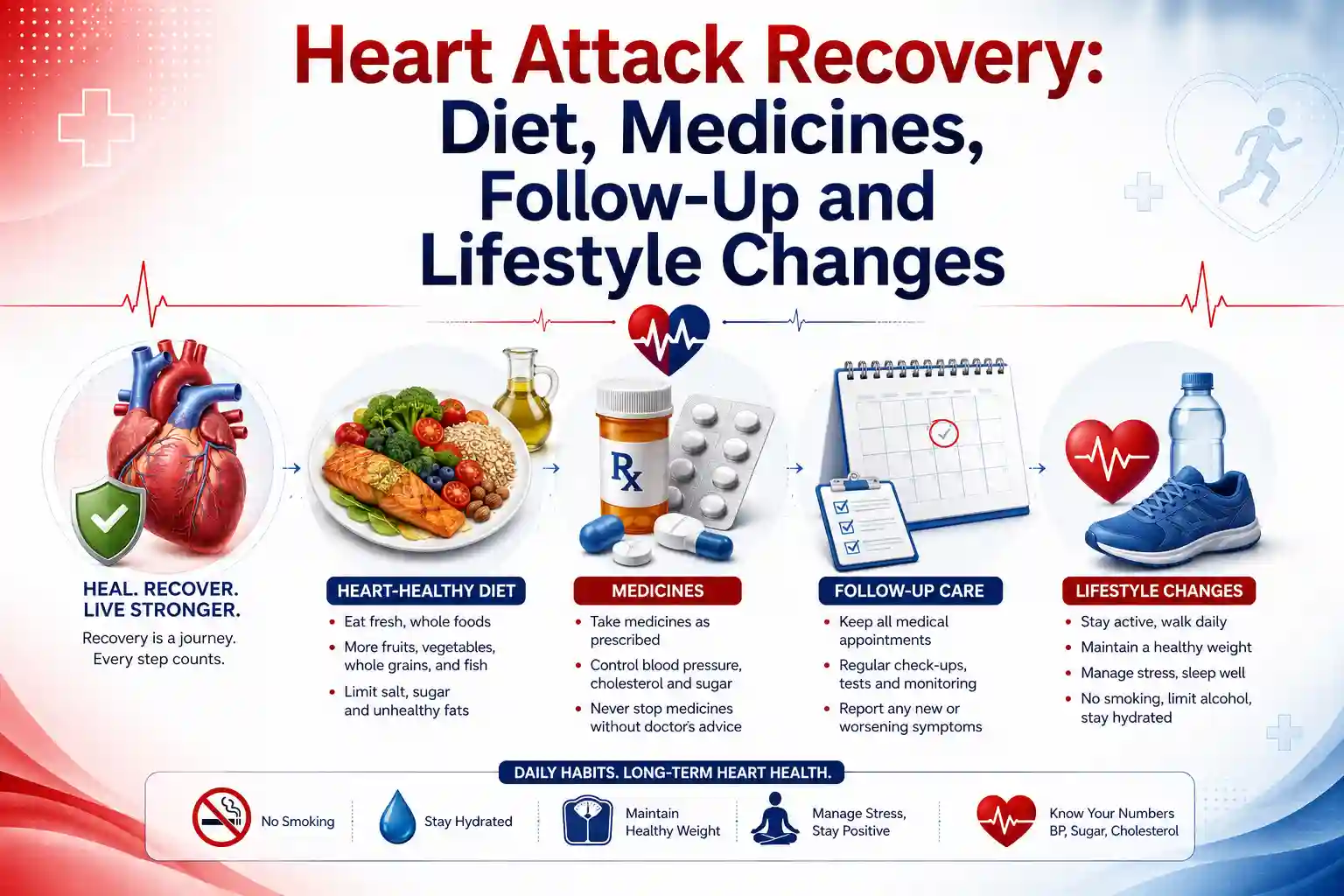
Leaving the hospital after a heart attack feels like the hard part is over. In many ways, it is just the beginning. The hospital stay treats the immediate blockage, but the next few months of diet, medicines, and follow-up visits decide how well the heart actually heals and whether a second heart attack is likely.
Heart attack recovery is not a single event. It is a gradual process that combines what you eat, which medicines you take and for how long, and how closely you follow up with your cardiologist. Skipping any one of these three areas raises the risk of complications or another cardiac event.
During a heart attack, part of the heart muscle is starved of oxygen and some of it dies. Over the following weeks, that damaged area heals into scar tissue, which does not contract the way healthy heart muscle does. This is why doctors recommend a gradual return to activity rather than jumping back into a normal routine immediately, and why the choices made during recovery genuinely affect how well the remaining healthy muscle compensates.
According to the American Heart Association, Mediterranean and DASH style eating patterns are consistently linked to better heart outcomes, largely because they emphasize vegetables, whole grains, legumes, and healthy fats while limiting salt, added sugar, and processed food.
For Indian households, this does not mean giving up familiar food. Dal, whole grains like jowar and bajra, curd, garlic, and methi seeds all fit naturally into a heart-healthy pattern. What typically needs to change is the amount of deep-fried snacks, ghee-heavy curries, and high-sodium pickles and papads eaten regularly. Small, consistent swaps, such as using less oil in daily cooking and choosing baked or roasted snacks over fried ones, tend to be more sustainable than a completely new diet plan.
Most people leave the hospital with more than one new medicine, and each one has a specific job. Antiplatelet medicines, such as aspirin and often a second agent like clopidogrel or ticagrelor, help prevent new clots from forming, especially important if a stent was placed. Statins lower cholesterol and help stabilize the plaque inside the arteries, reducing the risk of a future blockage. Beta blockers reduce how hard the heart has to work, which can ease strain on damaged muscle. ACE inhibitors or ARBs lower blood pressure and reduce long-term stress on the heart.
| Medicine Type | What It Does | Typical Duration |
|---|---|---|
| Antiplatelet (aspirin, clopidogrel, ticagrelor) | Prevents new clots from forming, especially around a stent | Often 1 year, sometimes longer with aspirin alone |
| Statins | Lowers cholesterol and stabilizes artery plaque | Usually lifelong |
| Beta blockers | Reduces how hard the heart has to work | Weeks to years, based on recovery |
| ACE inhibitors or ARBs | Lowers blood pressure and reduces strain on the heart | Often lifelong |
According to the Cleveland Clinic, stopping these medicines early, even after feeling completely fine, is one of the most common reasons for a second cardiac event. GoodRx notes that dual antiplatelet therapy is often needed for up to a year after a stent, while statins and blood pressure medicines are frequently lifelong. Any changes to dosage or timing should go through your cardiologist, not be decided on your own.
Most people spend three to five days in the hospital after a heart attack, followed by a more cautious first six to eight weeks at home, according to guidance from Mayo Clinic. A follow-up visit within the first few weeks typically includes a review of medicines, a check of recovery progress, and sometimes a repeat stress test to assess how the heart is coping with activity.
Regular follow-up is not just a formality. It is how a cardiologist catches early warning signs, adjusts medicine doses, and confirms that healing is on track before clearing a patient for a full return to normal activity.
Physical healing gets most of the attention, but the emotional impact of a heart attack is just as real. It is common to feel anxious about every twinge of chest discomfort, to worry about exertion, or to feel low in the weeks after returning home. Family members often go through a version of this too, becoming overly cautious or anxious on the patient's behalf. Talking openly about these feelings with your cardiologist, rather than dismissing them, helps identify when normal adjustment ends and when additional support might help. Many cardiac rehabilitation programs build this kind of emotional check-in into the recovery process alongside physical rehabilitation.
Quitting smoking, staying physically active, managing blood pressure and diabetes, and limiting alcohol are some of the most effective ways to lower the risk of another heart attack. None of these changes need to happen overnight. Most cardiologists recommend building new habits gradually, since sudden, drastic changes are harder to sustain than small, consistent ones.
Structured cardiac rehabilitation in Hyderabad, combining supervised exercise, dietary guidance, and support in adjusting to life after a heart attack, is one of the most effective ways to improve long-term recovery. A rehab program gives patients a safe, monitored way to rebuild strength and confidence instead of guessing how much activity is too much.
Recovering from a heart attack is not just about surviving the event. It is about the months that follow: eating in a way that supports the heart, taking medicines consistently, attending follow-up visits, and making steady lifestyle changes. Together, these choices do more to prevent a second heart attack than any single treatment.
If you or a family member is recovering from a heart attack and want guidance on diet, medicines, or a structured rehabilitation plan, book a cardiology appointment with Germanten Hospitals in Attapur, Hyderabad.
Start with simple, home-cooked meals built around dal, vegetables, and whole grains, with less oil, salt, and fried food than before. Your cardiologist or a dietitian can tailor specifics to your test results and any other health conditions.
No. Feeling better does not mean the underlying condition is resolved. Stopping medicines like statins, beta blockers, or antiplatelet drugs early is one of the most common causes of a second heart attack.
This depends on the severity of the heart attack, whether you had a stent or surgery, and the physical demands of your job. Many people return to desk-based work within two to four weeks, though your cardiologist will confirm timing based on your recovery.
Yes, cardiac rehab is usually recommended even after a mild heart attack, since it lowers the risk of future cardiac events and helps rebuild fitness safely under supervision.
There is no single most important change. Quitting smoking, staying active, and taking medicines consistently all contribute meaningfully, and doctors usually recommend focusing on whichever habit is currently the biggest risk factor for you.
Initial recovery typically takes six to eight weeks, but full recovery, including rebuilding fitness and confidence, can take three months to a year depending on the severity of the heart attack and how closely lifestyle changes are followed.