10 Massages and Stretches for a Frozen Shoulder
June 15, 2023
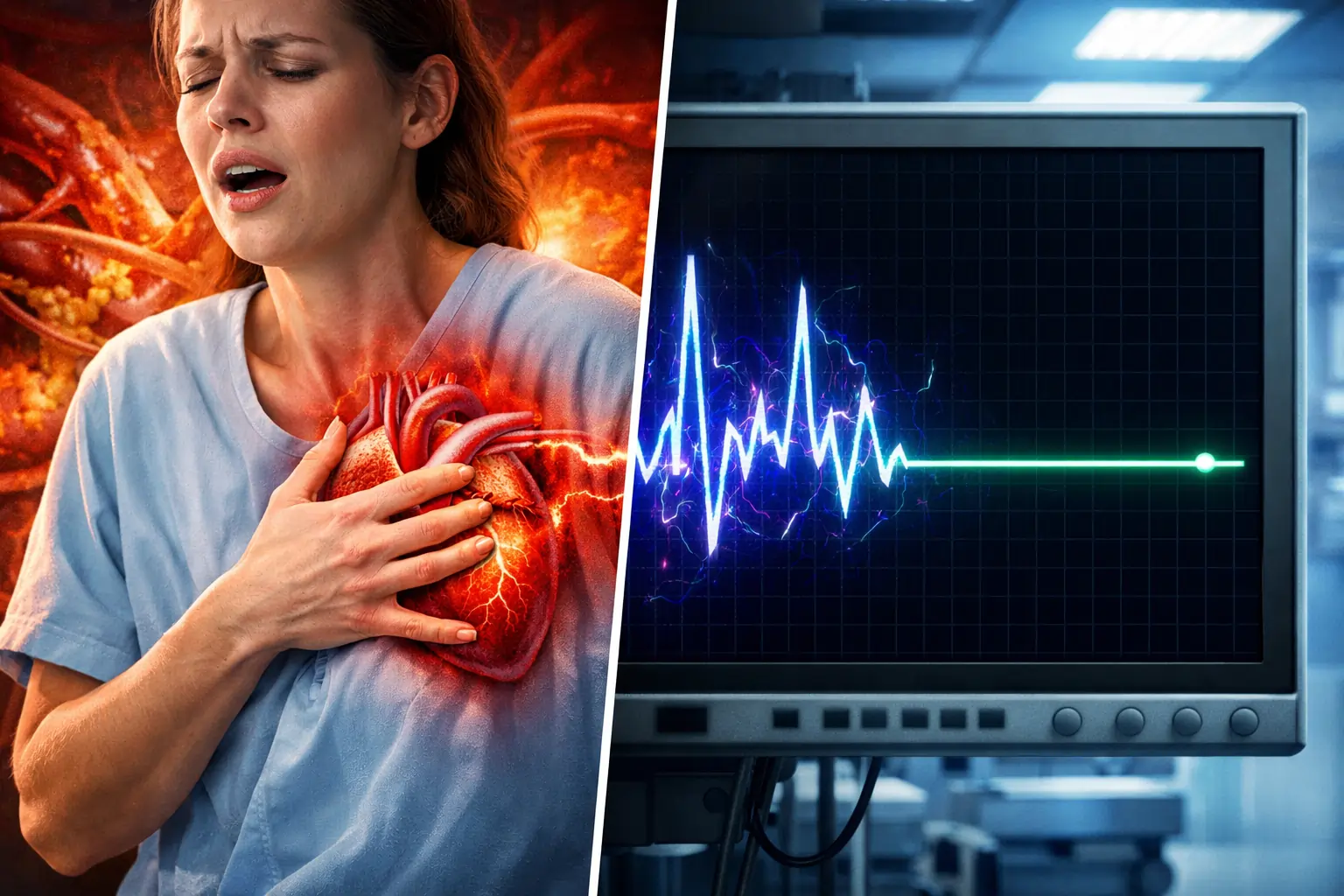
Priya grabbed her chest while cooking dinner Tuesday night. She felt short of breath, like she could not catch her wind. Her husband told her to sit and relax. By 2 AM, she collapsed. Paramedics rushed her to hospital, but it was too late. What Priya did not know, what most people do not know, is her shortness of breath was a warning sign. Research shows half of cardiac arrest victims have symptoms 24 hours before collapse. For women like Priya, that breathlessness triples cardiac arrest risk. Had she known the difference between heart attack and cardiac arrest, her story might have ended differently.
A heart attack blocks blood flow to the heart. Cardiac arrest stops the heart's electrical rhythm. These sound similar but demand different actions. Here is what you need to know to spot the differences and save lives.
Think of your heart like a house. A heart attack clogs the pipes. Blood can not reach part of the heart muscle, so that tissue starts dying. The heart usually keeps beating during this plumbing crisis.
Cardiac arrest shorts the electrical wiring. The heart's rhythm goes haywire, often ventricular fibrillation where lower chambers quiver uselessly at 500 beats per minute. No blood pumps to brain or lungs. You collapse in seconds.
Here is what most websites miss: a heart attack can trigger cardiac arrest. Scar tissue from damaged heart muscle creates electrical short circuits. But most heart attacks do not immediately cause arrest. When arrest happens, heart attack caused 80% of cases.
| Feature | Heart Attack | Cardiac Arrest |
|---|---|---|
| Problem | Blocked artery | Faulty rhythm |
| Heartbeat | Usually continues | Stops suddenly |
| Consciousness | Usually awake | Collapse in seconds |
| Time to act | Hours | Minutes |
Here is the surprising truth most websites ignore: Half of cardiac arrest patients had warning signs 24 hours before collapse. These differ dramatically by gender.
Shortness of breath triples cardiac arrest risk for women. Not during exercise, sudden breathlessness at rest. Women also report:
Priya ignored her cooking breathlessness. Many women dismiss it as anxiety. Do not.
Men face double cardiac arrest risk with chest pressure. Other signs:
What doctors rarely tell families: Women survive cardiac arrest at half the rate of men (22% vs 36%). Why? Fewer get bystander CPR. Less likely to have "shockable" rhythms. Hospitals give women fewer life-saving treatments.
Every minute without CPR during cardiac arrest drops survival by 7-10%. Here is the brutal timeline:
| Minutes Without CPR | Survival Chance |
|---|---|
| 1 minute | 90% |
| 5 minutes | 50% |
| 10 minutes | <10% |
| 15+ minutes | Near zero |
What most people do not realize: Hospital data shows 22% survive at 1 minute CPR, but under 1% survive past 39 minutes. If someone has not responded after 40 minutes in hospital, even with perfect CPR, survival becomes statistically impossible.
Heart attacks give more time. Get to a hospital within 12 hours, and 90% survive with treatment. Cardiac arrest waits for no one.
The hidden crisis: Women die more from cardiac arrest because the system fails them. Not biology, systemic problems:
At Germanten Hospital, our heart specialists in Hyderabad use protocols ensuring equal treatment. No gender gaps here.
Most websites skip this. Ventricular fibrillation (VF) causes 70% of cardiac arrests. Here is what happens:
Survival drops because fine VF resists defibrillator shocks. Shockable rhythms (VF/VT) have 20 times better odds than flatline.
Cardio pulmonary resuscitation doubles survival when started immediately. Every second counts.
What NO other hospital website mentions: Cardiac arrest survivors face massive psychological trauma.
Priya's husband never recovered. He watched CPR, felt helpless. Caregiver PTSD now cripples families.
Recovery phases matter:
55% achieve good recovery at 1 year. But psychological support makes the difference.
Women: unexplained shortness of breath demands immediate evaluation at a heart hospital in Hyderabad.
| Factor | Heart Attack | Cardiac Arrest |
|---|---|---|
| Immediate survival | 90-95% treated | 10-15% overall |
| With CPR/AED <5 min | N/A | 50-70% |
| 1-year survival | 85-90% | 55-60% |
| Women's disadvantage | Mild | 40% lower |
Best pulmonology hospitals in Hyderabad watch breathing patterns. Shortness of breath saves lives when caught early.
Good news: 91% alive at 12 months. Many return to work, travel, normal life. But:
Cognitive issues affect 30-50%:
Physical rehab fixes weakness. Psychological care heals trauma. Comprehensive programs work best.
Shortness of breath + heart risk factors = emergency. Our pulmonologist Hyderabad team at Germanten Hospital checks:
Early detection saves lives.
✅ Heart attack = plumbing block. Cardiac arrest = electrical failure
✅ Women: shortness of breath
triples arrest risk 24 hours before
✅ Every CPR minute = 7-10% survival drop
✅ 40% survivors
get PTSD. 50% caregivers get PTSD
✅ Women survive at half men's rate due to systemic gaps
✅ VF
quivering kills in minutes. Know the progression
✅ ICD cuts death risk 50% for high-risk patients
Learn CPR today. Hands-only works. Download our free cardio pulmonary resuscitation guide or visit Germanten Hospital for training. One 2-hour class could save your family's life.
Feeling short of breath unexpectedly? Do not wait like Priya. Call a heart specialist in Hyderabad immediately. Seconds matter.
What is your plan if someone collapses tomorrow? The answer determines if they see the next sunrise.