10 Massages and Stretches for a Frozen Shoulder
June 15, 2023
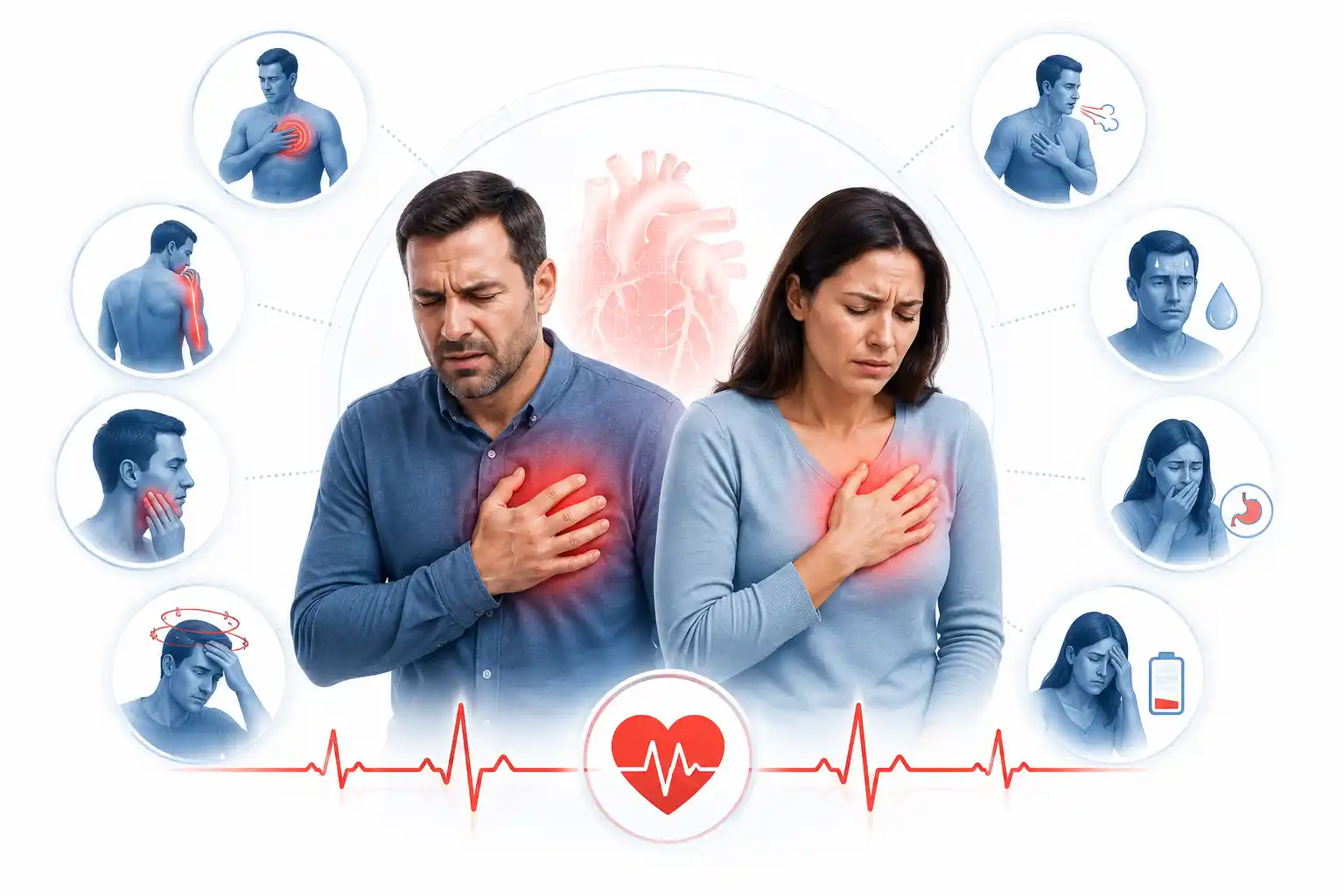
A heart attack can happen suddenly, but in many cases, the body gives warning signs before the condition becomes serious. Some people feel severe chest pain, while others may only feel mild discomfort, breathlessness, sweating, nausea, tiredness, or pain spreading to the arm, jaw, shoulder, or back. Because the symptoms are not always dramatic, many patients delay medical help thinking it is acidity, gas, stress, or weakness.
This delay can be dangerous. A heart attack happens when blood flow to a part of the heart muscle is reduced or blocked. The longer the heart muscle remains without proper blood supply, the higher the risk of damage. This is why recognising early heart attack warning signs is important for both men and women.
If you are searching for a cardiologist in Hyderabad, heart attack treatment in Hyderabad, cardiac emergency care Hyderabad, or a heart specialist near me, this blog will help you understand which symptoms need urgent medical attention and when to visit a cardiology hospital.
Germanten Hospital, Attapur, Hyderabad, provides cardiac consultation, diagnostic testing and advanced heart care support for patients from Attapur, Rajendra Nagar, Mehdipatnam, Tolichowki, Langar Houz, Nanal Nagar, Karwan, Kismatpur, Bandlaguda Jagir, Shamshabad, Manikonda, Gachibowli, Banjara Hills and nearby Hyderabad areas.
A heart attack, medically called myocardial infarction, occurs when blood flow to the heart muscle is blocked or reduced. This usually happens because of narrowing or blockage in the coronary arteries, which supply oxygen-rich blood to the heart.
The blockage is commonly caused by plaque buildup inside the arteries. Plaque may contain cholesterol, fat and other substances. If a plaque ruptures, a blood clot can form and block the blood supply. When the heart muscle does not receive enough oxygen, it can start getting damaged.
A heart attack is a medical emergency. It should not be managed at home with painkillers, antacids or rest. Timely diagnosis and treatment can help reduce complications and protect heart function.
Heart attack symptoms can vary from person to person. Some people have intense symptoms, while others have mild or unusual symptoms. Still, there are some warning signs that should never be ignored.
Common symptoms include:
Not every patient will have all symptoms. Some people may not even have strong chest pain. This is why any unusual chest discomfort, especially with breathlessness, sweating, dizziness or radiating pain, should be treated seriously.
Men often experience more typical heart attack symptoms, although this is not always the case. The most common symptom in men is chest pain or pressure. This may feel like a heavy weight on the chest, tightness, squeezing, or pain in the centre or left side of the chest.
Men may also experience:
Many men ignore symptoms if they are mild or temporary. Some may think it is acidity, muscle pain or work stress. However, chest discomfort that occurs during exertion or emotional stress can be a sign of reduced blood flow to the heart and needs cardiology evaluation.
If you have chest pressure, heaviness, sweating, breathlessness, or pain spreading to your arm, jaw, shoulder or back, seek medical help immediately. For non-emergency symptoms, schedule a consultation with the cardiology team at Germanten Hospital, Attapur, Hyderabad.
Women can also have chest pain during a heart attack, but they may experience additional or less obvious symptoms. In many cases, women may feel tired, breathless, nauseous, dizzy, or have discomfort in the upper back, jaw, neck or stomach.
Heart attack symptoms in women may include:
Women may mistake these symptoms for acidity, hormonal changes, stress, migraine, weakness or gastric issues. This can delay diagnosis and treatment. Any new, unexplained or repeated discomfort should be checked, especially if the person has diabetes, high BP, high cholesterol, obesity, smoking history or family history of heart disease.
Heart attack symptoms may vary due to differences in body structure, hormonal factors, risk profiles, pain perception and the type of artery involvement. Some women may have blockages in smaller blood vessels, which can create symptoms that are less typical than classic chest pain.
Women are also more likely to report nausea, breathlessness, back pain, jaw pain, unusual tiredness or indigestion-like discomfort. This does not mean these symptoms are mild. They can still be signs of a serious heart problem.
The important point is simple: both men and women can have chest pain, but women may have more subtle or mixed symptoms. When symptoms feel unusual, it is safer to get cardiac evaluation instead of waiting.
Acidity and heart attack symptoms can sometimes overlap. Both may cause burning, heaviness or discomfort in the chest. This is one reason patients delay medical care.
Acidity is more likely when discomfort appears after spicy or heavy meals, lying down after food, burping, sour taste in the mouth, bloating or indigestion. Heart-related symptoms are more concerning when pain occurs during exertion, spreads to the arm or jaw, comes with sweating, breathlessness, dizziness, nausea or does not settle quickly.
However, self-diagnosis is unsafe. Heart attack pain can sometimes feel like acidity or indigestion. If the symptom is new, severe, repeated, or associated with warning signs, treat it as urgent.
A silent heart attack is a heart attack with mild, unusual or unnoticed symptoms. Some people may only feel tiredness, indigestion, breathlessness, sweating or mild discomfort. They may not realise that their heart is under stress.
Silent heart attacks are more commonly suspected in:
If you are diabetic or have multiple heart risk factors, do not ignore mild chest discomfort, unusual fatigue or breathlessness. Regular cardiac checkups can help detect heart risk early.
Seek emergency medical help immediately if you or someone near you has:
Do not wait to see if symptoms settle. Do not drive yourself if the symptoms are severe. Ask someone to take you to the nearest emergency department or call emergency medical support.
Some people have a higher risk of heart attack because of existing health conditions or lifestyle factors.
Common risk factors include:
If you have these risk factors, regular heart checkups become more important. A cardiologist may recommend tests based on your symptoms, age, medical history and risk profile.
When a patient visits a cardiology hospital with suspected heart attack symptoms, doctors may perform urgent tests to understand whether the heart muscle is under stress or damage.
Common tests may include:
An ECG records the electrical activity of the heart. It is one of the first tests done when a patient has chest pain, palpitations, dizziness or suspected heart attack symptoms.
Blood tests can help detect markers that may rise when the heart muscle is injured. These tests are important in emergency chest pain evaluation.
A 2D Echo is an ultrasound of the heart. It helps assess heart pumping function, valve movement and areas of the heart muscle that may not be moving normally.
A treadmill test may be recommended when symptoms are stable and the doctor wants to check how the heart responds to physical activity. It is not usually done during an active heart attack emergency.
Holter monitoring records heart rhythm for a longer duration. It may be used when the patient has palpitations, irregular heartbeat, dizziness or rhythm-related symptoms.
If doctors suspect artery blockage, coronary angiography may be advised to identify where the blood flow is blocked. In some cases, angioplasty and stenting may be performed to open the blocked artery and restore blood flow.
During a heart attack, time is critical. The longer the heart muscle does not receive enough blood, the more damage can occur. Early treatment can help restore blood flow, reduce complications and improve recovery chances.
Delaying care because symptoms feel mild can be risky. Even if the pain goes away, it may still be a warning sign. Repeated chest discomfort, exertional breathlessness, sudden sweating or unexplained fatigue should always be evaluated.
Germanten Hospital, Attapur, provides cardiology services for patients with chest pain, heart attack warning signs, high BP, palpitations, breathlessness, abnormal ECG, suspected coronary artery disease and post-cardiac procedure follow-up.
The cardiology department offers diagnostic support such as EKG, Echocardiography, Event Monitoring, Holter Monitoring, Stress Testing and Cardiac Rehabilitation.
Dr. Mohammed Wasif Azam, Chief Consultant Cardiologist at Germanten Hospital, Hyderabad, has 33+ years of experience in cardiology and interventional cardiology. His expertise includes coronary interventions, coronary angiogram, angioplasty, stenting, pacemaker implantation, heart rhythm management, advanced cardiac imaging and heart attack or chest pain management.
If you have chest pain, breathlessness, palpitations, sweating, dizziness, high BP, abnormal ECG or heart attack warning signs, book an appointment with Dr. Mohammed Wasif Azam at Germanten Hospital, Attapur, Hyderabad.
Local Access: Heart Care Near Attapur and Nearby Hyderabad Areas
For patients searching for a cardiologist near me, heart hospital near me, cardiac emergency care Hyderabad, or heart attack treatment in Hyderabad, location can matter during urgent symptoms.
Germanten Hospital is located in Attapur, Hyderabad, and is accessible for patients from:
Patients from these areas can visit Germanten Hospital for cardiac consultation, ECG, 2D Echo, Holter monitoring, stress testing, angiography guidance, angioplasty evaluation and follow-up cardiac care.
You cannot control every risk factor, but you can reduce many heart risks with timely action and regular care.
Helpful steps include:
If you already had a heart attack, angioplasty, stent or bypass surgery, follow-up care is essential. Do not stop medicines without your cardiologist’s advice.
Heart attack warning signs are not always dramatic. Chest pressure, breathlessness, sweating, nausea, dizziness, fatigue, jaw pain, back pain or indigestion-like discomfort can all be warning signs. Men commonly report chest pressure or pain, while women may have more subtle symptoms such as fatigue, nausea, breathlessness or back and jaw discomfort.
The safest approach is to act early. If symptoms are severe, sudden, repeated or associated with warning signs, seek emergency medical care. If you have risk factors such as diabetes, high BP, high cholesterol, smoking, obesity or family history of heart disease, do not ignore mild symptoms.
For patients in Hyderabad, Germanten Hospital, Attapur, offers cardiology consultation and cardiac diagnostic support for people from Attapur, Rajendra Nagar, Mehdipatnam, Tolichowki, Langar Houz, Nanal Nagar, Karwan, Kismatpur, Bandlaguda Jagir, Shamshabad, Manikonda, Gachibowli, Banjara Hills and nearby areas.
If you are experiencing chest pain, heaviness, breathlessness, cold sweating, palpitations, dizziness, nausea, high BP, abnormal ECG or symptoms that may suggest a heart attack, consult the cardiology team at Germanten Hospital, Attapur, Hyderabad.
Early warning signs may include chest pressure, heaviness, tightness, breathlessness, sweating, nausea, dizziness, fatigue, palpitations, or pain spreading to the arm, jaw, shoulder, neck, back or upper stomach. Symptoms may be mild at first, so repeated or unusual discomfort should not be ignored.
Yes. Men often experience chest pressure or pain, while women may also have symptoms such as unusual tiredness, nausea, vomiting, shortness of breath, back pain, jaw pain, shoulder pain or indigestion-like discomfort. Both men and women should seek medical care for unusual symptoms.
Yes. Some heart attack symptoms can feel like acidity, gas, heartburn or indigestion. If chest burning or discomfort is new, severe, repeated, or comes with sweating, breathlessness, dizziness or radiating pain, it should be treated as a possible heart symptom until checked by a doctor.
You should visit a cardiologist if chest pain is repeated, occurs during walking or exertion, spreads to the arm or jaw, or is linked with breathlessness, sweating, dizziness, nausea or palpitations. Patients with diabetes, high BP, cholesterol, smoking history or family history should be extra cautious.
Common tests include ECG, cardiac blood tests, 2D Echo, Holter monitoring, stress testing in stable cases, and coronary angiography if artery blockage is suspected. The cardiologist will decide the right tests based on symptoms and risk level.
Yes. Diabetic patients may have silent or unusual symptoms such as fatigue, breathlessness, sweating, dizziness, nausea, or mild indigestion-like discomfort. This is why diabetic patients should not ignore unexplained symptoms and should undergo regular cardiac evaluation.
Yes. Germanten Hospital is located in Attapur, Hyderabad, and is accessible for patients from Rajendra Nagar, Mehdipatnam, Tolichowki, Langar Houz, Nanal Nagar, Karwan, Kismatpur, Bandlaguda Jagir, Shamshabad, Manikonda, Gachibowli, Banjara Hills and nearby areas.
Reference Links
https://www.heart.org/en/health-topics/heart-attack/warning-signs-of-a-heart-attack
https://www.cdc.gov/heart-disease/about/heart-attack.html
https://www.mayoclinic.org/diseases-conditions/heart-attack/symptoms-causes/syc-20373106