10 Massages and Stretches for a Frozen Shoulder
June 15, 2023

Meera was 46, a schoolteacher in Hyderabad, and she had never fallen, twisted, or strained her knee. But one Monday morning, she noticed her right knee looked different. Puffier. Rounder. She pressed her palm against it and felt a strange, fluid-like fullness beneath the skin.
She thought she had slept in a bad position. She waited. By Friday, both knees looked the same. By the following month, she had trouble climbing stairs at school. What she didn't know was that her body had been sending her a message for weeks, and she hadn't known how to read it.
Meera finally walked into an orthopedic clinic, and her diagnosis was early-stage rheumatoid arthritis and was caught just in time to protect her joints from long-term damage. The swelling was never about an injury. It was about her immune system.
Here's the truth most people don't know: knee swelling without an injury is one of the most commonly misread signals in joint health. People wait, assume it will pass, and often miss a critical early diagnosis window.
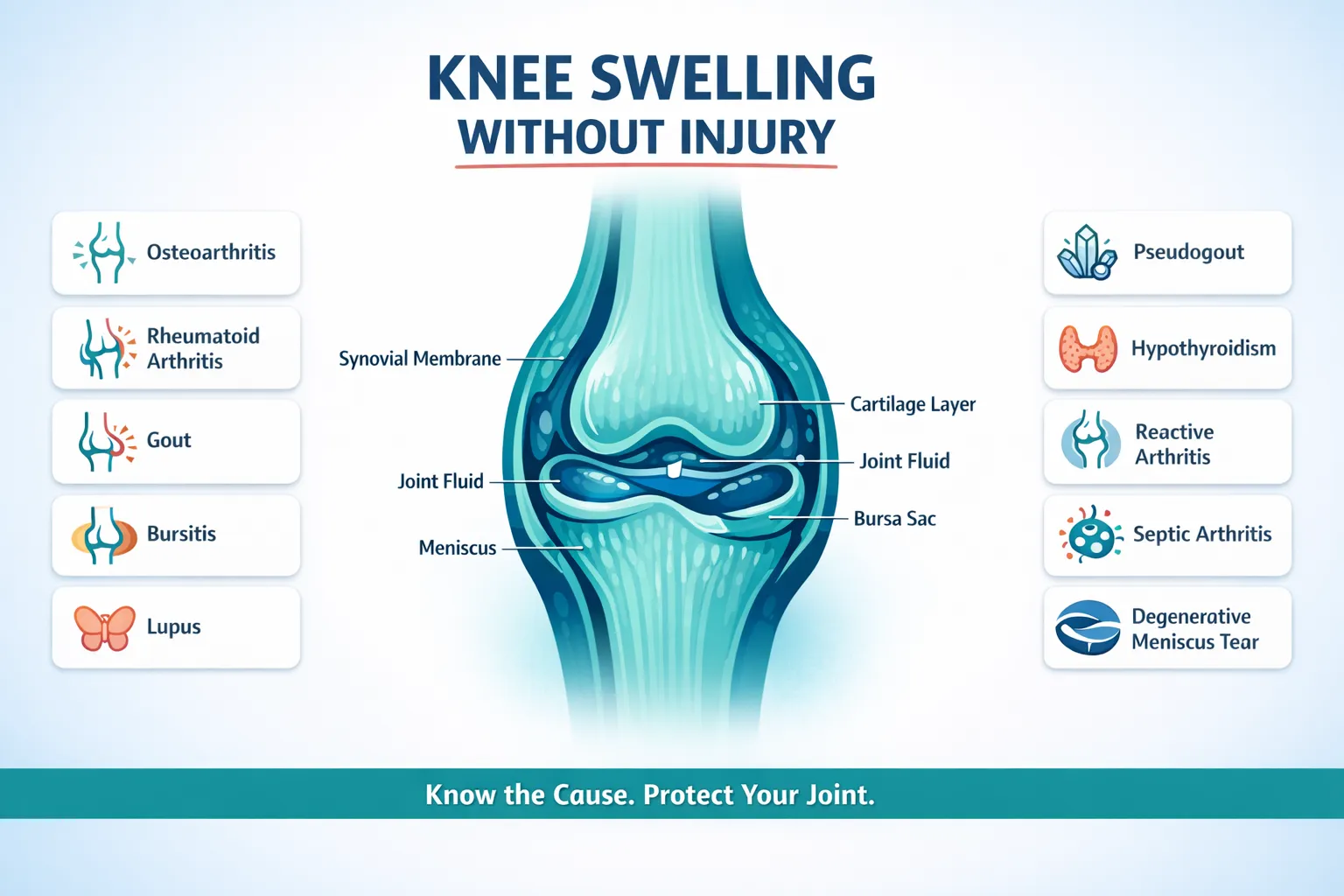
Knee swelling without injury, also called non-traumatic knee effusion. It happens when fluid builds up inside or around the knee joint due to an underlying medical condition, not a fall, impact, or accident.
This article breaks down every real reason your knee might be swelling, what symptoms to never ignore, how doctors find the cause, and what treatment options can help.
The knee joint is one of the most complex structures in the human body. It holds together bones, cartilage, tendons, ligaments, and a lining called the synovial membrane. This membrane produces a fluid that keeps the joint lubricated. Under normal conditions, that fluid stays at a quiet volume of about 2 to 3 mL.
When the body detects any kind of irritation, infection, immune response, or structural change inside the joint, the synovial membrane reacts by producing more fluid than the joint can hold. That excess fluid is what you see as swelling.
What most websites won't tell you is this: the swelling is not the problem. It is a symptom of something that started long before you noticed the puffiness. And that underlying cause is what truly needs attention.
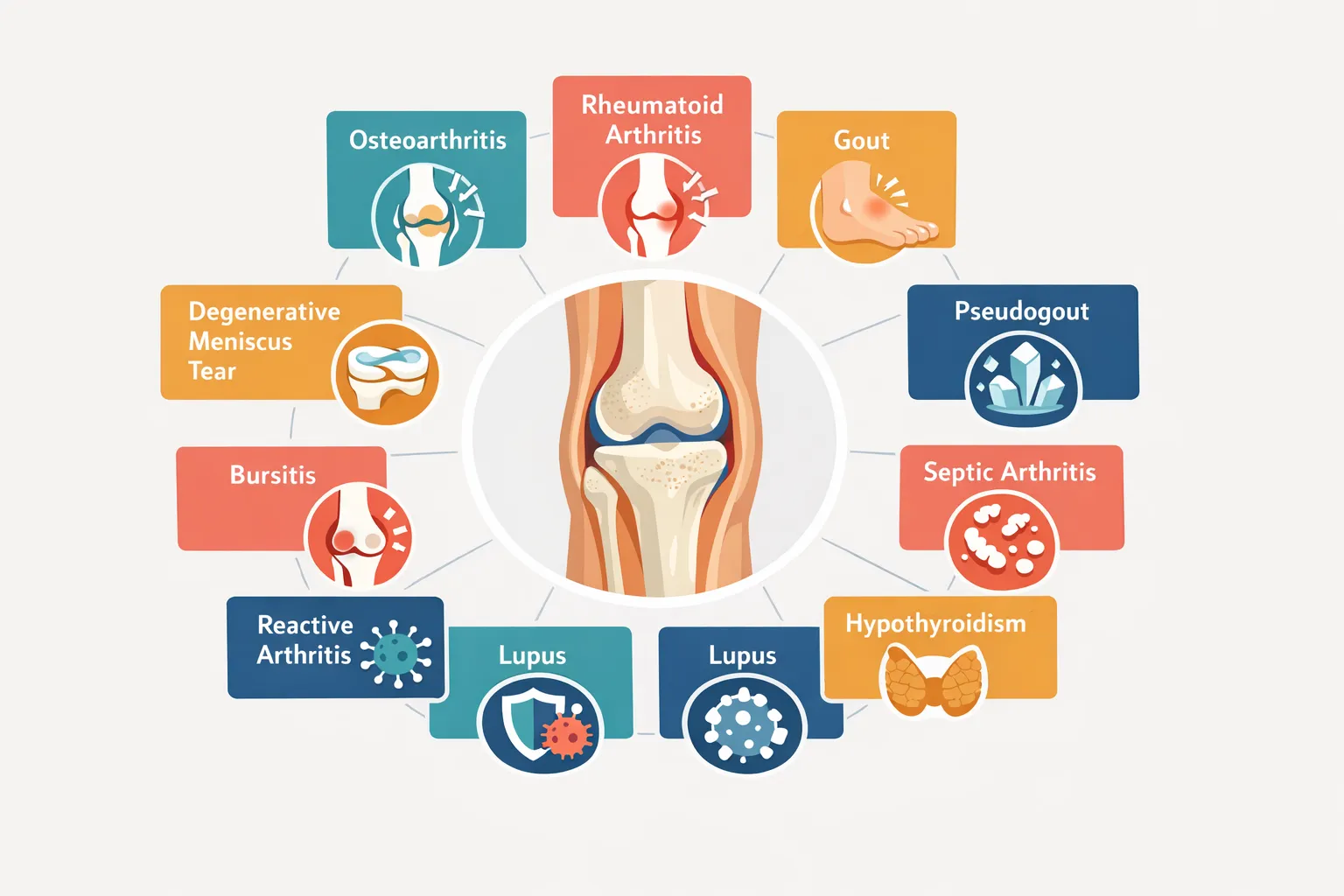
Most people think osteoarthritis (OA) always starts with severe pain. It doesn't. In the earliest stages, cartilage begins to break down at a microscopic level, and the synovial membrane responds by producing extra fluid,before significant pain even begins.
This makes early OA one of the most commonly missed diagnoses in patients who come in saying: "My knee is swollen, but it doesn't really hurt that much."
The scale of this condition is staggering. According to a 2024 review published in Therapeutic Advances in Musculoskeletal Disease, osteoarthritis affects nearly 528 million people worldwide, with the knee being involved in 60 to 85% of all OA cases. The global prevalence of knee OA has also increased by 113% since 1990 and continues to rise with aging populations.
Rheumatoid arthritis (RA) is an autoimmune condition where your immune system mistakenly attacks the lining of your joints. The knee is frequently involved, and the swelling tends to be symmetrical, meaning both knees may swell at the same time, often alongside morning stiffness that lasts 30 minutes or more.
What makes RA tricky is that early joint swelling can appear long before a formal diagnosis is made. Meera's story at the start of this article reflects this reality exactly. If you notice swelling in both knees along with fatigue, don't write it off as aging.
Gout gets blamed mostly for big toe pain. But the knee is actually one of the most common joints affected by both gout and pseudogout, and many patients are surprised to learn this.
According to Portland Urgent Care, gout and pseudogout are types of crystal-induced arthritis that trigger sudden, intense episodes of swelling, redness, and warmth, caused by the body's immune response to urate crystals (gout) or calcium pyrophosphate crystals (pseudogout) deposited in the joint.
Pseudogout is particularly common after a major illness or surgical procedure, a trigger most patients never connect to their knee swelling.
Around the knee are small, fluid-filled sacs called bursae. Their job is to reduce friction between bones, tendons, and skin. When these sacs get irritated from repetitive kneeling, prolonged pressure, or overuse, they swell.
Prepatellar bursitis (in front of the kneecap) is especially common in people who kneel for work: housewives, tile workers, gardeners, and domestic workers. The swelling can be significant without causing intense pain, especially in mild cases. Medical research confirms that when a bursa is mildly irritated, visible swelling can precede significant pain by a considerable period.
Most people associate a meniscus tear with a dramatic moment: a sports injury, a sudden twist, a pop. But degenerative meniscus tears are completely different. They develop slowly in adults over 40 due to gradual wear of cartilage tissue.
According to Focus Physiotherapy, small or degenerative meniscal tears can present with swelling, catching, or stiffness rather than a single acute injury event, particularly in people engaged in repetitive activities like running, stair climbing, or prolonged kneeling.
This is one of the most overlooked causes on general health websites. Many patients recall no injury yet have a tear confirmed on MRI.
Here's something most people don't know: a gut infection or urinary tract infection can trigger knee swelling 2 to 4 weeks later. This is called reactive arthritis, and the connection between the original infection and the later joint swelling is almost never made by patients without medical guidance.
The immune response triggered by the infection inadvertently attacks joint tissue. The knee looks swollen and inflamed with no local injury whatsoever. The real cause was hundreds of kilometers away in your digestive or urinary system.
Systemic Lupus Erythematosus (SLE) is an autoimmune disease that can affect virtually every organ in the body, including joints. What makes lupus particularly deceptive is that musculoskeletal symptoms often appear long before the condition is formally diagnosed.
According to research published in Frontiers in Immunology (PMC), musculoskeletal involvement in SLE affects up to 90% of patients and represents the very first symptom in 60 to 80% of cases. The knee is among the most frequently targeted joints.
The arthritis in lupus is migratory, moving from joint to joint, and the swelling may appear symmetrically across both knees. Women between 15 and 45 account for 9 out of 10 adult lupus patients, making this especially relevant for women with unexplained knee swelling.
This one surprises almost every patient. An underactive thyroid gland can cause periarticular edema, a swelling around the joint that looks and feels exactly like a swollen knee but does not come from the joint itself. It is caused by the accumulation of mucin-like substances in the tissue surrounding the joint, a condition called myxedema.
Patients with undiagnosed or poorly controlled hypothyroidism frequently report joint swelling, stiffness, and fatigue. A simple thyroid function blood test (TSH, T3, T4) is not a standard part of a knee pain workup, which is why this cause gets missed repeatedly.
PVNS is a benign but aggressive condition where the synovial tissue that lines the knee joint grows abnormally and produces bloody joint fluid. It has no traumatic cause and no infection. It is simply the joint lining behaving abnormally.
Patients typically present with recurring knee swelling, a feeling of fullness or stiffness, and sometimes a brownish fluid when the joint is aspirated. It is more common in young adults and is frequently misdiagnosed for months or years. No major orthopedic blog in India currently addresses this condition as a cause of non-traumatic knee swelling. It requires MRI for diagnosis and surgical treatment.
This is the most dangerous cause on this list. Septic arthritis is a bacterial infection inside the knee joint, and it can destroy joint cartilage within days if left untreated.
According to a clinical guide published by PMC (National Institutes of Health), septic arthritis is an orthopaedic emergency and the chance of a good outcome diminishes significantly with every hour of delayed diagnosis. Risk is highest in people with diabetes, those on immune-suppressing medications, or anyone with a recent penetrating wound near the knee.
Red flags: high fever, joint so hot it's almost burning to touch, severe pain even at rest, complete inability to bear weight. This requires emergency care, not a home remedy.
Don't wait for pain to get worse. Early diagnosis and care protect your joint.
Book Your Consultation Today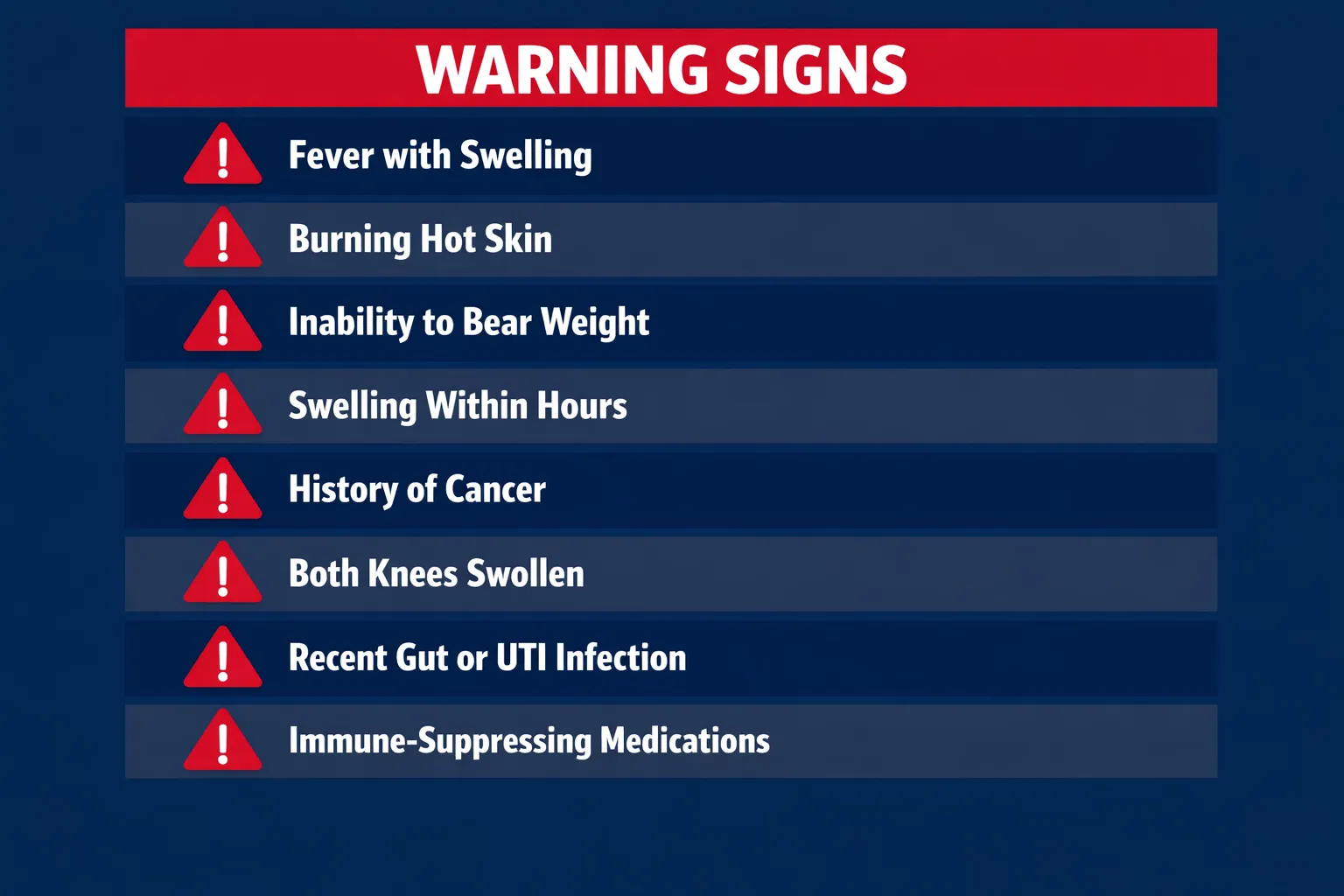
Most causes of non-traumatic knee swelling are not emergencies. But some absolutely are. Here is when you should seek care immediately:
• Fever of 38°C (100.4°F) or higher alongside knee swelling
• The skin over the knee feels burning hot and looks red or shiny
• You cannot bear any weight on the leg at all
• The swelling appeared within a matter of hours, not days
• You have a history of cancer anywhere in the body
• Both knees are swollen at the same time with no injury to either
• You had a gut infection or UTI 2 to 4 weeks ago and now have a swollen knee
• You are on steroids, chemotherapy, or immune-suppressing drugs
The point about bilateral (both knees) swelling is especially important. If both knees are swelling without any injury to either, the cause is almost certainly systemic, meaning it is coming from somewhere else in your body, not from the knees themselves. This is not something you treat with rest and ice. It requires blood work and a proper diagnosis.
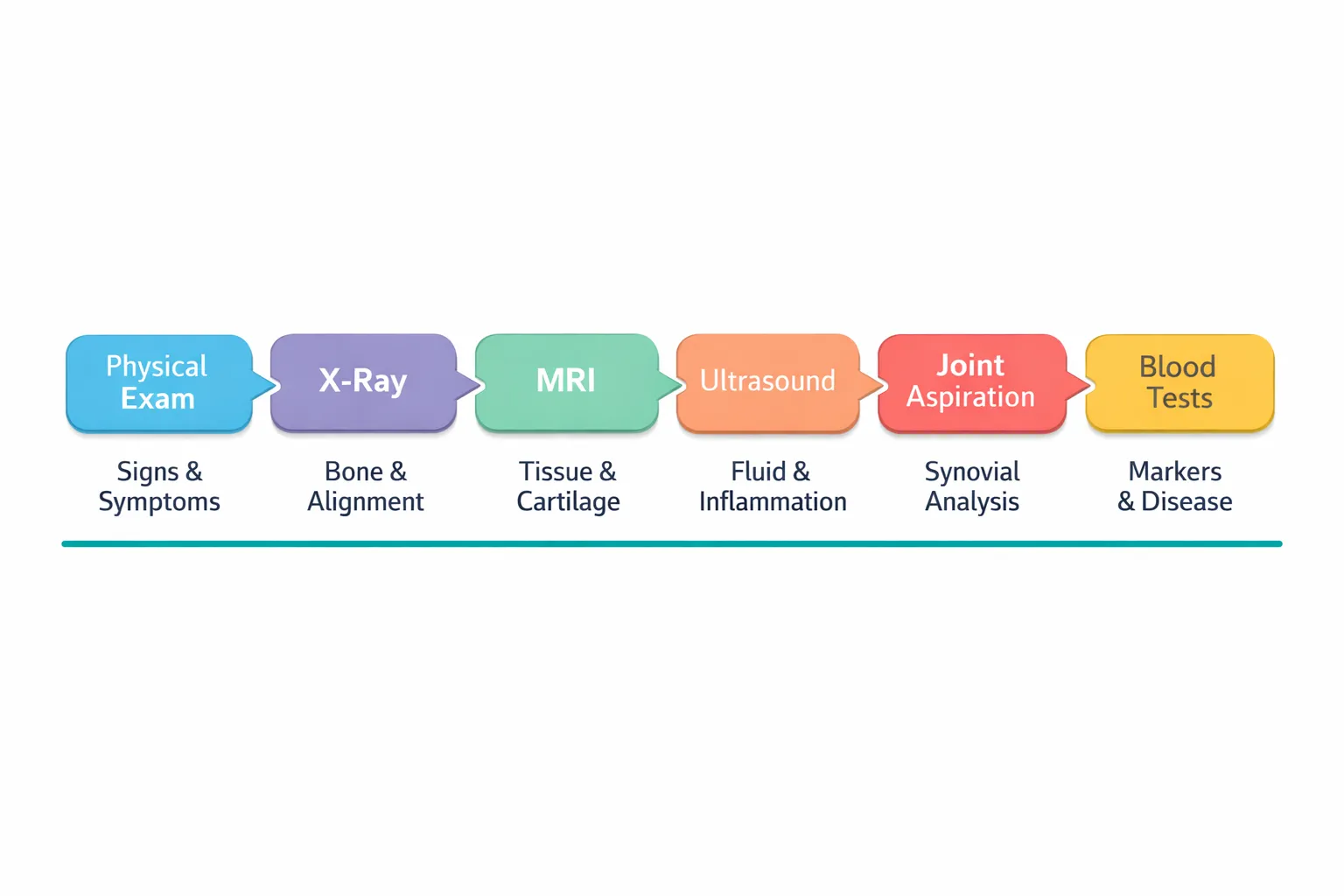
A good diagnostic workup for knee swelling without injury follows a logical path. Here is what you can expect when you walk into a well-equipped orthopedic facility:
One detail most patients don't know: the color of the fluid drawn from the joint tells a completely different story depending on the cause. Clear or pale yellow fluid suggests OA or mild inflammation. Cloudy or murky fluid points to infection. Bloody fluid raises concern for PVNS or a ligament tear. Your doctor reads the fluid like a fingerprint.
The right treatment depends entirely on the correct diagnosis. This is why "just resting" a swollen knee without knowing the cause is not a strategy. It is simply a delay.
• Rest and activity modification: avoid high-impact activities that stress the knee
• Ice application: 15 to 20 minutes every few hours to reduce acute swelling
• Compression and elevation: reduces fluid accumulation in the joint
• NSAIDs (anti-inflammatory medications): for pain and inflammation control
• Weight management: every kilogram of excess body weight adds 4 kilograms of load to the knee joint
• Joint aspiration: fluid removal both diagnoses and provides immediate relief
• Corticosteroid injections: rapid anti-inflammatory relief, short-term
• PRP Therapy: uses your own blood platelets to stimulate natural healing
• Hyaluronic Acid Injections: lubricates the joint, reduces friction and swelling in OA
• Stem Cell Therapy: regenerates damaged joint tissue for eligible patients
• BMAC Therapy: bone marrow aspirate concentrate for cartilage repair
• Exosome Therapy: next-generation regenerative treatment for joint inflammation
• Arthroscopy: minimally invasive surgery for meniscal tears, PVNS, and synovial problems
• Robotic Knee Replacement: for end-stage OA where the joint is beyond conservative repair
Germanten Hospital offers all major advanced treatments for knee swelling—no matter the cause or stage.
Book a Consultation with a Knee Specialist in HyderabadNot all causes of knee swelling are preventable, but many contributing factors are within your control:
• Maintain a healthy weight, as every kilogram you lose reduces knee load significantly
• Strengthen your quadriceps and hamstrings, since strong muscles absorb load so cartilage doesn't have to
• Choose low-impact exercise when symptomatic: swimming, cycling, and walking are kinder to the knee than running and jumping
• Get your uric acid levels checked annually if you have had even one episode of gout
• Ask your doctor for a TSH blood test if you have unexplained joint swelling combined with fatigue, weight gain, or cold intolerance
• Do not ignore bilateral knee swelling. Two swollen knees with no injury is a systemic signal, not a coincidence
• Complete full courses of antibiotics for UTIs and gut infections to reduce the risk of reactive arthritis
Let's return to Meera for a moment. She didn't fall. She didn't twist anything. She just noticed her knee growing larger, and she was lucky enough to take it seriously before the damage became irreversible.
The most important takeaway from this article is simple: knee swelling without injury is never "nothing." It is your body producing a visible, external signal about something happening beneath the surface: in your joints, in your immune system, in your metabolism, or in your bloodstream.
Some causes are manageable with lifestyle changes and simple medication. Others require advanced imaging and targeted treatment. And a few require immediate medical attention.
The one thing all of them have in common is this: the sooner you identify the cause, the more treatment options you have, and the better your outcome will be.
Key takeaways:
• Knee swelling without injury is called non-traumatic knee effusion and has many possible causes
• The 10 causes range from early OA and gout to lupus, hypothyroidism, and the rare PVNS
• Bilateral (both-knee) swelling almost always signals a systemic cause, not a local joint problem
• A proper diagnosis requires physical exam, blood work, imaging, and sometimes joint aspiration
• Treatment options range from rest and medication to regenerative therapies and robotic surgery
• Early diagnosis changes everything and protects your joint from long-term damage
So here is our question for you: Has your knee been quietly swelling without any injury you can point to? If the answer is yes, what would it take for you to stop waiting and start finding out why?
The orthopedic specialists at Germanten Hospital use advanced diagnostics and the full spectrum of treatments—from PRP and regenerative therapies to robotic knee replacement—to find the cause and protect your joint health.
Schedule Your Consultation with Top Orthopedic Doctors in Hyderabad