10 Massages and Stretches for a Frozen Shoulder
June 15, 2023

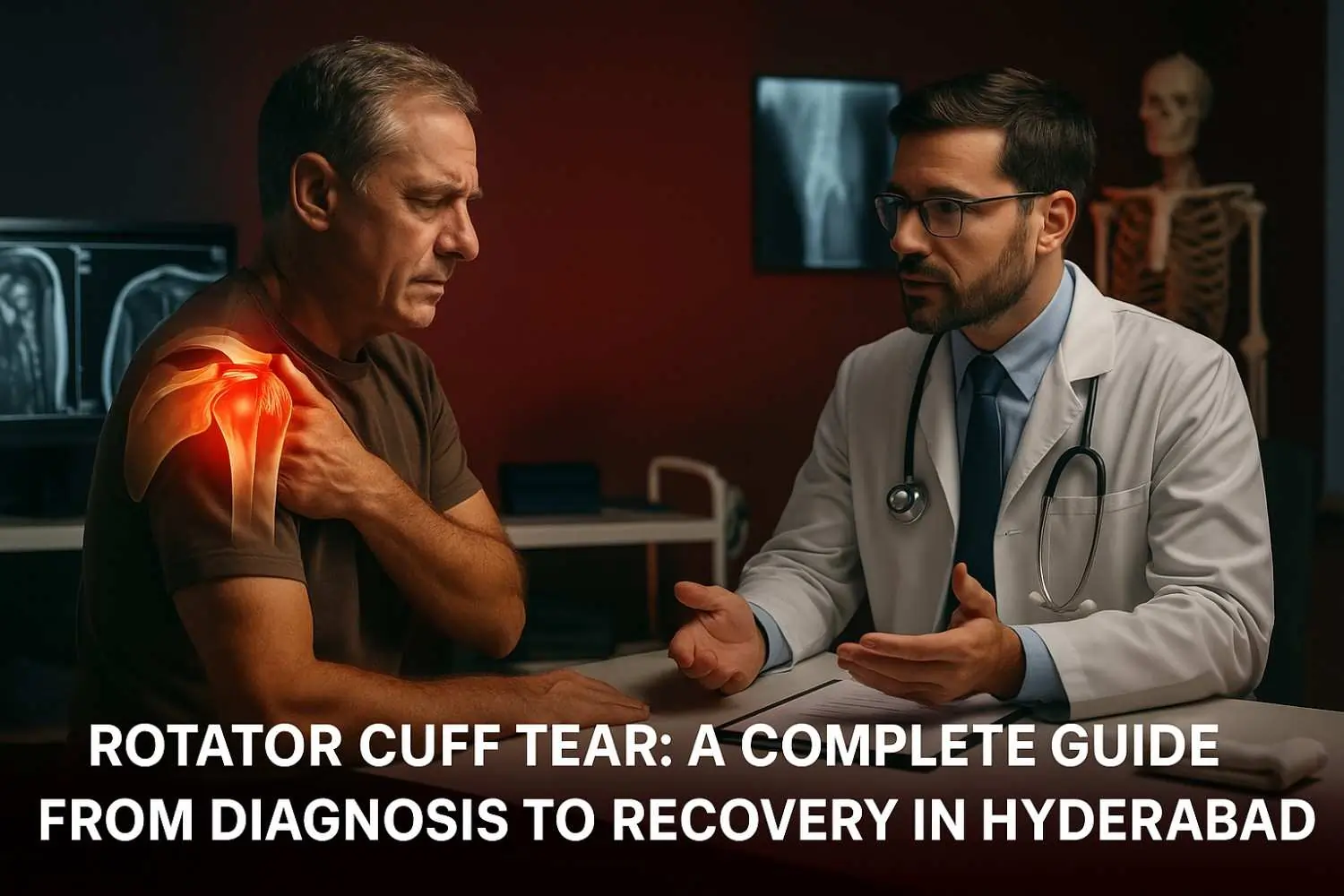
A rotator cuff tear happens when one of the four tendons holding your shoulder together gets damaged or rips. This injury can sneak up on you slowly over months, or it can strike suddenly from a fall or accident. At Germanten Hospital in Hyderabad, our orthopedic surgeon in Hyderabad team sees hundreds of patients every year who didn't recognize their warning signs until the damage got serious. Here's what you need to know.
Your rotator cuff is basically the group of muscles and tendons that keep your shoulder stable and let you move your arm in all directions. When these structures tear, you lose both strength and the ability to move your arm the way you normally do. The tricky part? Some people ignore their symptoms for months, and by then, the tear has grown much larger and harder to fix.
We work with patients at our top orthopedic hospital in Hyderabad who waited too long, and many of them tell us the same thing: "I wish I'd come in sooner." That's why we're sharing these 10 warning signs with you today.
This is the most common sign we see. You reach for something on a shelf, and sharp pain shoots through your shoulder. Or you try to lower your arm slowly, and it hurts. The pain usually sits in the front and outside part of your shoulder. It doesn't go away with rest, and over-the-counter pain pills don't help much.
At Germanten Hospital, our orthopedic consultation in Hyderabad starts with understanding this pain. Is it constant? Does it get worse over time? These questions matter because they tell us if we're dealing with a small tear or something bigger.
You lie down to sleep, and as soon as you roll onto your injured shoulder, pain shoots through you. You can't get comfortable. This happens night after night, and your sleep gets ruined. This is one of the most common symptoms our patients report when they come in for shoulder pain treatment in Hyderabad.
This nighttime pain happens because your shoulder is bearing weight when you lie down, which puts pressure on the torn tendon. Many people think this is just aging or normal stiffness. It's not. It's your body telling you something is wrong.
You notice you can't lift things that used to be easy. Your arm just feels weak, almost like the strength got turned down. This weakness might not even hurt that much – it's just there. You go to pick up a bag of groceries, and you can't do it like you used to.
This weakness is different from being tired. It's a real loss of strength. Our bone specialist in Hyderabad team knows that this weakness often means the muscle is damaged, not just inflamed.
Try to lift your arm straight up over your head. If you have a rotator cuff tear, you might not be able to do it at all. Or if you try, sharp pain stops you. You can reach your arm out to the side, but lifting it up? That's painful or impossible.
This loss of motion is a red flag. It means the tear has probably gotten pretty significant.
Reaching into high cupboards hurts. Combing your hair becomes painful. Throwing something across the room? Forget about it. Any movement where your arm goes up and back causes trouble.
If you play sports like tennis or baseball, this sign shows up fast. Athletes notice it right away because their throwing arm stops working right. People with desk jobs might miss this sign because they don't do many overhead movements.
You move your shoulder, and you hear or feel a click. Or maybe a pop. Sometimes it hurts, sometimes it doesn't. But it's there, and it shouldn't be.
This clicking tells us the tendon is moving in a way it shouldn't, or rough surfaces are grinding together inside the joint. At our orthopedic hospital in Hyderabad, we use imaging to see what's really happening when we hear these sounds.
You can't dress yourself without pain. Washing your hair hurts. Buckling your seatbelt is hard. These aren't athletic activities – they're just normal life stuff. But a rotator cuff tear makes them tough.
This is when people really start thinking about seeing a doctor. It's one thing to not be able to play sports. It's another when you can't get dressed in the morning.
You sit for a while, and when you get up, your shoulder feels tight and stiff. Morning stiffness is especially bad. It takes a while of moving around before the stiffness goes away.
This stiffness is your body's way of protecting the injured area. The muscles tighten up to stop movement that might hurt.
Maybe you fell. Maybe you tried to lift something heavy and felt something snap. Suddenly, you have intense pain, and your arm goes weak right away.
This is an acute tear – it happens all at once instead of slowly over time. If this happens to you, don't wait. Come see us for advanced rotator cuff surgery in Hyderabad as soon as you can.
Look at both shoulders. Is one noticeably smaller than the other? The muscle above your shoulder blade might look flat or smaller on the injured side. This is muscle atrophy – the muscle has shrunk because it's not working right.
This is a sign that the tear has been there for a while. It means you probably need surgery, not just physical therapy.
Here's the hard truth: every week you wait, your tear can get bigger. About 42 out of every 100 rotator cuff tears get larger over time. Your muscle starts to fill with fat instead of staying strong. After a certain point, surgery can't fix that damage.
If you wait too long, the tear becomes what doctors call "irreparable." That means surgery can't put it back together properly. You end up needing a special procedure called a reverse shoulder replacement instead, which is a much bigger surgery with a longer recovery.
Your shoulder joint can also develop arthritis from the tear. This is called rotator cuff tear arthropathy. It's painful, it's permanent, and it gets worse over time. The best way to stop it? Fix the tear early.
We see patients at Germanten Hospital every month who tell us, "If I'd just come in when it first started hurting, I wouldn't be in this mess now." Don't be that person.
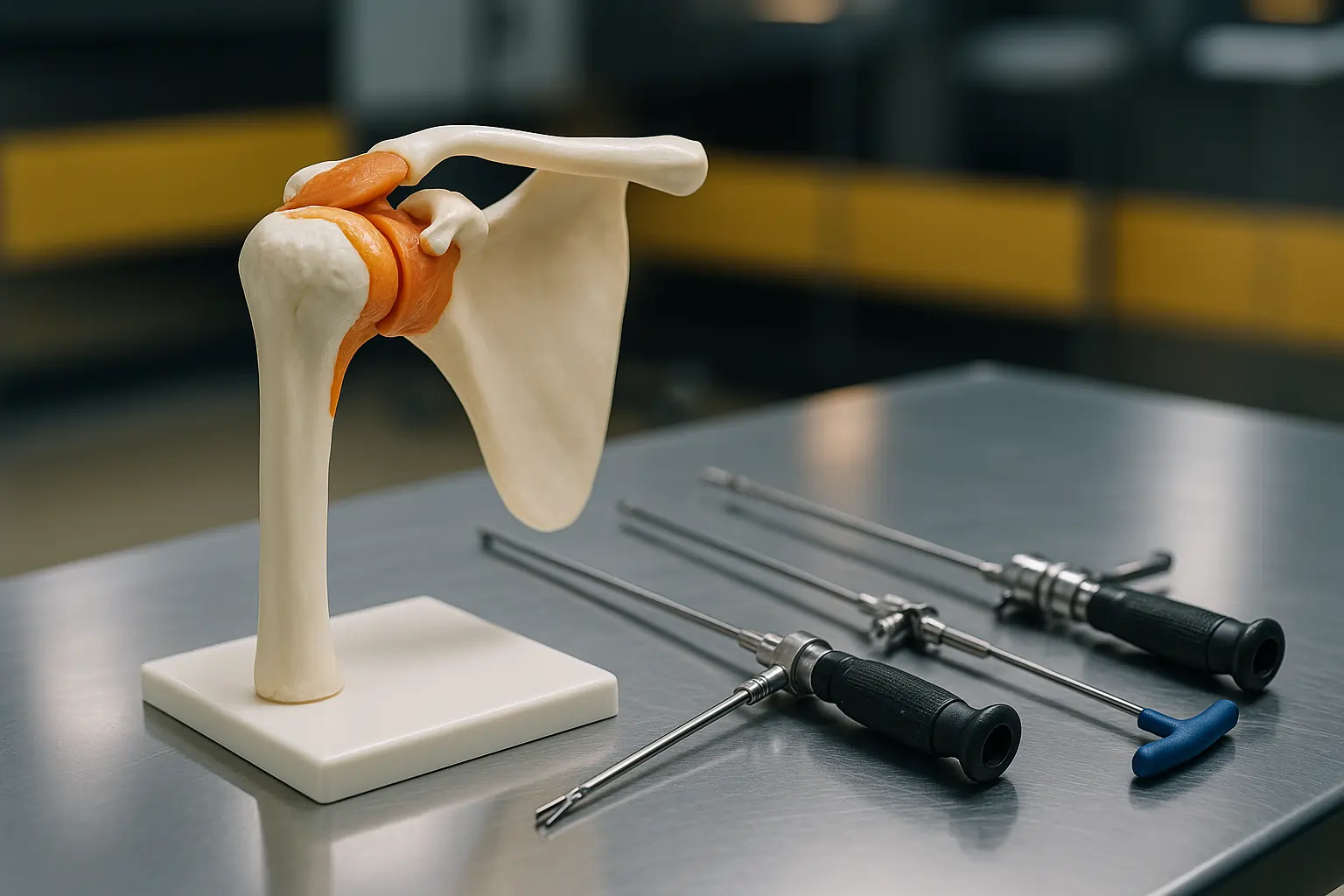
At Germanten Hospital, we offer minimally invasive rotator cuff repair using shoulder arthroscopy. This is completely different from old-fashioned open surgery where they cut you wide open.
Here's how it works: we make three or four tiny cuts – about the size of a grain of rice – around your shoulder. Through one cut, we put in a tiny camera so we can see inside your shoulder on a screen. Through the other cuts, we put in special small tools. We look at exactly where the tear is, clean up any damaged tissue, and then reattach the tendon to the bone using small anchors and stitches.
The whole thing takes about an hour. You go home the same day or stay one night. You wake up with a small bandage, not a big scar.
When you get minimally invasive rotator cuff repair, you hurt less after surgery. The tiny cuts mean way less tissue damage. You don't need strong pain medication for weeks and weeks. You get back to normal faster.
With regular open surgery, they cut through muscle to get to the tendon. That muscle damage takes months to heal. With arthroscopy, there's barely any muscle damage at all.
Most patients can start moving their shoulder within days instead of weeks. You can go back to desk work in a few weeks instead of months. And your shoulder works better at the end because there's less scar tissue.
After your advanced rotator cuff surgery in Hyderabad, here's what to expect.
Weeks 1-3: Your arm is in a sling. You take pain medicine as needed. You start doing gentle hand and wrist exercises to keep blood flowing.
Weeks 3-6: You stop wearing the sling part-time. You start gentle movements without any weight or resistance. Physical therapy starts.
Weeks 6-12: You take the sling off completely. You start strengthening exercises with light resistance. You begin doing more normal activities.
Weeks 12+: You do strengthening exercises with more resistance. You start playing sports or doing demanding activities. Most people are pretty much back to normal around 4-6 months for smaller tears. Larger tears take longer – up to a year or more.
On average, full recovery takes about 14 months. That sounds like a long time, but it beats the alternative: dealing with a shoulder that doesn't work right for the rest of your life.
Don't wait until you can't move your arm at all. Come in if shoulder pain lasts more than a couple of weeks. Come in if you can't sleep because of shoulder pain. Come in if your arm feels weak. Come in if you hear popping or clicking.
Call us for an orthopedic consultation in Hyderabad if any of these 10 signs sound like what you're experiencing. Our bone specialist in Hyderabad can often tell if you have a tear just by examining you and asking questions. We use ultrasound and MRI imaging to see exactly what's going on inside your shoulder.
The sooner we catch it, the easier it is to fix. And easier to fix means faster recovery and better results.
Not all orthopedic surgeon in Hyderabad offices are the same. You want someone who has lots of experience with arthroscopic surgery. You want someone who listens to your problems and explains things clearly.
At Germanten Hospital, we specialize in exactly this kind of surgery. We have the newest equipment. Our surgeons have done hundreds and hundreds of these procedures. Most importantly, we care about getting you better and getting you back to your life.
When you come in for shoulder pain treatment in Hyderabad, we don't rush you. We take time to understand your pain, where it comes from, and what's causing it. We explain your options clearly. We answer your questions.
Germanten is one of the top orthopedic hospital in Hyderabad for rotator cuff repairs. Our orthopedic hospital in Hyderabad has invested in the best technology for arthroscopic surgery. Our doctors have trained at top hospitals around India and the world.
But what really matters is results. Our patients get better. They get back to work. They get back to sports. They get back to their lives. Patients tell us that coming to Germanten Hospital was the best decision they made about their shoulder.
Don't ignore shoulder pain. Don't hope it goes away on its own. Don't wait until you can't move your arm.
If you have any of these 10 signs of a rotator cuff tear, contact an orthopedic surgeon in Hyderabad right away. The difference between getting treated now and waiting 6 months is huge. Waiting can mean the difference between a quick recovery and permanent damage.
At Germanten Hospital, we're ready to help. We'll examine you, figure out exactly what's wrong, and fix it with the latest minimally invasive rotator cuff repair techniques. Your shoulder is too important to mess around with.
Call us today to schedule your orthopedic consultation in Hyderabad. Your future self will thank you.