10 Massages and Stretches for a Frozen Shoulder
June 15, 2023
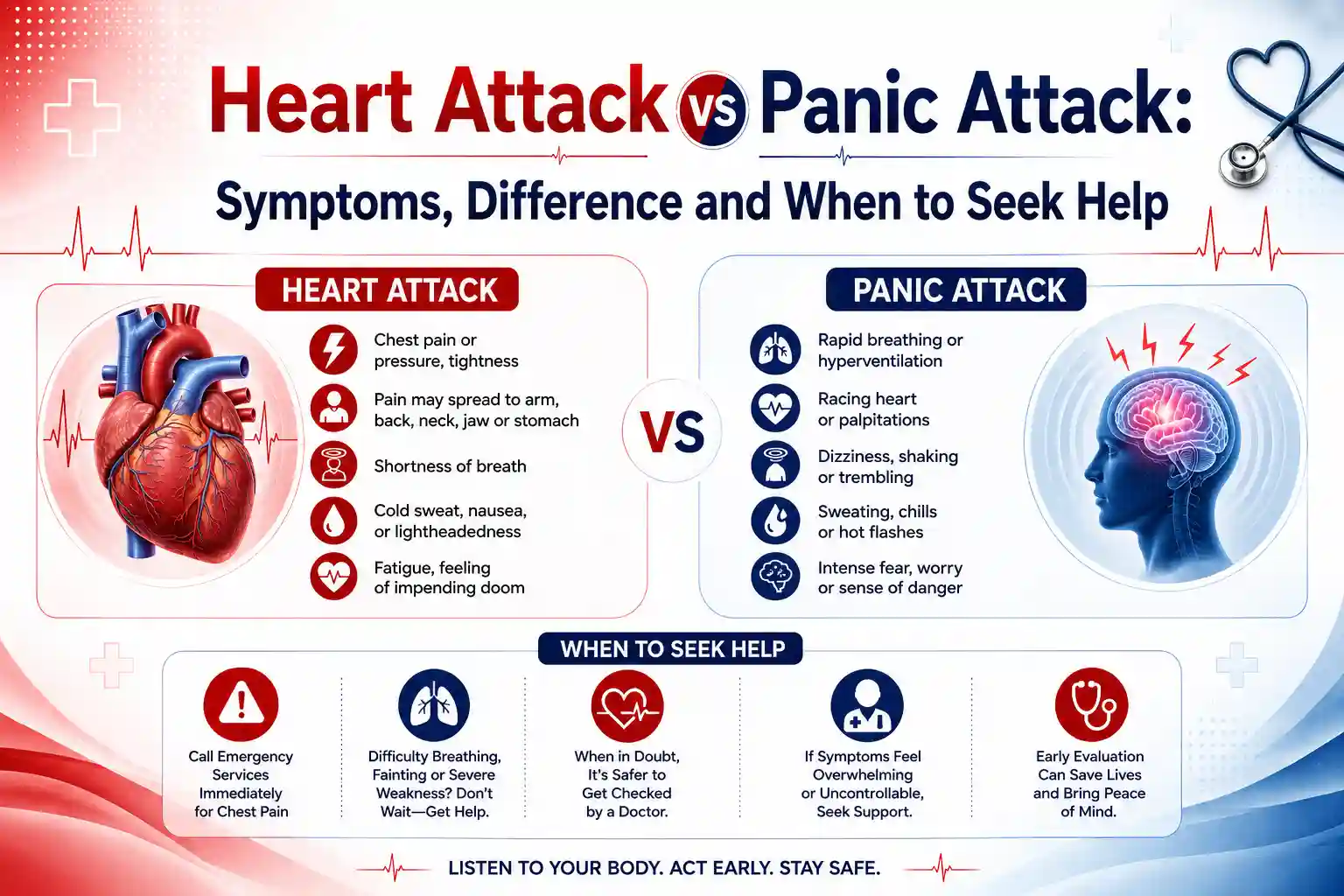
Your chest tightens. Your heart is racing. You cannot catch your breath. Is this a heart attack, or is it a panic attack? For many people in high-pressure jobs across Hyderabad, this question arrives without warning, often at a desk, in traffic, or in the middle of the night.
Heart attack vs panic attack is one of the hardest medical comparisons to make in the moment because the two conditions can feel almost identical. Both can cause chest pain, a racing heart, sweating, breathlessness, and a sense of dread. However, one is related to the body's response to intense fear or anxiety, while the other may be caused by a life-threatening reduction in blood flow to the heart. Knowing the general differences, and knowing when not to guess, can change the outcome.
Both conditions activate the body's stress response. During a panic attack, a surge of stress hormones can trigger a racing heart, rapid breathing, sweating, trembling, and chest tightness, even when there is no blockage in the heart.
During a heart attack, similar symptoms may appear because part of the heart muscle is not receiving enough oxygen-rich blood. The overlap in symptoms is exactly why doctors do not rely only on how an event feels when distinguishing between a heart attack and a panic attack.
Heart attack chest discomfort often begins gradually, sometimes starting as mild pressure, tightness, burning, or heaviness that worsens over several minutes. It may feel like squeezing, fullness, or a heavy weight pressing on the chest.
The discomfort may spread to the arm, shoulder, jaw, neck, upper abdomen, or back. Heart attack symptoms may appear or worsen during physical exertion and may not improve with rest, slow breathing, or calming techniques.
Women may experience less typical warning signs, including nausea, unusual fatigue, breathlessness, dizziness, back pain, or jaw pain. In some cases, significant chest pain may not be present.
A panic attack usually begins suddenly and may reach peak intensity within several minutes. The chest discomfort may feel sharp, stabbing, fluttering, or difficult to describe rather than like a persistent crushing pressure.
Panic attacks may be triggered by emotional stress, fear, trauma, or an overwhelming situation, although they can also occur without an obvious trigger. Symptoms often begin to improve within 20 to 30 minutes, particularly when the person uses controlled breathing, grounding techniques, or other calming methods.
The following comparison provides general guidance about how the two conditions commonly differ:
| Feature | Panic Attack | Heart Attack |
|---|---|---|
| Onset | Usually sudden and may peak within several minutes | May begin gradually and intensify over several minutes |
| Pain quality | Often sharp, stabbing, fluttering, or tight | Often pressure, squeezing, heaviness, fullness, or burning |
| Pain location | Often remains mainly in the chest | May spread to the arm, jaw, shoulder, neck, back, or upper abdomen |
| Triggered by exertion | Usually not, unless exercise is connected with an emotional trigger | May appear or worsen during physical exertion |
| Response to rest or calming | May improve with slow breathing, grounding, or reassurance | May persist, return, or worsen despite rest |
| Typical duration | Often improves within 20 to 30 minutes, although symptoms can last longer | Usually lasts more than a few minutes or returns in waves |
| Common additional symptoms | Intense fear, trembling, tingling, dizziness, or a feeling of unreality | Cold sweat, nausea, breathlessness, faintness, or arm and jaw discomfort |
These patterns are useful general guides, but they are not a diagnostic test. Heart attacks do not always follow the typical pattern, and panic attacks can also produce severe physical symptoms. This is why chest pain should not be self-diagnosed using symptoms alone.
The relationship between anxiety and heart health goes beyond confusing symptoms. Chronic anxiety and prolonged stress may contribute to cardiovascular risk through persistently elevated stress hormones, poor sleep, high blood pressure, reduced physical activity, smoking, unhealthy eating habits, or other coping behaviours.
This can be particularly relevant for Hyderabad's fast-paced professional workforce, where long working hours, frequent travel, poor sleep, limited exercise, and sustained workplace pressure are common.
Having anxiety does not mean that a person will have a heart attack. However, recurring anxiety, ongoing chest discomfort, high blood pressure, diabetes, high cholesterol, or a family history of heart disease should be discussed with a qualified doctor.
If chest pain is new, severe, lasts more than a few minutes, keeps returning, or occurs with breathlessness, sweating, nausea, dizziness, faintness, or discomfort spreading to the arm, shoulder, jaw, neck, or back, treat it as a possible heart attack and seek emergency medical care immediately.
You should be especially cautious if you are over 40 or have diabetes, high blood pressure, high cholesterol, obesity, a smoking history, known heart disease, or a family history of early heart disease.
Do not wait at home to see whether the symptoms pass, and do not assume that chest pain is anxiety simply because you are experiencing stress.
When a patient arrives with chest pain, doctors do not guess whether anxiety or a cardiac condition is responsible. They evaluate the symptoms, medical history, vital signs, and cardiovascular risk factors before ordering the appropriate tests.
An ECG test may be performed within minutes to examine the heart's electrical activity and identify changes that could indicate reduced blood flow, an abnormal rhythm, or a heart attack.
A troponin blood test may be ordered to look for chemical evidence of heart muscle injury. Because troponin levels can change over time, the test may be repeated after several hours when the first result is normal but symptoms or clinical findings remain concerning.
Depending on the patient's condition, doctors may also recommend a 2D echocardiogram, chest imaging, continuous heart rhythm monitoring, or other investigations. These tests help rule out a heart-related emergency before symptoms are attributed to anxiety.
If cardiac tests are reassuring and the symptoms follow a typical panic attack pattern, the patient can receive appropriate advice, reassurance, and referral for anxiety or mental health support when needed.
A reliable distinction between a panic attack and a heart attack requires medical evaluation. This commonly includes a clinical examination, an ECG, and troponin blood testing when clinically indicated.
Seeing a cardiologist in Hyderabad for a proper heart evaluation, even after symptoms have settled, may help rule out a cardiac cause, identify risk factors, and provide appropriate guidance for future episodes.
Heart attack and panic attack symptoms can appear very similar in the moment, but the risks of getting the distinction wrong are too serious to rely on guesswork. When chest pain is new, severe, persistent, or accompanied by other warning signs, treat it as a possible heart attack and seek emergency medical care.
If you have experienced unexplained chest pain, breathlessness, recurring palpitations, or want a thorough cardiac evaluation for peace of mind, book a cardiology appointment with Germanten Hospitals in Attapur, Hyderabad.
Anxiety is not usually considered a direct cause of a heart attack in an otherwise healthy heart. However, long-term anxiety and chronic stress may contribute to cardiovascular risk by affecting blood pressure, sleep, lifestyle habits, and stress hormone levels.
Heart attack discomfort may build gradually, worsen with exertion, spread to the arm or jaw, and persist despite rest. Panic attack symptoms often begin suddenly, peak quickly, and may improve with calming techniques. However, these are only general patterns. When in doubt, get emergency medical evaluation rather than guessing.
Yes. If you cannot confidently explain new chest pain, especially when it is severe or accompanied by breathlessness, sweating, nausea, faintness, or spreading discomfort, treat it as a possible heart attack and seek emergency care.
Yes. Abnormal heart rhythms and other cardiovascular conditions can cause palpitations, breathlessness, dizziness, sweating, and a sense of unease that may resemble anxiety. A medical evaluation is needed to determine the cause.
Long working hours, poor sleep, inactivity, chronic stress, unhealthy eating habits, and smoking may increase the likelihood of anxiety symptoms as well as cardiovascular risk factors. Professionals experiencing recurring chest discomfort should consult a doctor rather than assuming stress is the only cause.
Slow breathing, grounding techniques, sitting in a safe place, relaxing tense muscles, and focusing attention on visible or touchable objects may help reduce panic symptoms. These techniques should not be used to delay emergency care when symptoms could represent a heart attack.