10 Massages and Stretches for a Frozen Shoulder
June 15, 2023
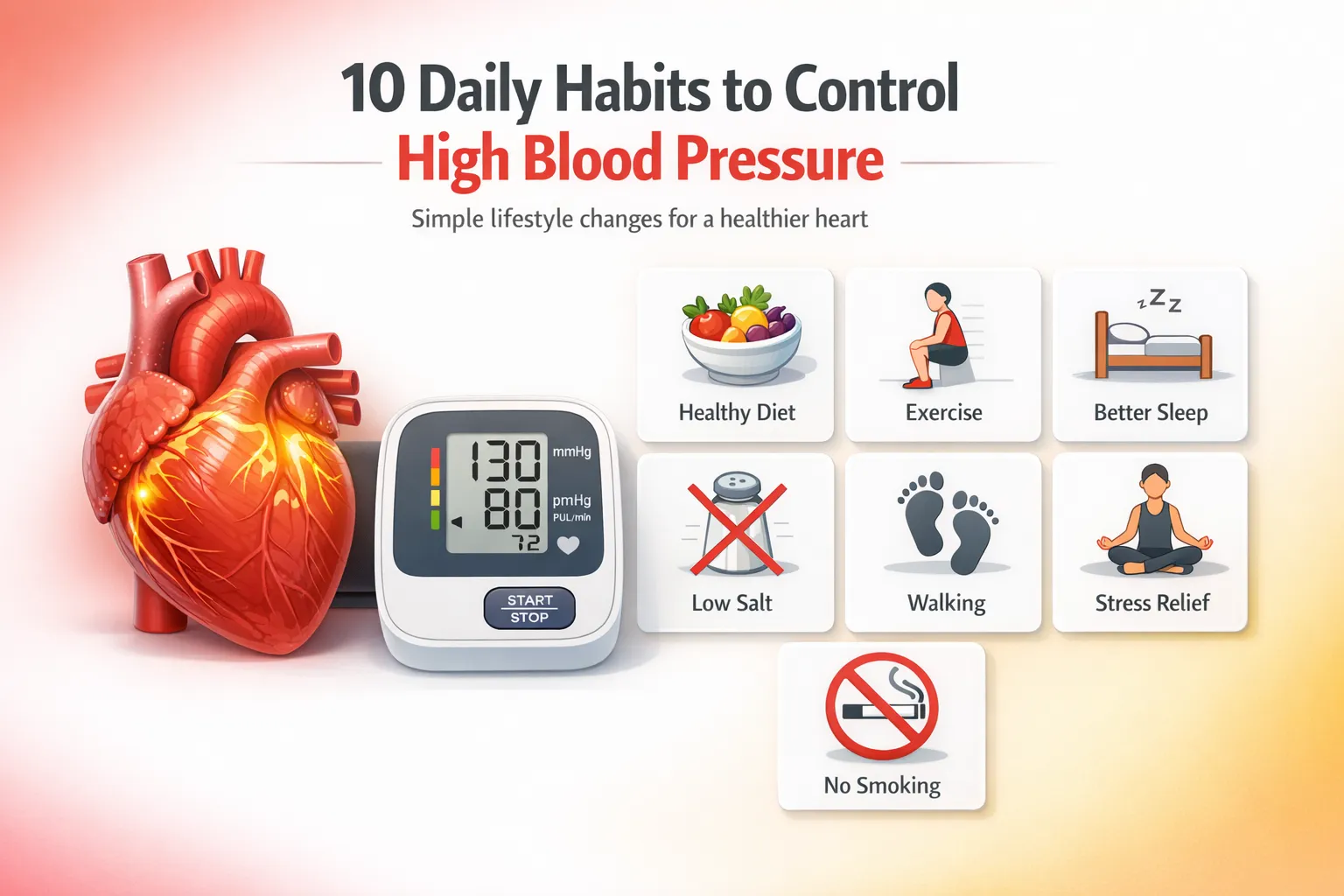
Ravi was 34 and worked at an IT park in Hyderabad. His mornings started with chai, his lunches were biryani from the office canteen, and his idea of exercise was a short walk to the parking lot. When a routine company check-up showed a blood pressure reading of 148/94, he laughed it off. "I am too young for all that," he told the doctor.
Three months later, Ravi woke up at 2 AM with crushing chest pain. His wife rushed him to the emergency room. He survived. But his cardiologist told him something that changed his life forever: "Your heart does not care how old you are. It only cares about what you do every single day."
Ravi's story is far more common than you think. Over 230 million Indians live with high blood pressure, according to NFHS-5 data published in BMC Public Health (2024). And here is the scariest part: only 7.8% of them have it under control, as reported by the Lancet Regional Health Southeast Asia.
Is your blood pressure a concern? Book a Cardiology Consultation at Germanten Hospital — expert heart care is just one step away.
High blood pressure (hypertension) is a condition where blood pushes against your artery walls with too much force, silently damaging your heart, brain, kidneys, and blood vessels over time.
The 2025 AHA/ACC Guideline now calls it the "#1 preventable risk factor" for heart attack, stroke, heart failure, and even dementia. But the same research also shows that simple daily habits can lower your numbers dramatically. Sometimes, these habits work as well as medication.
Here are 10 research-backed habits that can protect your heart starting today.
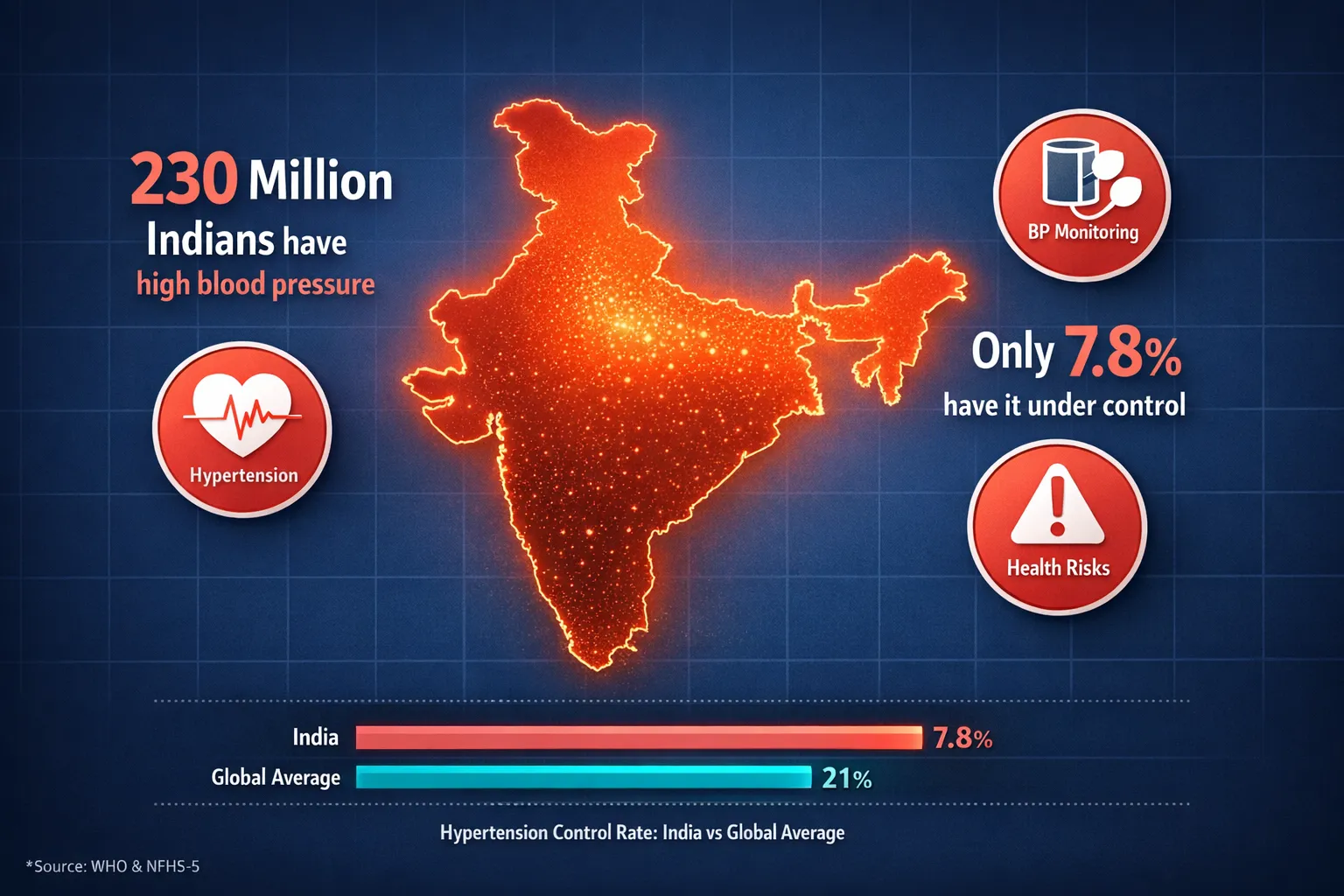
Before we get into the habits, let us look at why this topic is urgent. According to the WHO, hypertension affects 1.28 billion adults worldwide, and only 1 in 5 have it under control. The Global Burden of Disease 2019 study found that 19% of all global deaths are linked to elevated blood pressure.
In India, the problem is even worse. A 2024 study in Hypertension Research found that hypertension is growing fastest among young and rural populations. Developed states and metros like Hyderabad, where stressful jobs and rich food are part of daily life, show even higher rates.
Here is what the updated 2025 guidelines changed: the blood pressure goal is now <130/80 mmHg for all adults. People with Stage 1 hypertension (130-139/80-89) already have double the risk of heart attack and stroke compared to those with normal readings. And for the first time, the guidelines highlight a strong link between high blood pressure and cognitive decline and dementia, as noted by Harvard Health (December 2025).
1. Eat the DASH Way (Yes, It Works With Indian Food)
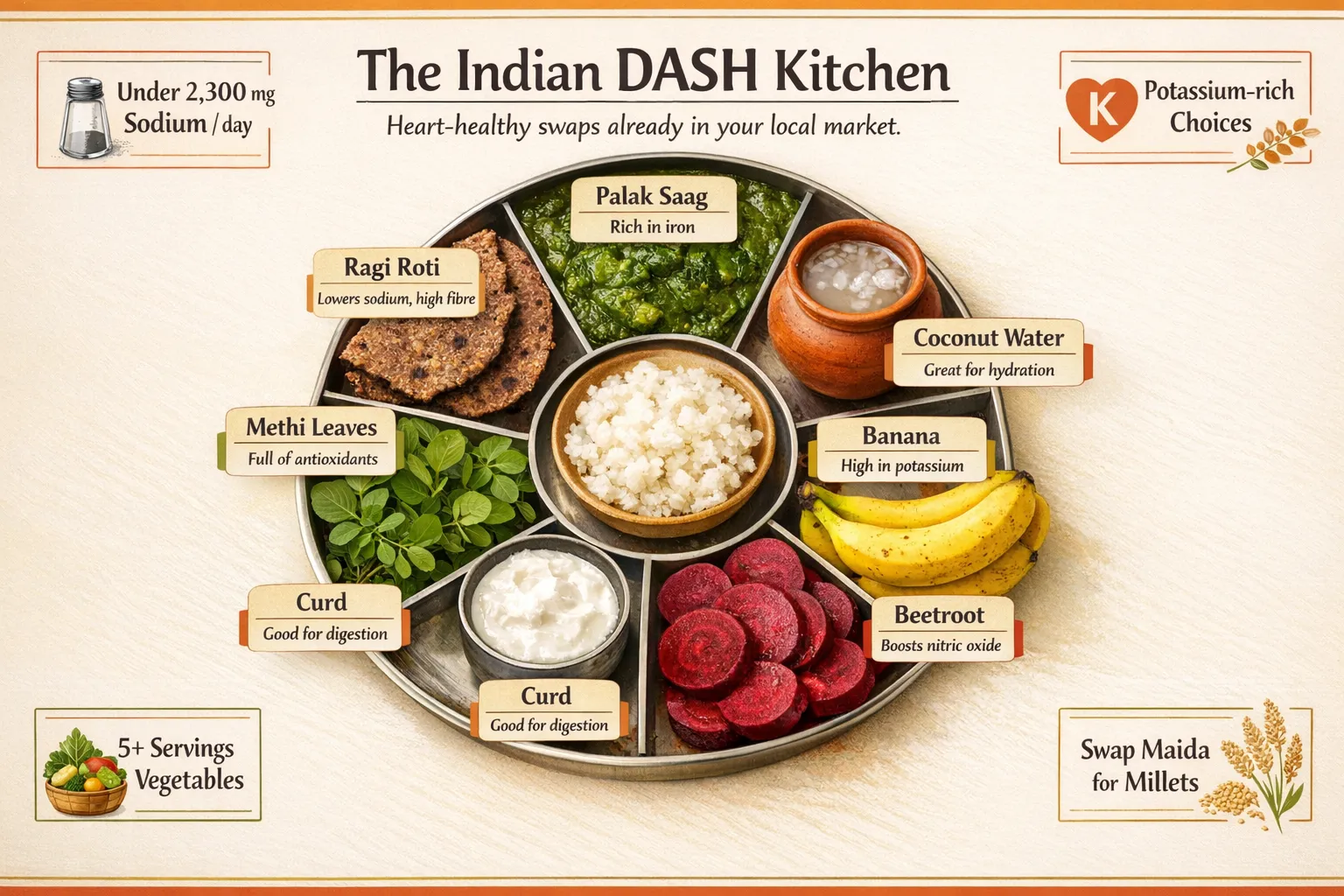
The DASH eating plan (NHLBI) is proven to lower systolic blood pressure by 8 to 14 mmHg. It focuses on fruits, vegetables, whole grains, and low-fat dairy while cutting sodium.
What most articles miss is how to make DASH work in an Indian kitchen. Swap maida roti for ragi roti. Replace fried snacks with roasted chana. Use coconut water instead of cola for a potassium boost. Dal, curd, palak, methi, banana, and beetroot are all DASH-friendly foods that are already in your local market. The goal is to keep sodium under 2,300 mg per day, and ideally under 1,500 mg.
Want a personalised Indian diet plan for heart health? explore our Lifestyle & Nutritional Counseling program — designed for real Indian kitchens.
2. Try Wall Squats (The Exercise Cardiologists Are Talking About)
Here is the surprising truth about exercise and blood pressure. Walking is great. But it is not the most effective. A massive 2023 meta-analysis in the British Journal of Sports Medicine analyzed 270 trials with 15,827 people. The result? Isometric exercises (like wall squats and planks) reduced blood pressure by 8.24/4.00 mmHg, beating aerobic exercise, resistance training, HIIT, and combined training.
That is comparable to some blood pressure medications. Try holding a wall squat for 2 minutes, rest for 2 minutes, and repeat 4 times. Do this 3 days a week. It takes less than 15 minutes and you do not need a gym.
3. Fix Your Sleep Schedule (Duration Alone Is Not Enough)
Most articles tell you to "sleep 7 to 8 hours." That is incomplete. Research presented at ACC 2024 found that sleeping less than 7 hours raises hypertension risk by 7%, and less than 5 hours raises it by 11%.
But what most people do not realize is that sleep regularity matters more than total hours. An AHA scientific statement found that people with consistent sleep-wake times had a 22% to 57% lower risk of cardiovascular death. Going to bed at 11 PM on weekdays and 2 AM on weekends ("social jetlag") disrupts your body's natural blood pressure dip during the night.
Also worth knowing: habitual snoring raises hypertension risk by 17%, and excessive daytime sleepiness raises it by 42%, per a French study of over 34,000 adults cited in Hypertension Research (2026). If you snore loudly every night, talk to your doctor about a sleep study.
4. Cut Hidden Sodium (The Salt Shaker Is Not the Problem)
About 80% of the sodium you eat does not come from the salt shaker on your table. It comes from processed and restaurant food. In an Indian context, the biggest culprits are packaged namkeen, instant noodles, ready-to-eat curries, restaurant biryani, pickles (achaar), and bakery biscuits.
A practical approach: cook at home at least 5 days a week. Season food with lemon, garlic, cumin, and coriander instead of extra salt. Read labels before buying packaged food. Anything with more than 20% Daily Value of sodium is considered high.
5. Walk After Every Meal (Your Grandmother Was Right)
A 15-minute walk within 30 minutes of eating improves blood sugar response and reduces arterial stiffness. The traditional Indian practice of "shatapavali" (100 steps after a meal) turns out to be backed by modern science. This is especially helpful after dinner, when most people sit on the couch or go straight to bed.
6. Feed Your Gut (The Microbiome-Heart Connection Most Doctors Skip)
This is something almost no health blog covers. The American Heart Association published a Science Advisory in 2025 confirming that your gut bacteria directly influence blood pressure. The microbiome produces short-chain fatty acids (like butyrate) that improve blood vessel function and reduce inflammation.
What does this mean for you? Eat more fermented foods: homemade curd, buttermilk (chaas), idli and dosa batter, and fiber-rich millets like ragi and jowar. These feed the good bacteria in your gut, which in turn help keep your blood pressure in check.
7. Breathe on Purpose (The 4-7-8 Technique)
Chronic stress keeps your body in fight-or-flight mode, which constricts blood vessels and raises heart rate. One of the simplest tools to break this cycle is the 4-7-8 breathing technique: breathe in for 4 seconds, hold for 7, and breathe out slowly for 8 seconds. Repeat this 4 times.
Do it first thing in the morning, during a work break, or before bed. If you already practice pranayama or meditation, you are ahead of the curve. The key is consistency. Calming your nervous system for even 5 minutes a day helps lower blood pressure naturally.
8. Monitor Your BP at Home (Because the Clinic Reading Can Lie)
"White coat hypertension" is real. Many people show high readings at the doctor's office but normal readings at home, and vice versa. The 2025 AHA/ACC guideline now strongly recommends home monitoring with a validated upper-arm cuff. Yet only 12% of hypertensive Indians own a self-monitoring device.
Check your BP every morning after using the bathroom. Sit quietly for 3 to 5 minutes first. Do not talk or cross your legs during the reading. Keep a written log and share it with your cardiologist at every visit. This gives a much clearer picture of your true baseline than a single clinic reading.
Not sure which specialist to see? Meet our expert cardiologists at Germanten Hospital and find the right doctor for your heart care.
9. Eat Dinner Earlier (Meal Timing Affects Blood Pressure)
This is one of the newest findings in cardiology. A review published in Hypertension Research (February 2026) found that late eating patterns, including lunch after 1 PM and heavy evening meals, are linked to a higher risk of hypertension. A separate analysis found that going to sleep around 10 PM was associated with the lowest cardiovascular risk.
In Hyderabad, late-night biryani runs and 10 PM dinners are part of the culture. But your body's internal clock matters. Try finishing dinner by 7:30 to 8 PM. It gives your digestive and cardiovascular systems time to recover before sleep.
10. Quit Tobacco Completely and Limit Alcohol
The 2025 AHA/ACC guideline is unambiguous: reducing or eliminating alcohol is strongly recommended for blood pressure management. For tobacco, there is no safe level. This includes cigarettes, bidis, gutka, and paan with tobacco. NFHS-5 data shows that tobacco users in India are significantly less likely to have their blood pressure under control.
If quitting feels impossible, ask your doctor about support programs. Behavioral counseling combined with medication can double your chances of quitting for good.
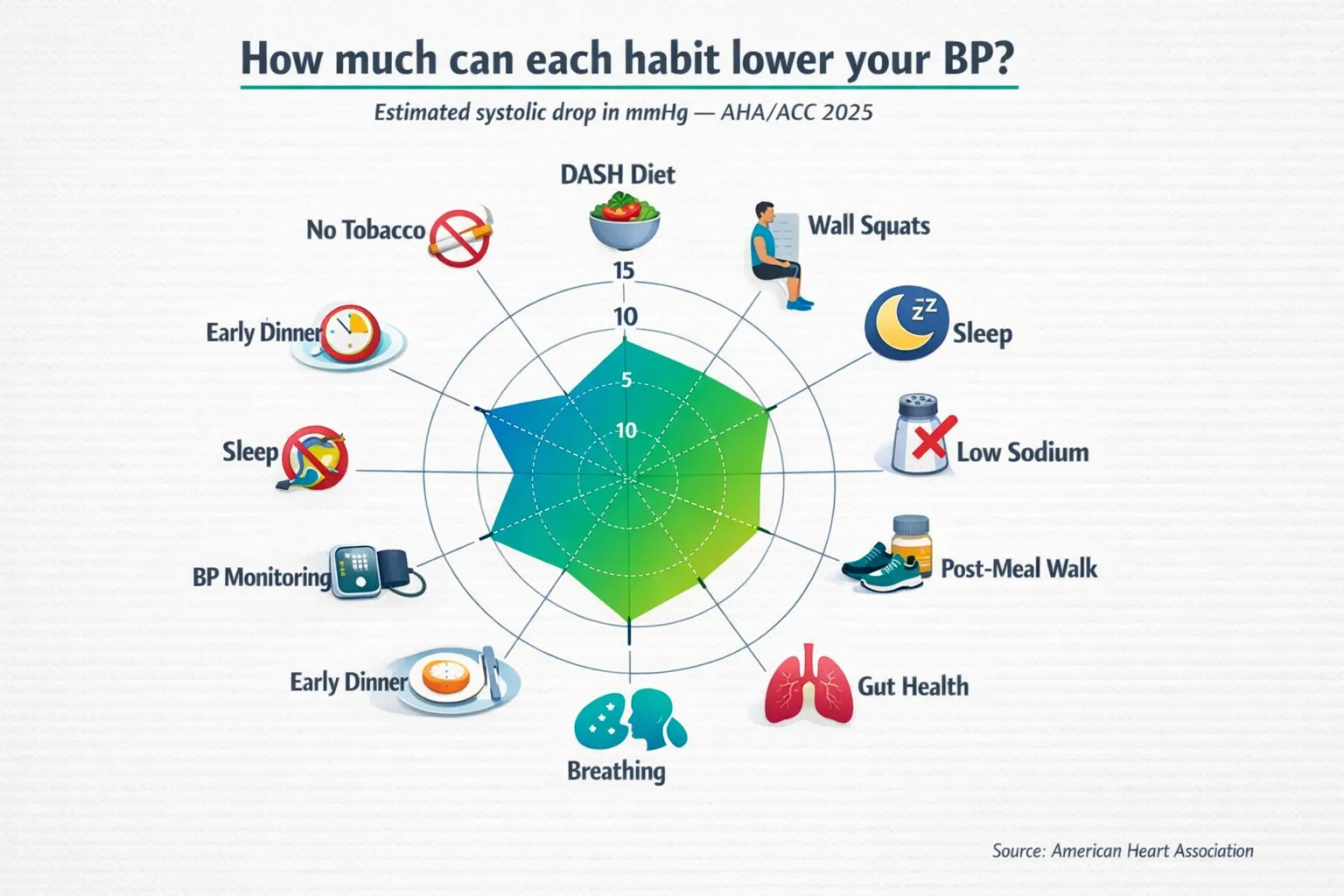
Here is a quick snapshot of the estimated blood pressure reduction from each habit, based on published research:
| Daily Habit | Estimated Systolic BP Drop | Source |
|---|---|---|
| DASH Diet | 8 to 14 mmHg | NHLBI |
| Isometric Exercise (Wall Squats) | 8.24 mmHg | BJSM 2023 |
| Consistent Sleep (7-9 hrs, regular) | 4 to 7 mmHg | AHA 2024-25 |
| Sodium Reduction (<1,500 mg) | 5 to 6 mmHg | AHA/ACC 2025 |
| Post-Meal Walking | 2 to 4 mmHg | Multiple studies |
| Gut-Healthy Diet | 2 to 5 mmHg | AHA Advisory 2025 |
| Stress Reduction (Breathing/Meditation) | 3 to 5 mmHg | AHA |
| Home Monitoring (Improves Adherence) | Indirect benefit | AHA/ACC 2025 |
| Earlier Meal Timing | Emerging data | Hypertension Res. 2026 |
| No Tobacco + Limit Alcohol | 4 to 8 mmHg | AHA/ACC 2025 |
Combined effect: When you stack multiple habits together, the reductions add up. Many patients who adopt 4 to 5 of these habits see drops of 15 to 25 mmHg in systolic pressure, which is on par with prescription medication.
Air pollution raises your blood pressure. If you live in a city with high PM2.5 levels, your heart is already working harder. On high-pollution days, limit outdoor exercise and keep windows closed.
Loneliness is a cardiovascular risk factor. Social isolation increases inflammation and sympathetic nervous system activity. Staying connected with family, friends, or community groups is genuinely protective for your heart.
Your dentist might spot trouble first. Periodontal (gum) disease is associated with hypertension. If your gums bleed when you brush, that is worth mentioning to both your dentist and your heart specialist in Hyderabad.
Is your blood pressure a concern? Book a Cardiology Consultation at Germanten Hospital — expert heart care is just one step away.
High blood pressure does not shout. It whispers. And by the time it raises its voice, the damage is often already done. But the research is clear: 10 simple, daily habits can change the story. You do not need to overhaul your life overnight. Start with one. Maybe it is a wall squat after work. Maybe it is swapping namkeen for roasted chana. Maybe it is going to bed at the same time every night.
Remember Ravi from the beginning of this article? He started with just two habits: home BP monitoring and a 15-minute walk after dinner. Six months later, his reading dropped from 148/94 to 126/78 without any change in medication. Small choices, repeated daily, add up to big results.
If you or someone in your family has been told they have high blood pressure, do not wait for symptoms to appear. The cardiology team at Germanten Hospital, Hyderabad, led by Dr. Mohammed Wasif Azam, offers comprehensive heart care in Hyderabad, from advanced diagnostics to personalized lifestyle counseling, all under one roof at this best multispecialty hospital Hyderabad families trust.
Want a personalised Indian diet plan for heart health? explore our Lifestyle & Nutritional Counseling program — designed for real Indian kitchens.
Not sure which specialist to see? Meet our expert cardiologists at Germanten Hospital and find the right doctor for your heart care.
What is the one habit from this list you can start today? Your heart is waiting for your answer.
Q: Can high blood pressure be cured permanently?
Hypertension cannot be cured, but it can be controlled. With consistent lifestyle changes and medication (if your doctor prescribes it), most people maintain healthy readings for life. The 2025 AHA guidelines emphasize lifelong management, not a one-time fix.
Q: What is the fastest natural way to lower blood pressure?
Deep breathing exercises like the 4-7-8 technique can temporarily lower readings within minutes. For lasting results, the DASH diet combined with regular exercise typically shows improvement within 2 to 4 weeks.
Q: Are wall squats really better than walking for blood pressure?
According to a 2023 BJSM meta-analysis of 270 trials, isometric exercises like wall squats lowered blood pressure more than aerobic exercise, resistance training, and HIIT. Walking is still beneficial, but adding isometric holds gives you a bigger advantage.
Q: Which Indian foods help lower blood pressure?
Coconut water, ragi, bajra, palak, methi, bananas, curd, garlic, beetroot, and flaxseeds are all excellent choices. These are readily available in Indian markets and fit naturally into the DASH eating pattern.
Q: When should I see a heart hospital in Hyderabad about my blood pressure?
Visit a cardiologist if your BP is consistently above 140/90 despite lifestyle changes, if you experience chest pain, shortness of breath, severe headaches, or vision changes, or if your reading ever crosses 180/120 (this is a hypertensive emergency requiring immediate attention).