Echo Test, ECG, Holter & Troponin Test: A Complete Guide to Cardiac Diagnosis
Aug 18, 2026
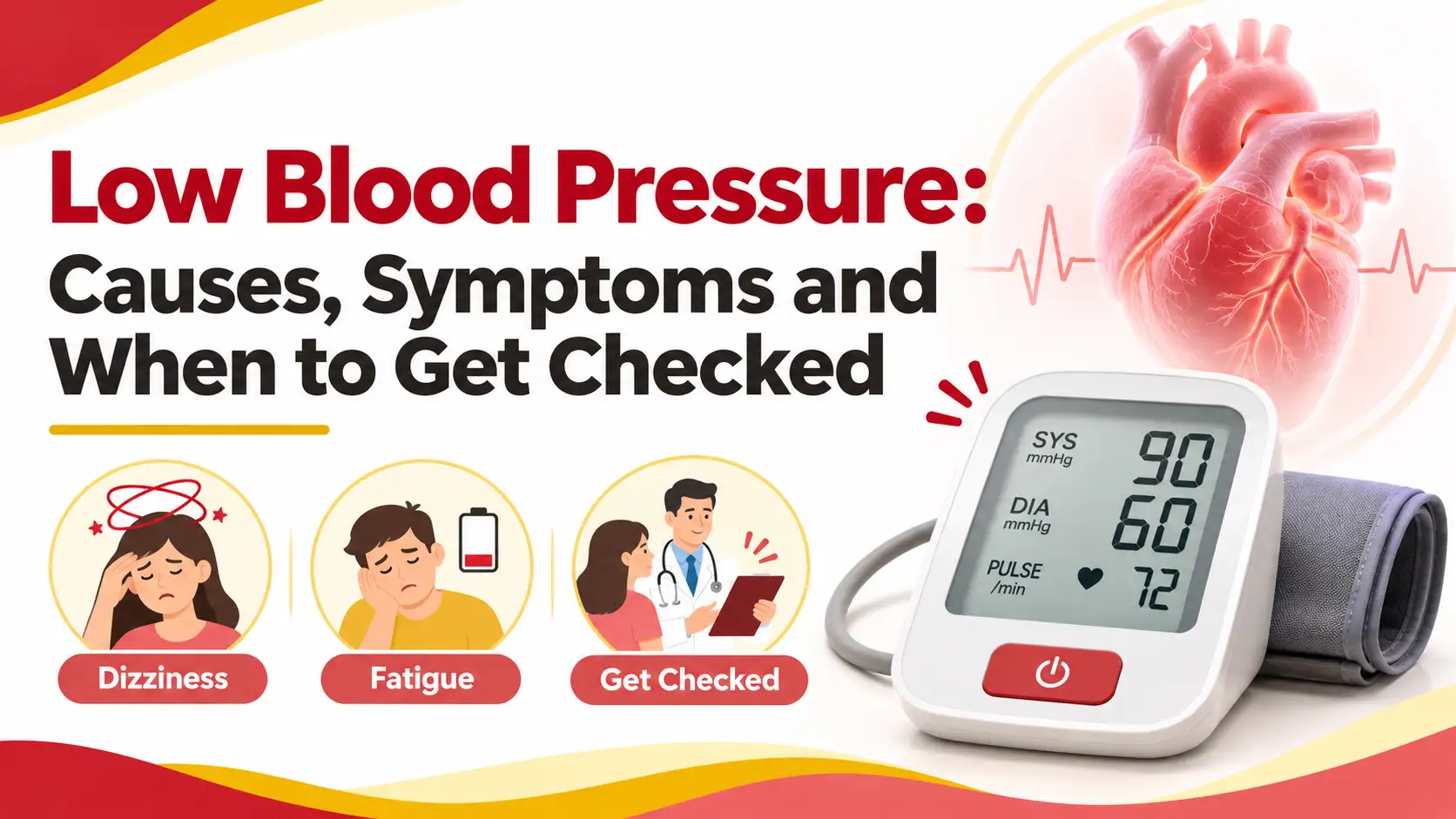
Image Disclaimer: AI-generated illustration for educational purposes.*
If you have searched for “blood pressure low reason” after seeing an unexpected reading, start with how you feel. A blood pressure below 90/60 mmHg is commonly described as low, but one low reading is not always a problem. Some people naturally have lower blood pressure and feel well. For others, especially when the reading comes with dizziness or fainting, it may be a sign that something needs attention.
Low blood pressure is also called hypotension. It has many possible causes, from dehydration or a medicine effect to a heart condition or serious illness. This guide explains what the numbers mean, what to do if you feel dizzy, and when to seek medical help. It cannot diagnose the cause of an individual reading.
Blood pressure is written as two numbers, such as 90/60 mmHg. The first, or systolic, number measures pressure when the heart pumps. The second, or diastolic, number measures pressure between heartbeats.
A reading below 90/60 mmHg is a commonly used definition of low blood pressure. It is not a rule that every person below that number needs treatment. Your usual readings, symptoms, medicines and medical history all matter.
Consider the difference between these situations:
The second situation needs prompt assessment even if the number does not look dramatically low. A rapid change and the way the person feels can be more important than the threshold alone.
Not taking in enough fluid, or losing fluid through vomiting, diarrhoea, fever or heavy sweating, can lower blood pressure. The cause may be temporary, but significant dehydration can be serious, particularly in older adults or people who are already unwell.
If you think dehydration is involved, do not assume that drinking a large amount of water is safe for you. Some people with heart or kidney conditions have been given limits on fluid intake. Follow your own care plan and seek advice if symptoms persist.
Some medicines can lower blood pressure as part of their intended effect. These include medicines used for high blood pressure and certain heart conditions. Other prescribed medicines may also contribute.
Do not stop or reduce a medicine because of one home reading. Make a note of the result, the symptoms and when you took your medicines, then discuss the pattern with the prescribing clinician. Changing treatment without advice may create another problem.
Postural hypotension, also called orthostatic hypotension, is a drop in blood pressure when you move from lying or sitting to standing. You may feel light-headed, unsteady or briefly notice blurred vision.
This pattern may be linked to dehydration, medicines or other health conditions. It can also increase the chance of a fall. If it keeps happening, a clinician can compare your blood pressure in different positions and look for a cause. Do not try repeated standing measurements by yourself if you feel likely to faint.
Some heart problems can lower blood pressure, including a very slow heart rate, certain valve problems, heart failure or a heart attack. Conditions affecting hormones, the nervous system or blood sugar may also play a role. Pregnancy can be associated with lower readings, but symptoms during pregnancy should be discussed with a healthcare professional rather than attributed to pregnancy automatically.
A blood pressure reading cannot tell you which of these causes applies. The pattern of symptoms, examination and sometimes further tests are needed.
A sudden drop in blood pressure can occur with significant blood loss, a severe infection or a serious allergic reaction. These are medical emergencies. If a person is confused, has cold clammy skin, is breathing rapidly, faints or appears seriously unwell, seek emergency medical help. Do not delay while taking more readings.
Low blood pressure may cause no symptoms at all. When it does cause symptoms, a person may experience:
These symptoms are not specific to low blood pressure. For example, dizziness may have other causes, and a person can feel unwell even if a home monitor shows a reading near their usual range.
Notice when the symptoms happen. Do they start after standing, following a meal, during hot weather or after taking a medicine? Does sitting down help? This information can help a clinician investigate the cause. It should not be used to rule out a serious problem if symptoms are severe or new.
Sit or lie down promptly so you are less likely to fall. Do not keep walking, drive or try to “push through” faintness. If symptoms improve, get up slowly and make a note of what happened.
If you are fully alert and have no restriction on drinking fluids, water may be reasonable when dehydration is possible. However, there is no universal home remedy for low blood pressure. Do not automatically take extra salt, stop a prescription or take a tablet suggested online. People with high blood pressure, heart failure, kidney disease or other conditions may need very different advice.
If the dizziness keeps returning, contact a healthcare professional. If you faint, have chest pain, severe breathlessness, new confusion or signs of serious illness, seek urgent medical assessment rather than trying home measures.
A home monitor can help you record a pattern, but technique affects the result. If you feel safe to sit and measure:
If the first number is unexpected and you feel well, repeating it correctly may help identify a measurement error. If you feel seriously unwell, do not wait to complete these steps. Seek help based on your symptoms.
Bring your monitor to a clinical appointment if possible. The team can check that it fits and that you are using it correctly. A blood pressure log is more useful when it includes dates, times and symptoms, not just a list of numbers.
A clinician will ask about your usual blood pressure, recent illness, fluid loss, medicines and when symptoms occur. They may check your pulse and blood pressure, including readings while lying down and after standing when it is safe to do so.
Tests depend on the suspected cause. Blood tests may help identify anaemia, dehydration-related changes or other medical issues. An ECG can assess heart rhythm if symptoms suggest a cardiac cause. Some people need further heart monitoring or other investigations. Others may need no additional test after a straightforward review.
The goal is to answer why the pressure is low and whether it is affecting you, not simply to bring every reading above a particular number.
Treatment depends on the cause and the symptoms. A person who feels well and naturally has lower readings may not need treatment. Someone who is dizzy because of a medicine may need a supervised review of that prescription. Dehydration, an infection, a heart-rhythm problem or bleeding requires a different approach.
A clinician may suggest changes in how you stand up, advise on fluid intake if appropriate, review medicines or recommend other measures for recurring postural symptoms. Treatment must account for other conditions. For example, a person with heart failure should not make a major change to fluid or salt intake without advice from their care team.
For persistent symptoms or a possible heart-related cause, a cardiology consultation in Hyderabad can help connect the readings with your symptoms and medical history. If the cause is unclear or several conditions may be involved, a general medicine consultation in Hyderabad may be an appropriate starting point. These are links for planned care, not for an active emergency.
Book an assessment if you repeatedly feel dizzy on standing, have fainted, notice new weakness or blurred vision, or keep recording readings that are unusually low for you. This is particularly important if symptoms began after a medicine change or you have a known heart condition.
Bring your blood pressure log, medicine list and details of when symptoms happen. If you have been diagnosed with high blood pressure and now see low readings, do not change your treatment without discussing them with the clinician managing it.
Seek urgent medical help for fainting, chest pain, severe breathlessness, new confusion or a sudden significant decline in your condition. Cold, clammy skin and rapid breathing can be signs of shock, which needs immediate emergency care. A person may need urgent help because of their symptoms even when a home blood pressure reading is unavailable or uncertain.
Low blood pressure is a reading interpreted in context, not a diagnosis by itself. A result below 90/60 mmHg may be normal for someone who feels well, while a sudden drop with dizziness or fainting needs attention. Record recurring symptoms and readings, discuss medicines with your clinician, and seek emergency care for signs of serious illness.
A reading below 90/60 mmHg is commonly described as low, but it is not always harmful. Whether it needs attention depends on symptoms, your usual blood pressure, medical history and whether the change was sudden.
There is no single cause that applies to everyone. Dehydration, medicines and a drop in pressure on standing are among the possibilities. A clinician can assess the likely cause in your situation.
Yes. A drop in pressure after standing can cause light-headedness or faintness. If it happens repeatedly, ask a healthcare professional to assess it rather than relying on a single home reading.
Do not automatically increase salt. It may be unsuitable if you have high blood pressure, heart failure, kidney disease or another condition. Ask your clinician what is appropriate for you.
Yes, some medicines can contribute to low blood pressure. Do not stop or change a prescribed dose on your own. Record the readings and symptoms, then speak with the prescribing clinician.
Yes, certain heart conditions can cause low blood pressure, but a reading alone cannot identify the cause. Symptoms and a medical assessment determine whether heart tests are needed.
Seek emergency medical help if a low reading occurs with fainting, chest pain, severe breathlessness, new confusion, cold clammy skin or rapid breathing. Do not delay care to repeat the measurement.
Medical Note: This article is for general educational purposes only and does not replace professional medical advice. Consult a qualified healthcare professional for personalised guidance.