Echo Test, ECG, Holter & Troponin Test: A Complete Guide to Cardiac Diagnosis
Aug 18, 2026
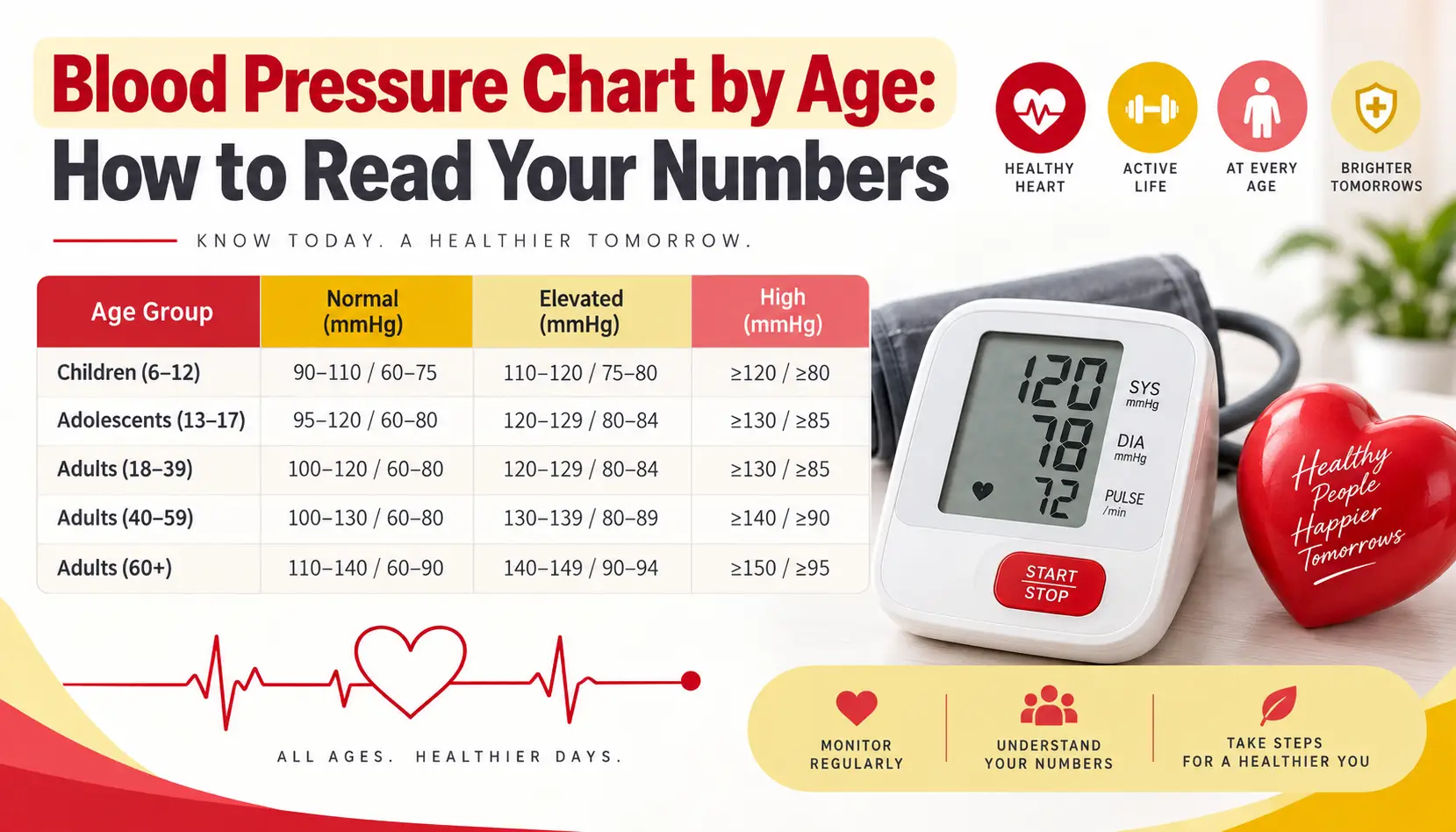
A blood pressure chart by age can help you understand a reading, but it should not suggest that high blood pressure automatically becomes “normal” as you get older. For adults, the same general blood-pressure categories are used across age groups. What may change with age is your personal treatment plan, based on factors such as other health conditions, medicines, dizziness or a history of falls.
If your monitor shows 130/80, what do the two numbers mean? Should you worry about one high reading? And is the answer different at 35 and 70? This guide explains how to read the numbers, measure them more reliably at home and know when to speak with a doctor.
Blood pressure is written as two numbers, such as 120/80 mmHg. The first is systolic pressure: the pressure in your arteries when your heart beats. The second is diastolic pressure: the pressure when your heart relaxes between beats. “mmHg” is the unit used to measure both.
Both numbers matter. For example, 145/78 has a high systolic number even though the diastolic number is below 80. Likewise, a lower first number does not cancel out a raised second number. When the two numbers fall into different categories, the higher category guides how the reading is described.
A monitor also measures your pulse. Pulse rate and blood pressure are related to your circulation, but they are different measurements; one cannot replace the other.
The chart below helps answer the age question without assigning a higher “normal” blood pressure to each decade.
| Age or Situation | How to Use a Blood-Pressure Chart |
|---|---|
| Adults 18–39 | Use the general adult categories below. A high reading is worth checking even if you feel well. |
| Adults 40–59 | Use the same general categories. Discuss repeated raised readings and other health risks with a clinician. |
| Adults 60 and older | The general categories still apply. A clinician may individualise treatment goals after considering your health, medicines and symptoms. |
| Children and younger teenagers | Do not use this adult chart. A clinician uses age- and growth-related guidance to interpret their readings. |
| Pregnancy or shortly after childbirth | Seek advice from your maternity care team; blood pressure needs pregnancy-specific assessment. |
So, if you searched for a “normal blood pressure chart age-wise,” the most useful distinction is adult versus special situations, not a list that labels progressively higher readings as normal at 40, 60 and 80.
| Category | Systolic: Top Number | Diastolic: Bottom Number |
|---|---|---|
| Normal | Below 120 | and below 80 |
| Elevated | 120–129 | and below 80 |
| Stage 1 high blood pressure | 130–139 | or 80–89 |
| Stage 2 high blood pressure | 140 or higher | or 90 or higher |
| Severely high reading | Higher than 180 | and/or higher than 120 |
How to use this chart: It describes adult reading categories, not a diagnosis from one measurement or a personal treatment target. Clinical guidelines differ in their thresholds for diagnosing hypertension; some use repeated readings of 140/90 or higher. Home and clinic measurements may also be interpreted differently. Your clinician will consider properly taken readings over time and your overall health.
Look at both numbers, then use the higher applicable category in the adult chart. These examples show how:
These are examples of readings, not diagnoses. Blood pressure changes during the day. Stress, recent exercise, caffeine, an incorrectly sized cuff or talking during measurement can affect a result. A single unexpected number is a reason to check the measurement and follow up, not to change your medicine yourself.
On the adult category chart above, 130 systolic or 80 diastolic reaches the Stage 1 range. But that does not mean one reading of 130/80 confirms hypertension or that everyone with this result needs medication.
A doctor will consider repeated readings, how they were measured and factors such as diabetes, kidney disease or cardiovascular risk. This is one reason a home blood-pressure log can be more useful than a photograph of a single reading.
If you already take blood-pressure medicine, do not use a general chart to decide whether to stop it or change the dose. Your prescribed target may be personalised.
A careful technique makes your home BP log more useful. If possible, use a validated upper-arm monitor with a cuff that fits your arm. Ask a clinician or pharmacist for help checking the fit and your technique.
Before measuring:
Take two readings at least one minute apart and record both. If your clinician has asked you to monitor at home, follow their advice on the times of day and number of days to check. Write down the date, time, both readings and any relevant symptoms. Bring the log and, if asked, your monitor to your appointment.
Do not keep measuring every few minutes because one number worries you. Repeated anxious checks can make it harder to understand your usual pattern. If you have concerning symptoms, seek care rather than trying to obtain a reassuring number.
Some people have higher readings in a medical setting than at home. Others have normal-looking clinic readings but higher results during everyday life. Measurement technique, timing and the circumstances of the reading also matter.
Tell your doctor if there is a consistent difference. They may review your home log, check your monitor or recommend longer-term monitoring. Neither one clinic reading nor one home reading tells the whole story.
This is particularly important if you feel dizzy when standing or have had falls. The clinician needs to know about those symptoms, even if the numbers in your log look acceptable.
If you feel well but get an unexpectedly high reading, sit quietly, check that the cuff is fitted correctly and measure again. Record the result. If readings remain raised on different occasions, arrange a medical review rather than waiting for symptoms; high blood pressure often causes no noticeable symptoms.
A doctor can assess whether you need continued monitoring, lifestyle changes, medication or a review of treatment you already take. They may also consider other conditions that affect your risk.
If you are in Hyderabad and need an assessment of repeated high readings, the hypertension care in Hyderabad service page provides a place to explore specialist care. This is for planned assessment, not a substitute for emergency help.
If your blood pressure is higher than 180 systolic and/or 120 diastolic, and you have chest pain, shortness of breath, severe back pain, weakness, numbness, vision changes or difficulty speaking, seek emergency medical care immediately. Do not wait to see whether the number falls.
If you have no concerning symptoms, wait at least one minute and take the measurement again. If it remains that high, contact a healthcare professional promptly for advice. New severe symptoms need urgent assessment regardless of the number shown on the monitor.
A chart focused on high blood pressure does not tell you whether a lower reading is safe for you. Some people usually have lower readings and feel well; others become dizzy, faint or weak, particularly after standing or after a medication change.
If you have repeated low readings with symptoms, speak with a clinician. Seek urgent care if you faint, have chest pain, are severely unwell or have other alarming symptoms. Do not stop prescribed medication solely because a home reading looks low.
The right plan depends on your readings and health history. Common measures include eating a balanced diet with less sodium, being physically active at a level appropriate for you, avoiding tobacco, limiting alcohol and taking prescribed medication as directed. These steps support long-term heart and blood-vessel health, but they do not replace a review of repeated high readings.
A practical starting point is to measure accurately and discuss the pattern, rather than choosing a treatment from an age chart. Ask your clinician what target applies to you, how often to monitor and when to return for follow-up.
A blood pressure chart by age should help you understand a reading, not persuade you that a high result is normal because of your age. For adults, start with the general categories, measure correctly and look at the pattern over time. Your doctor can then interpret that pattern in light of your health and agree on an appropriate plan.
No. The general adult blood-pressure categories do not automatically rise with each decade. A clinician may individualise a treatment goal for an older adult based on their overall health.
There is no separate “normal” number just for age 60. In the adult chart, normal is below 120/80 mmHg, but a personal treatment target should be discussed with a clinician.
Both matter. The systolic number is the top reading and the diastolic number is the bottom reading. If they fall in different categories, use the higher category when describing the reading.
No. It falls in the Stage 1 range in the adult category chart, but a diagnosis needs clinical assessment and properly measured readings over time.
Take two readings at least one minute apart and record both. If you are monitoring over several days, follow your clinician’s advice on when and how often to measure.
If you also have chest pain, breathlessness, weakness, vision changes or difficulty speaking, seek emergency care immediately. If you have no concerning symptoms, repeat the reading after at least one minute and contact a healthcare professional promptly if it remains that high.
No. Children’s readings and blood pressure during pregnancy require different clinical assessments. Discuss those readings with the appropriate healthcare professional.
Image Disclaimer: AI-generated illustration for educational purposes.
Medical Disclaimer: This article is for general information only and is not medical advice. A blood pressure chart by age cannot diagnose a condition or set your personal target. Discuss repeated or concerning readings with a qualified healthcare professional, and do not change prescribed treatment on your own.