10 Massages and Stretches for a Frozen Shoulder
June 15, 2023
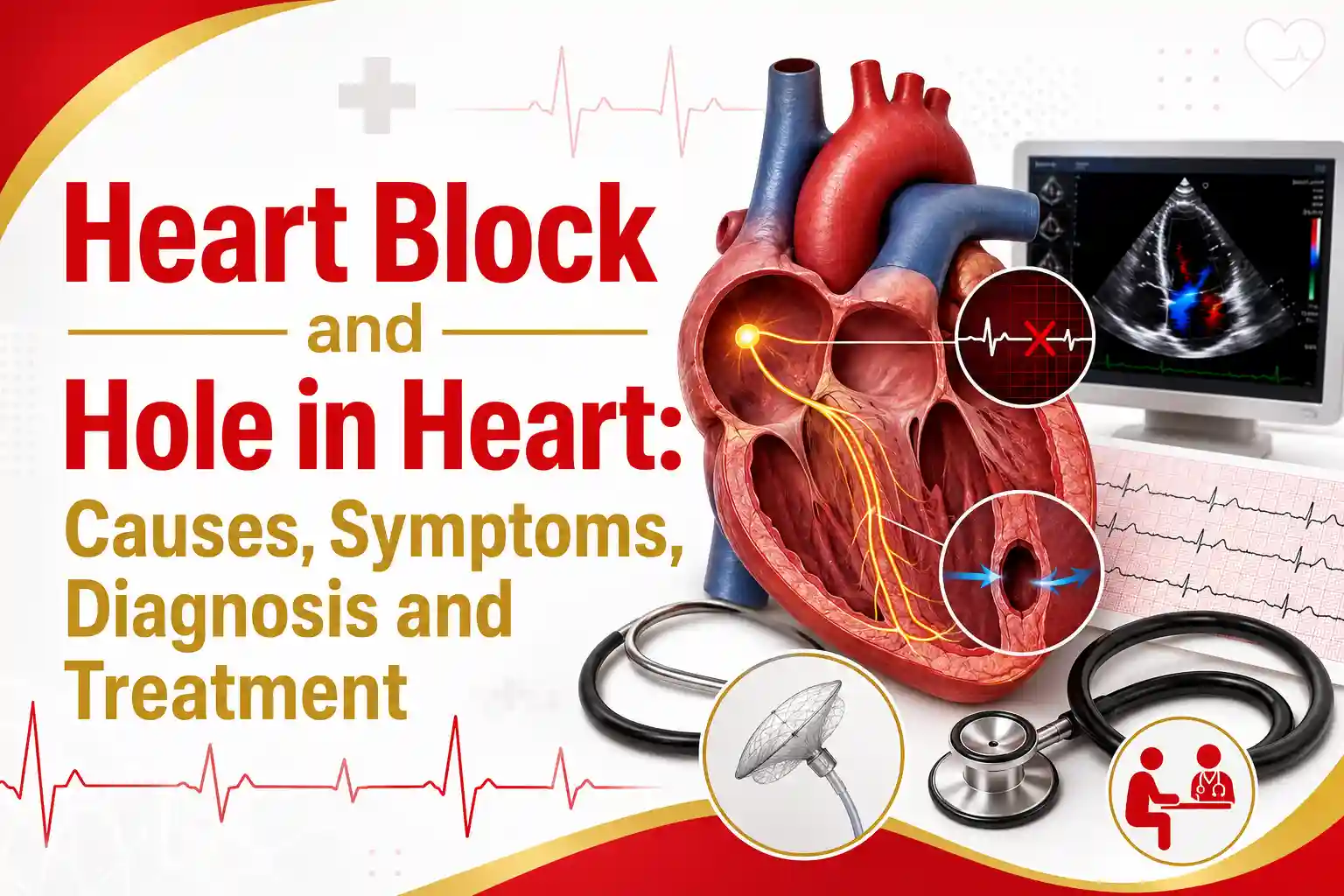
Heart block and a hole in heart are two very different cardiac conditions, even though both can affect how the heart functions. The names can be confusing, especially because people may also use phrases such as "heart blockage" to describe narrowed coronary arteries.
Heart block generally refers to a problem with the heart's electrical conduction system. A "hole in the heart" commonly refers to a structural opening such as an atrial septal defect (ASD) or ventricular septal defect (VSD) that develops before birth.
Understanding the difference matters because the symptoms, diagnostic tests and treatment pathways are not the same.
The heart has an electrical conduction system that coordinates each heartbeat. A heart block, also called a conduction disorder, occurs when electrical signals passing through this system are delayed or interrupted. The clinical significance depends on where the conduction problem occurs and how much the signal is slowed or blocked.
Heart block does not automatically mean that a coronary artery is physically blocked. A blocked or narrowed coronary artery relates to coronary artery disease, while heart block refers to abnormal electrical conduction.
Electrical signals still reach the ventricles, but conduction is slower than usual. Some people have no noticeable symptoms and the finding may be discovered on an ECG.
Some electrical signals do not successfully reach the ventricles. There are different forms of second-degree block, and their clinical importance varies. A cardiologist interprets the exact ECG pattern together with symptoms and medical history.
Electrical communication between the upper and lower chambers is significantly disrupted. This can result in a very slow heart rate and may require urgent treatment depending on symptoms and haemodynamic stability.
Because heart block can range from mild to serious, an ECG and clinical evaluation are needed to identify the specific conduction problem.
Symptoms depend on the type and severity of the conduction disturbance. Some people have no symptoms, while others may develop:
Fainting, severe breathlessness, new chest pain or significant weakness should not be ignored. These symptoms may require urgent assessment. Rhythm-related symptoms may require arrhythmia diagnosis and treatment.
An ECG is one of the most important tests because it records the electrical activity of the heart and can show characteristic conduction patterns. If symptoms are intermittent, longer rhythm monitoring may be recommended because a brief ECG can miss abnormalities that occur only occasionally.
For intermittent palpitations, dizziness or unexplained fainting, Holter monitoring treatment may be recommended to detect irregular heart rhythms that may not appear during a brief ECG.
Depending on the patient's symptoms and medical history, the cardiologist may also recommend echocardiography, blood tests or other investigations to look for an underlying cause or to assess the overall condition of the heart.
Not every person with a heart block needs a pacemaker. The decision depends on the type and degree of block, heart rate, symptoms, underlying cause, other cardiac conditions and the risk of the conduction disorder progressing.
Pacemakers send electrical impulses when needed to help maintain an appropriate heart rate. In selected patients with clinically important conduction disease, pacemaker implantation can be an important treatment. The decision should be based on ECG findings and specialist assessment rather than on symptoms alone.
The phrase "hole in heart" usually refers to an abnormal opening between chambers of the heart. Many such defects are congenital, meaning they develop before birth. Congenital heart defects affect the structure of the heart and may alter normal blood flow through the heart and lungs.
Two commonly discussed defects are atrial septal defect (ASD) and ventricular septal defect (VSD).
An atrial septal defect is an opening in the wall separating the heart's upper chambers. The effect of an ASD depends on its size, location and how much blood flows through the opening. Some smaller defects may produce few symptoms, while larger defects can place additional workload on the right side of the heart and lungs over time.
A ventricular septal defect is an opening in the wall between the two lower chambers of the heart. VSDs vary in size and clinical significance. Some small defects may close or remain stable, while larger or haemodynamically important defects can require specialist monitoring or treatment.
The phrase "hole in the heart" alone is therefore not enough to determine how serious the condition is. The exact type, size and effect on blood flow need to be evaluated.
Symptoms depend on the type and size of the defect and on the age of the patient. Some smaller defects may cause no obvious symptoms initially. Clinically important congenital defects can affect circulation and may place additional strain on the heart or lungs.
Possible features, depending on the defect, can include breathlessness, reduced exercise tolerance, poor growth in children, recurrent respiratory problems, palpitations or signs of heart failure. These symptoms are not specific to septal defects, so diagnosis requires cardiac assessment.
Echocardiography is a key imaging test because it allows clinicians to evaluate the heart's chambers, septa, valves and blood flow. Depending on the case, the cardiologist may use a standard transthoracic echo or a more specialised imaging approach.
A 2D echocardiography in Hyderabad may be recommended to assess the structure and function of the heart in greater detail.
Additional tests may be recommended based on the type of suspected defect, symptoms and treatment planning needs.
These terms should not be used interchangeably. Heart block is primarily an electrical conduction problem. A hole in the heart is primarily a structural abnormality. Heart block is usually identified through electrical testing such as ECG or rhythm monitoring, while a structural defect is generally evaluated using cardiac imaging, especially echocardiography.
This distinction is important because their treatment pathways can be completely different. One may involve rhythm monitoring or a pacemaker, while the other may require observation, catheter-based closure or surgery depending on the defect and its clinical impact.
No. A blocked or narrowed coronary artery is associated with coronary artery disease and reduced blood flow to heart muscle. Heart block affects the electrical conduction system that coordinates the heartbeat. The word "block" is used in both situations, but the underlying problem is different.
Arrange medical evaluation if you have unexplained fainting, recurrent dizziness, a persistently slow or irregular heartbeat, palpitations, breathlessness, reduced exercise tolerance, an abnormal ECG, an abnormal echocardiogram or a previously diagnosed congenital heart condition that needs follow-up.
For specialist assessment, consult a cardiology hospital in Hyderabad for appropriate evaluation and treatment.
Heart block and a hole in the heart affect the heart in different ways. Heart block involves the electrical system controlling the heartbeat. A hole in the heart is generally a structural defect such as an ASD or VSD.
Both conditions can range from mild to clinically important. Accurate diagnosis through ECG, echocardiography or other appropriate investigations is essential before deciding whether observation, medicines, device therapy, catheter-based treatment or surgery is required.
If an ECG has shown a conduction abnormality, an echo has identified a structural heart defect, or you are experiencing unexplained palpitations or fainting, book an assessment with a cardiologist in Hyderabad for personalised evaluation.
Heart block is a conduction disorder in which electrical signals controlling the heartbeat are delayed or interrupted.
No. Heart block affects electrical conduction. Coronary artery blockage affects blood flow to the heart muscle.
Its significance depends on the type, degree, symptoms and underlying cause. Some forms need only observation, while others may require urgent treatment or a pacemaker.
The phrase commonly refers to congenital structural defects such as an atrial septal defect (ASD) or ventricular septal defect (VSD).
Echocardiography is an important test for evaluating the heart's structure and can help identify septal defects and assess their effect on blood flow.
No. Pacemaker treatment depends on the exact conduction disorder, symptoms, heart rate, underlying cause and specialist assessment.
Germanten Hospitals provides cardiology evaluation and treatment for heart rhythm disorders, heart block and other cardiac conditions. A cardiologist can assess your symptoms and recommend appropriate tests and treatment based on your condition.
This article is for general information only and is not a substitute for professional medical advice, diagnosis or treatment. If you suspect a heart attack or other acute cardiac problem, seek emergency medical care immediately.