Echo Test, ECG, Holter & Troponin Test: A Complete Guide to Cardiac Diagnosis
Aug 18, 2026
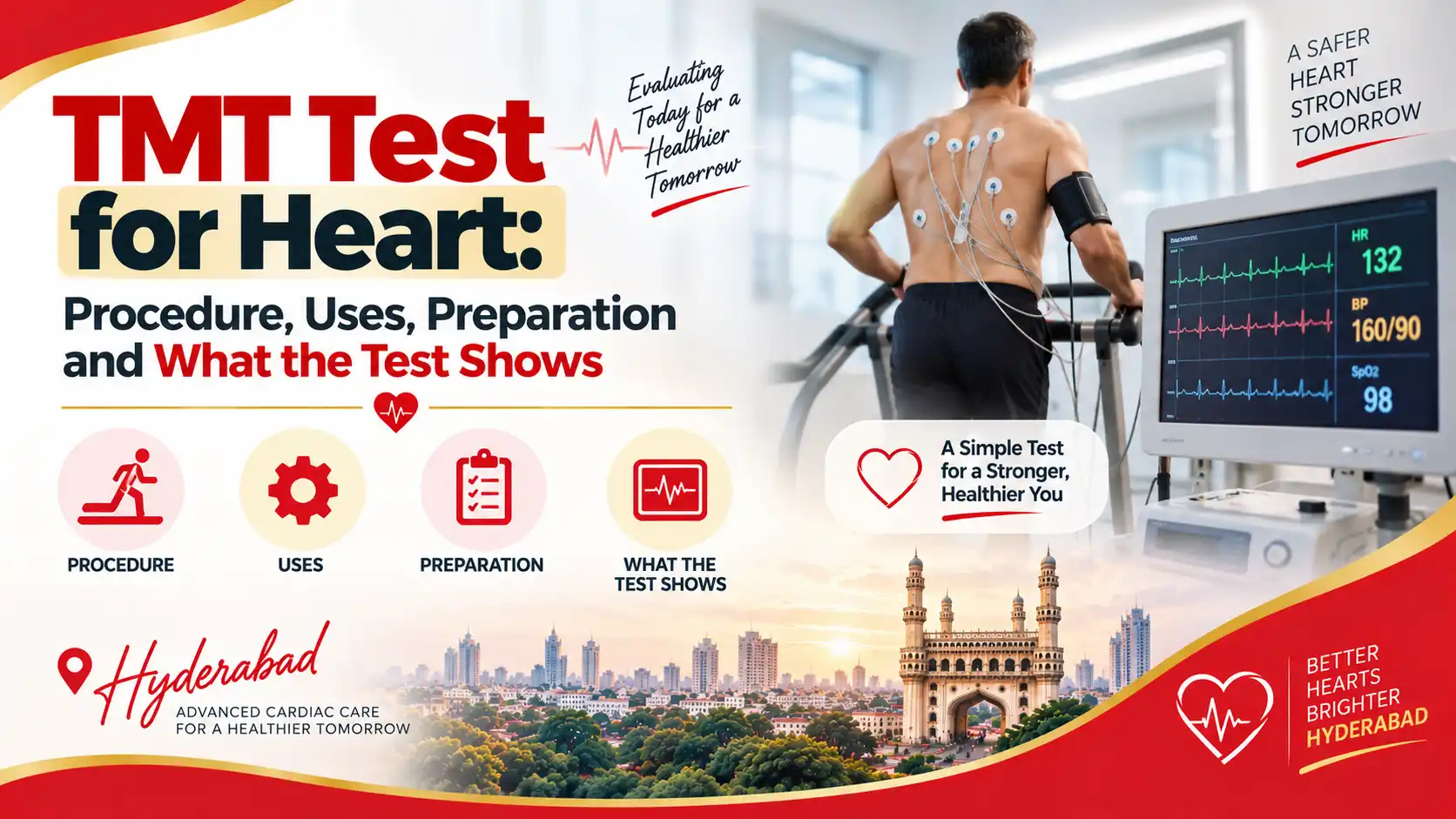
A TMT test for heart health, also known as a treadmill test, exercise stress test or exercise ECG, checks how the heart performs during physical activity. During the test, you walk on a treadmill while your heart rhythm, heart rate, blood pressure and symptoms are monitored.
The test can help a cardiologist assess whether exercise causes chest pain, breathlessness, abnormal ECG changes or heart-rhythm problems. It may be used when a person has symptoms that suggest reduced blood flow to the heart or when a clinician needs to understand safe exercise capacity.
A TMT is a useful diagnostic tool, but it is not suitable for everyone and does not independently confirm or rule out every heart condition. Your cardiologist interprets the result alongside your symptoms, medical history, risk factors and other tests.
Important medical note: If you currently have chest pain at rest, severe breathlessness, fainting, cold sweats or pain spreading to the arm, jaw, neck or back, seek emergency care. Do not wait for a routine TMT appointment.
TMT stands for Treadmill Test. It is commonly called an exercise stress test or exercise tolerance test.
When you exercise, your body needs more oxygen. Your heart responds by pumping faster and harder. A TMT records how the heart responds to this increased workload.
During the test, the clinical team monitors:
The treadmill begins slowly. Its speed and incline gradually increase according to a planned protocol. The test can be stopped at any time if you feel unwell, develop symptoms or reach the planned exercise level.
A cardiologist may recommend a TMT test to:
A TMT is not a routine screening test for every person. Your doctor considers your symptoms, age, blood pressure, diabetes, cholesterol levels, family history, resting ECG and ability to exercise before recommending it.
The TMT procedure is non-invasive. No needles or contrast dye are usually required.
A healthcare professional will review your symptoms, medicines, blood pressure and medical history. You may be asked to remove clothing from the upper body and wear a gown if required.
Small adhesive electrodes are placed on the chest. These are connected to an ECG machine. A blood-pressure cuff is placed around your arm.
You begin walking at a slow pace. At regular intervals, the treadmill becomes faster and may incline to create the effect of walking uphill.
The team continuously monitors your ECG and may check your blood pressure at different stages. Tell the team immediately if you experience chest discomfort, severe breathlessness, dizziness, leg pain or unusual fatigue.
The clinician may stop the test if:
After exercise stops, you will sit or lie down while your heart rate, ECG and blood pressure are monitored during recovery. This part is important because some changes may appear shortly after exercise ends.
The active walking portion is often short, but the total appointment takes longer because of preparation and recovery monitoring.
At Germanten Hospitals, the treadmill exercise part commonly takes around 6 to 15 minutes, depending on your fitness, symptoms and the protocol used. Allow approximately 60 to 90 minutes at the facility for preparation, the test and recovery monitoring.
The exact duration can vary. The goal is not to exercise for a fixed number of minutes; it is to obtain clinically useful information safely.
Follow the instructions given by your cardiologist or testing centre because preparation may differ depending on why the test is being done.
General preparation may include:
Do not stop any regular medicine on your own.
Some medicines, including beta-blockers, may affect heart-rate response during exercise. Whether they should be continued or paused depends on the reason for your TMT. Your cardiologist will give individual instructions.
The basic TMT procedure is the same for women and men. A female patient walks on the treadmill while ECG, heart rate and blood pressure are monitored.
However, the cardiologist will consider each patient’s symptoms, pregnancy status, medical history, menopause status, anaemia risk, diabetes, blood-pressure levels and ability to exercise before deciding whether a TMT or another cardiac test is more appropriate.
Women should not dismiss exertional chest pressure, breathlessness, unusual fatigue, nausea, jaw pain, back pain or shoulder discomfort. These symptoms require medical evaluation, especially when they are new or worsening.
A TMT test report contains multiple findings. It should be interpreted by a cardiologist rather than read as one simple “pass” or “fail” result.
| TMT Report Item | What It May Describe |
|---|---|
| Resting ECG | Heart rhythm and ECG pattern before exercise |
| Exercise protocol | The treadmill stages and intensity used |
| Exercise duration | How long you exercised |
| Workload achieved | How much activity your body tolerated |
| Heart-rate response | How the heart rate changed during exercise |
| Blood-pressure response | How blood pressure responded to exertion |
| Symptoms | Chest discomfort, breathlessness, dizziness or fatigue during the test |
| ECG changes | Any changes observed while exercising or during recovery |
| Rhythm changes | Exercise-related palpitations or arrhythmias |
| Final impression | The cardiologist’s overall interpretation and next steps |
A positive or abnormal TMT may show ECG changes or symptoms that suggest reduced blood flow to the heart during exercise. This may raise concern for coronary artery disease.
However, a positive TMT does not by itself confirm the location or severity of a blockage. Additional testing may be needed, such as:
Your cardiologist will decide the next step based on the full report, your symptoms and your heart-risk profile.
For patients with suspected artery narrowing, learn more about coronary artery disease evaluation and treatment .
A negative TMT test usually means that no concerning exercise-induced ECG changes or symptoms were observed at the workload achieved during the test.
It is reassuring, but it does not guarantee that every heart condition or every coronary blockage has been ruled out. Some people may need further tests if symptoms continue, risk factors are high or the TMT result is not conclusive.
Continue follow-up with your cardiologist if chest discomfort, breathlessness, palpitations or reduced exercise tolerance persists despite a negative TMT.
A TMT is generally safe when it is appropriately selected and performed under trained clinical supervision. Your heart rhythm, heart rate and blood pressure are monitored throughout the test.
The team can stop the treadmill quickly if symptoms or concerning changes occur. Before the test, the clinician checks whether you are suitable for exercise testing.
A TMT may not be appropriate for everyone, including some people with active chest pain, severe uncontrolled blood pressure, severe breathlessness, acute illness or certain unstable heart conditions. Your cardiologist will advise the safest test option.
A resting ECG records the heart’s electrical activity while you are at rest. It is quick and useful for checking rhythm, heart rate and some signs of heart disease.
A TMT records ECG changes while your heart is working harder during exercise. It can provide information that may not be visible on a resting ECG.
Both tests have different roles. A cardiologist may recommend one or both depending on your symptoms.
You can explore cardiology diagnostic services in Hyderabad at Germanten Hospitals, including ECG, echocardiography, TMT, Holter monitoring and other cardiac assessments.
See a cardiologist before booking a TMT if you have:
If symptoms are severe, sudden or occurring at rest, seek emergency care instead of waiting for an outpatient test.
A TMT test for heart health helps doctors understand how your heart responds to physical exertion. It can support the evaluation of chest pain, breathlessness, exercise tolerance and suspected coronary artery disease.
A positive or negative result should always be interpreted with your symptoms, risk factors and other test findings. For safe preparation, accurate testing and a personalised explanation of your report, consult a cardiologist.
The active exercise portion often takes around 6 to 15 minutes, depending on fitness, symptoms and the protocol used. Including preparation and recovery, the total appointment may take approximately 60 to 90 minutes.
A positive TMT may show ECG changes or symptoms that suggest reduced blood flow to the heart during exercise. It does not confirm the exact location or severity of a blockage, so further tests may be needed.
A negative TMT usually means no concerning ECG changes or symptoms were seen at the exercise level achieved. It can be reassuring, but persistent symptoms or high-risk factors may still require further evaluation.
Yes. The basic procedure is the same for women and men. The cardiologist will consider symptoms, medical history, pregnancy status and exercise ability before deciding whether a TMT is appropriate.
Avoid a heavy meal before the test. Follow the specific instructions from your cardiologist or testing centre, including advice about caffeine and medicines.
Do not stop medicines without instructions. Some medicines may affect heart-rate response, so your cardiologist will tell you whether to continue or temporarily pause any medicine before the test.