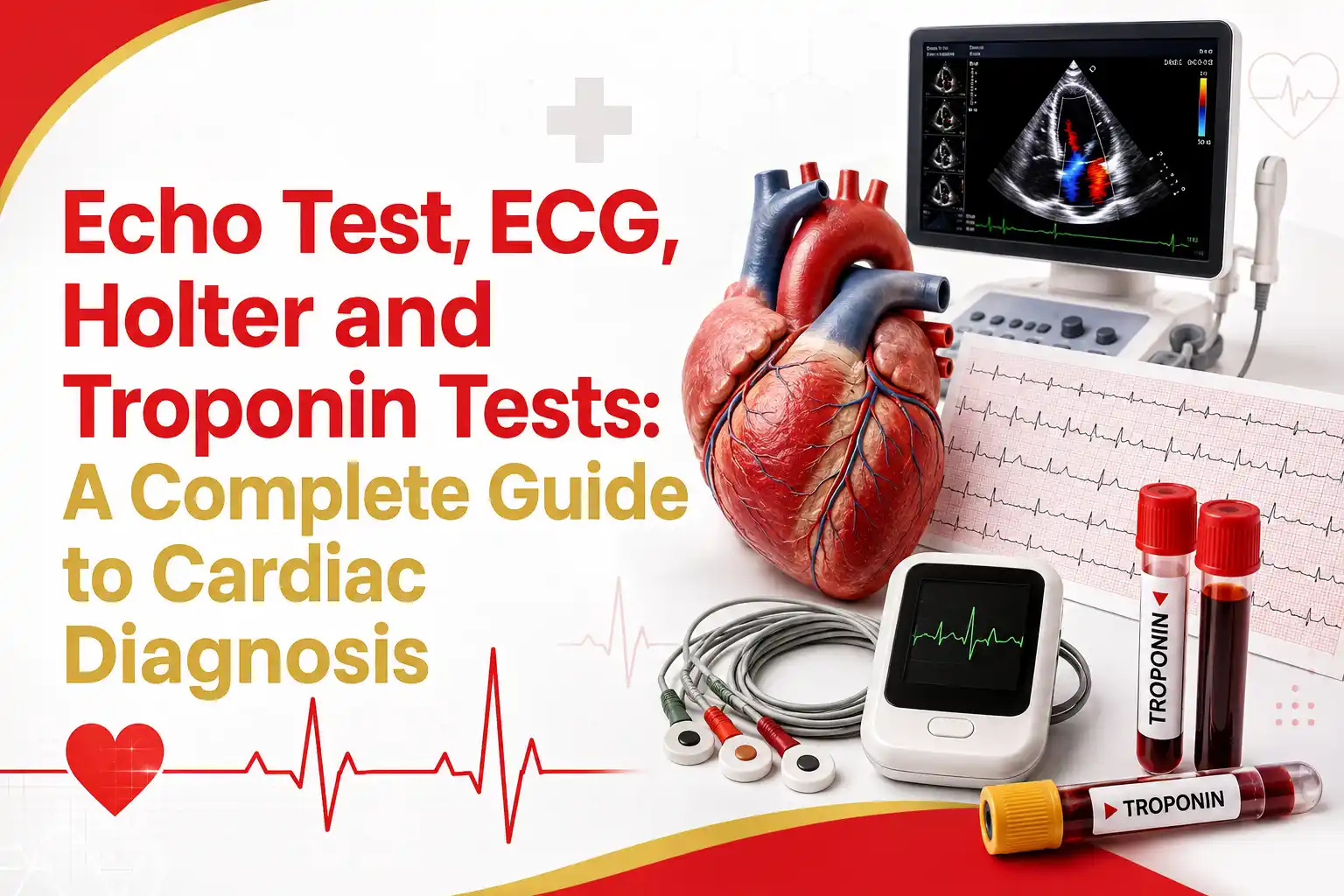
Echo Test, ECG, Holter & Troponin Test: A Complete Guide to Cardiac Diagnosis
Aug 18, 2026
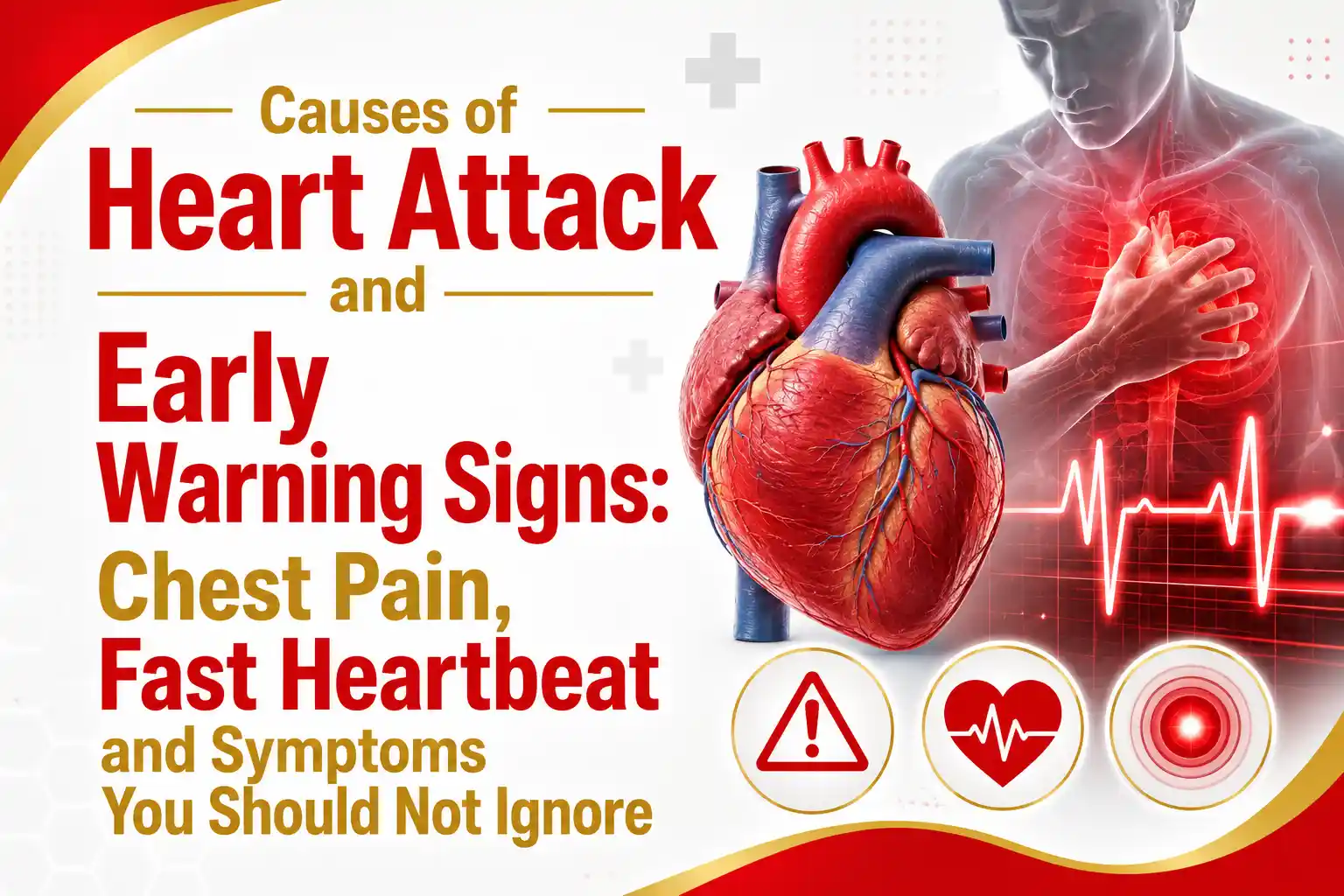
Understanding the causes of heart attack can help people recognise risk factors and, more importantly, act quickly when warning signs develop. A heart attack occurs when blood flow to part of the heart muscle becomes blocked and the muscle does not receive enough oxygen.
The most common underlying cause is coronary artery disease, in which plaque builds up within the coronary arteries. If a plaque becomes disrupted, a blood clot can form and significantly reduce or completely block blood flow. Less commonly, a severe coronary artery spasm or other coronary problem can also cause a heart attack.
Heart attack symptoms are not always dramatic. Chest discomfort is common, but breathlessness, sweating, nausea, unusual tiredness, dizziness or discomfort in other areas of the upper body may also occur.
Coronary artery disease develops when plaque accumulates within the coronary arteries. Over time, this can narrow the arteries and reduce the amount of oxygen-rich blood reaching the heart muscle. If a plaque ruptures or erodes, a blood clot can form and suddenly block blood flow, causing a heart attack.
For patients looking to understand available care options, Germanten Hospitals provides specialised coronary artery disease treatment.
Not every heart attack is caused by a large fixed plaque blockage. A severe spasm can cause a coronary artery to tighten suddenly and restrict blood flow. Other mechanisms can include a clot that travels into a coronary artery or a spontaneous tear in a coronary artery wall. These causes are less common and require medical assessment to diagnose.
A person's overall cardiovascular risk is influenced by multiple factors rather than one single issue. Important risk factors can include smoking, high blood pressure, high LDL cholesterol, diabetes or high blood sugar, obesity, physical inactivity, unhealthy dietary patterns, older age and a family history of premature heart disease.
Risk assessment should be personalised. People with several risk factors may benefit from regular cardiovascular evaluation even when they feel well, but screening does not replace urgent care when new symptoms develop.
The most recognised symptom is chest discomfort. It can feel like pressure, squeezing, heaviness, tightness or pain in the centre or left side of the chest. The discomfort may last several minutes or may go away and return.
Other possible symptoms include:
Not everyone experiences the same pattern. Some heart attacks begin gradually with milder symptoms, and some people may have very little chest pain. This is one reason it is unsafe to wait for every "classic" symptom to appear.
Chest pain can arise from the heart, lungs, stomach, muscles, ribs or other causes. However, because heart-related chest discomfort can represent an emergency, new, severe, persistent or unexplained chest symptoms should not be self-diagnosed online.
Hospital assessment may involve an ECG, blood testing such as troponin and additional tests depending on the presentation. The goal is to identify or rule out dangerous causes quickly. Learn more about heart attack treatment and emergency care at Germanten Hospitals.
People frequently search “chest pain in Telugu” when they need understandable information for themselves or family members.
Chest pain = ఛాతి నొప్పి
If chest discomfort feels like pressure, squeezing or heaviness, especially when it occurs with sweating, breathlessness, nausea, dizziness or pain spreading to the arm or jaw, urgent medical assessment is appropriate. One symptom alone cannot reliably confirm or rule out a heart attack.
Heart pain = గుండె నొప్పి
In everyday language, people may describe any left-sided chest discomfort as “heart pain”. Medically, however, chest discomfort can have cardiac and non-cardiac causes. Persistent, severe or unexplained chest pain should therefore be medically assessed rather than assumed to be acidity, gas or muscular pain.
For users searching “heart attack symptoms in Telugu”, these simple translations can help support patient understanding:
These translations are for awareness only. If symptoms suggest a heart attack, urgent medical evaluation is more important than continuing to search symptoms online.
Another keyword in the content strategy is “heart beat fast meaning in Hindi”. A simple explanation is:
दिल की धड़कन तेज़ होना या दिल का तेज़ धड़कना।
A person may describe this as: “मेरा दिल बहुत तेज़ धड़क रहा है।”
The medical term often used for an abnormally fast heart rate is tachycardia, although simply feeling that the heart is racing does not establish a diagnosis.
A rapid or irregular heartbeat may occur during an acute cardiac problem, but it is not specific to heart attack. Fast heartbeat can also occur with fever, dehydration, anxiety, anaemia, thyroid disorders, some medicines and several rhythm conditions.
For recurring palpitations or rhythm-related symptoms, timely evaluation for arrhythmia diagnosis and treatment can help identify the cause.
Heart-attack assessment is based on the complete clinical picture, including symptoms, ECG findings, troponin and other investigations. Heart rate alone should not be used to decide whether chest symptoms are safe to ignore.
Evaluation usually begins quickly with a clinical assessment and an ECG. Blood tests such as troponin help determine whether heart-muscle injury has occurred. Blood testing may be repeated because the pattern of change over time can be clinically important.
Depending on the ECG, symptoms and blood-test results, further cardiac imaging or urgent treatment to restore blood flow may be required. The treatment plan depends on the type of heart attack and the location and severity of the coronary problem.
A heart attack interrupts the supply of oxygen-rich blood to part of the heart muscle. The longer significant blockage persists, the more heart muscle can be damaged. This is why suspected heart-attack symptoms require urgent assessment and why patients should not wait at home for symptoms to become unbearable.
Seek urgent medical assistance for symptoms such as:
If you suspect a heart attack, do not delay care while looking for more symptoms or comparing hospitals online. Use the emergency medical system available in your location.
Not every cardiac event can be predicted, but many cardiovascular risk factors can be identified and managed. Blood-pressure control, diabetes management, cholesterol treatment when indicated, avoiding tobacco, regular physical activity, healthy diet and appropriate medical follow-up can all contribute to long-term cardiovascular risk reduction.
For people who want a structured preventive assessment, Germanten Hospitals offers health check-up packages. However, high-risk or symptomatic patients should be assessed by a clinician rather than relying only on screening packages.
The most common cause of heart attack is coronary artery disease, usually involving plaque in the coronary arteries and an acute reduction in blood flow to heart muscle. Recognising chest discomfort, shortness of breath, sweating, unusual fatigue, dizziness, nausea and pain spreading into the upper body can help people respond sooner.
Whether someone searches for chest pain in Telugu, heart pain in Telugu, heart attack symptoms in Telugu or heart beat fast meaning in Hindi, the most important message is the same: potentially serious cardiac symptoms should not be self-diagnosed or ignored.
If symptoms suggest a heart attack, seek emergency medical care immediately. For non-emergency evaluation of recurring chest discomfort, palpitations or cardiovascular risk factors, Germanten Hospitals provides specialised cardiac consultations. If you are looking for the best cardiology hospital in Hyderabad for ongoing heart care, you can consult a cardiologist in Hyderabad at Germanten Hospitals.
Coronary artery disease is the most common underlying cause. Plaque can build up in coronary arteries, and a clot can form when a plaque becomes disrupted, reducing or blocking blood flow to heart muscle.
No. Chest discomfort is common, but symptoms vary. Some people may have breathlessness, sweating, nausea, dizziness, unusual fatigue or upper-body discomfort with little or no obvious chest pain.
Heart-related discomfort can sometimes resemble indigestion or burning. New or concerning chest symptoms should therefore not be diagnosed at home solely as acidity.
A fast heartbeat has many possible causes. Persistent episodes, or episodes with chest pain, fainting, severe breathlessness or major dizziness, require medical assessment.
ECG and troponin blood testing are commonly part of the initial assessment. Additional imaging or coronary investigations may be needed depending on the findings.
If the symptoms could represent a heart attack, do not wait for them to become severe. Seek urgent medical assessment, especially when chest discomfort occurs with breathlessness, sweating, nausea, fainting or pain spreading to the arm or jaw.
When looking for the best cardiology hospital in Hyderabad, consider the availability of experienced cardiologists, emergency cardiac assessment, ECG and diagnostic support, and appropriate treatment facilities. Germanten Hospitals provides cardiology consultations and evaluation for recurring chest discomfort, palpitations, cardiovascular risk factors and other heart-related concerns.
Medical Note: This article is for general awareness only and does not replace medical advice. If you have chest pain, breathlessness, sweating, dizziness or pain spreading to the arm or jaw, seek emergency medical care immediately.