Heart Attack Treatment in Hyderabad | Germanten Hospital

Heart Attack Treatment in Hyderabad | 24/7 Emergency Cardiac Care


Advanced Heart Care at Germanten

Cardiology Treatments

Heart Attack Treatment | 24/7 Emergency Cardiac Care in Hyderabad

A heart attack is a medical emergency. Every minute that a blocked coronary artery goes untreated, approximately 1.9 million heart muscle cells die. The faster blood flow is restored, the more of the heart is saved, and the better the long-term outcome for the patient.

Germanten Hospital's cardiac team operates on a strict golden-hour protocol. From the moment a patient arrives at our casualty in Attapur, our goal is to have emergency angioplasty underway within 60 minutes. Our Cath Lab is staffed and available 24 hours a day, 7 days a week, with no referral or appointment required for cardiac emergencies.

If you or someone nearby is experiencing chest pain, breathlessness, sweating, or pain in the left arm or jaw, call +91 9000909073 immediately or go directly to Germanten Hospital, Attapur. Do not drive yourself. Do not wait to see if it passes.

What is a Heart Attack?

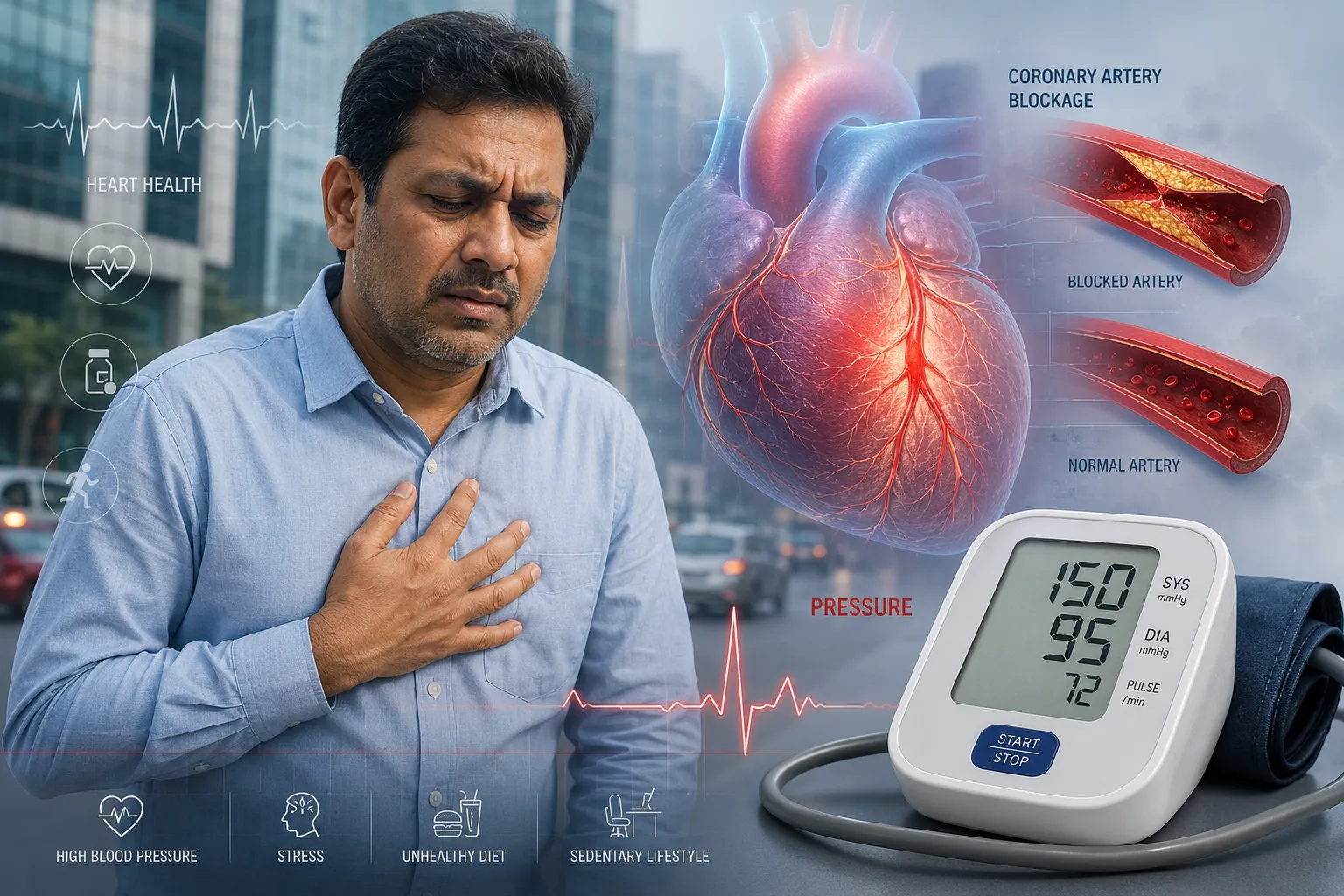
A heart attack, medically known as a myocardial infarction (MI), occurs when the blood supply to part of the heart muscle is suddenly cut off. This most commonly happens when a plaque inside a coronary artery ruptures. The rupture triggers the formation of a blood clot that completely blocks the artery, starving the heart muscle of oxygen.

Without oxygen, heart muscle cells begin to die within minutes. The extent of damage depends on which artery is blocked, how much of the heart it supplies, and how quickly the blockage is treated. A large heart attack affecting a major artery can cause severe heart muscle damage or be immediately life-threatening. A smaller heart attack affecting a minor branch may cause less damage, but still requires urgent treatment and investigation.

Heart attacks are different from cardiac arrest. In a heart attack, the heart continues to beat but part of the muscle is being damaged. In cardiac arrest, the heart stops beating entirely, usually due to an electrical problem, and the patient loses consciousness immediately. A heart attack can, however, trigger cardiac arrest.

Heart Attack Warning Signs

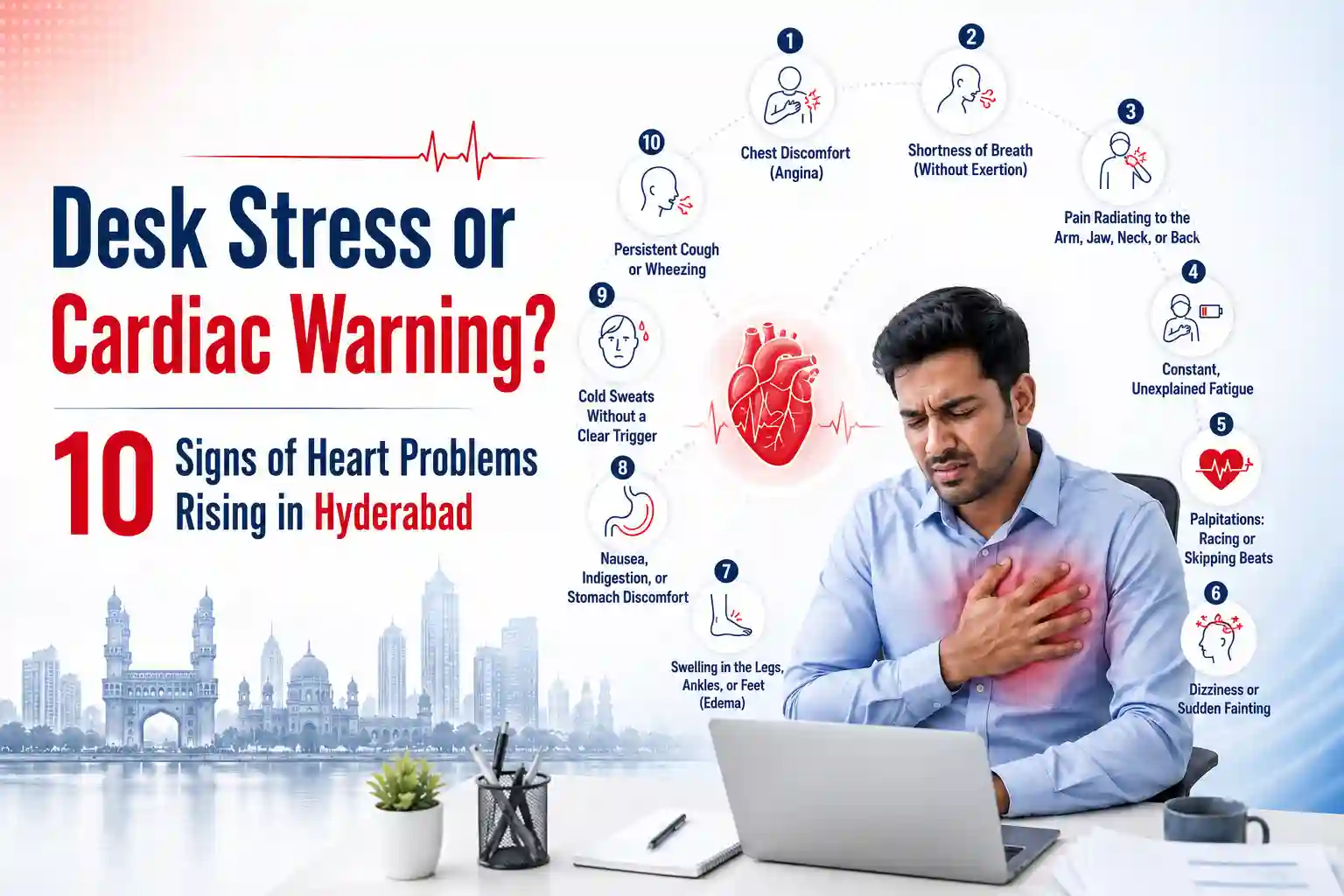
Recognizing symptoms early saves lives. The classic heart attack presentation involves central chest pain, but symptoms can vary considerably, particularly in women, older adults, and people with diabetes.

  • Chest pain or pressure:
    A heavy, squeezing, crushing, or burning sensation in the center or left side of the chest. It may last more than a few minutes or come and go.
  • Pain radiating outward:
    Discomfort spreading to the left arm, both arms, the jaw, neck, back, or upper abdomen.
  • Shortness of breath:
    Difficulty breathing, either with or without chest discomfort.
  • Cold sweats:
    Sudden, unexplained sweating, particularly if accompanied by chest discomfort or dizziness.
  • Nausea or vomiting:
    Especially in women, who are more likely than men to experience atypical symptoms.
  • Lightheadedness or dizziness:
    A feeling of faintness or loss of balance.
  • Unusual fatigue:
    Extreme tiredness, sometimes days before the event, more commonly reported in women.

Not all heart attacks cause severe chest pain. Some patients describe only mild discomfort or an unusual feeling in the chest. If something feels wrong, treat it as an emergency and seek help immediately.

Types of Heart Attack

  • STEMI (ST-Elevation MI)
    A complete blockage of a major coronary artery. The most serious type of heart attack. Requires emergency angioplasty (primary PCI) as fast as possible, ideally within 60 minutes of hospital arrival.
  • NSTEMI (Non-ST Elevation MI)
    A partial blockage or temporary complete blockage. Causes significant heart muscle damage but may not show the same ECG changes as a STEMI. Still requires urgent investigation and treatment.
  • Unstable Angina
    Severe chest pain at rest or with minimal exertion, without detectable heart muscle damage on blood tests. Treated as a cardiac emergency because it can progress to a full heart attack.
  • Silent Heart Attack
    A heart attack that produces minimal or no symptoms. More common in diabetic patients whose nerve damage can mask pain signals. Often discovered incidentally on a routine ECG or echo.

Emergency Treatment for Heart Attack at Germanten

Germanten Hospital's 24/7 cardiac emergency pathway is designed to minimize the time between a patient arriving and receiving definitive treatment.

  • Immediate Assessment:
    On arrival at casualty, a 12-lead ECG is performed within 10 minutes. Blood is drawn for cardiac enzymes (troponin). The emergency cardiologist reviews findings immediately.
  • Aspirin and Initial Medication:
    Antiplatelet therapy and supportive medications are administered while Cath Lab preparation begins.
  • Emergency Coronary Angiography:
    A diagnostic catheterization to identify the blocked artery. Performed in our on-site digital Cath Lab.
  • Primary Angioplasty (Primary PCI):
    The blocked artery is opened using a balloon catheter and a stent is placed to restore blood flow. This is the definitive treatment for STEMI and is performed immediately following angiography in the same Cath Lab session.
  • Cardiac ICU Monitoring:
    After the procedure, the patient is transferred to our cardiac ICU for continuous monitoring, rhythm management, and recovery.

For patients with multiple vessel disease discovered during emergency angiography, our team will plan further treatment (additional angioplasty or bypass surgery) after initial stabilization.

Recovery After a Heart Attack

Recovery depends on the size of the heart attack, the speed of treatment, and the patient's overall health. Most patients who receive timely angioplasty for a STEMI are discharged within three to five days and can return to light activity within two to four weeks.

Medications

Virtually all post-heart attack patients are prescribed a combination of antiplatelet agents, statins, beta-blockers, and ACE inhibitors long-term to reduce the risk of a second event.

Cardiac Rehabilitation

A structured program of supervised exercise, dietary counseling, and psychological support that significantly reduces the risk of a second heart attack.

Lifestyle Changes

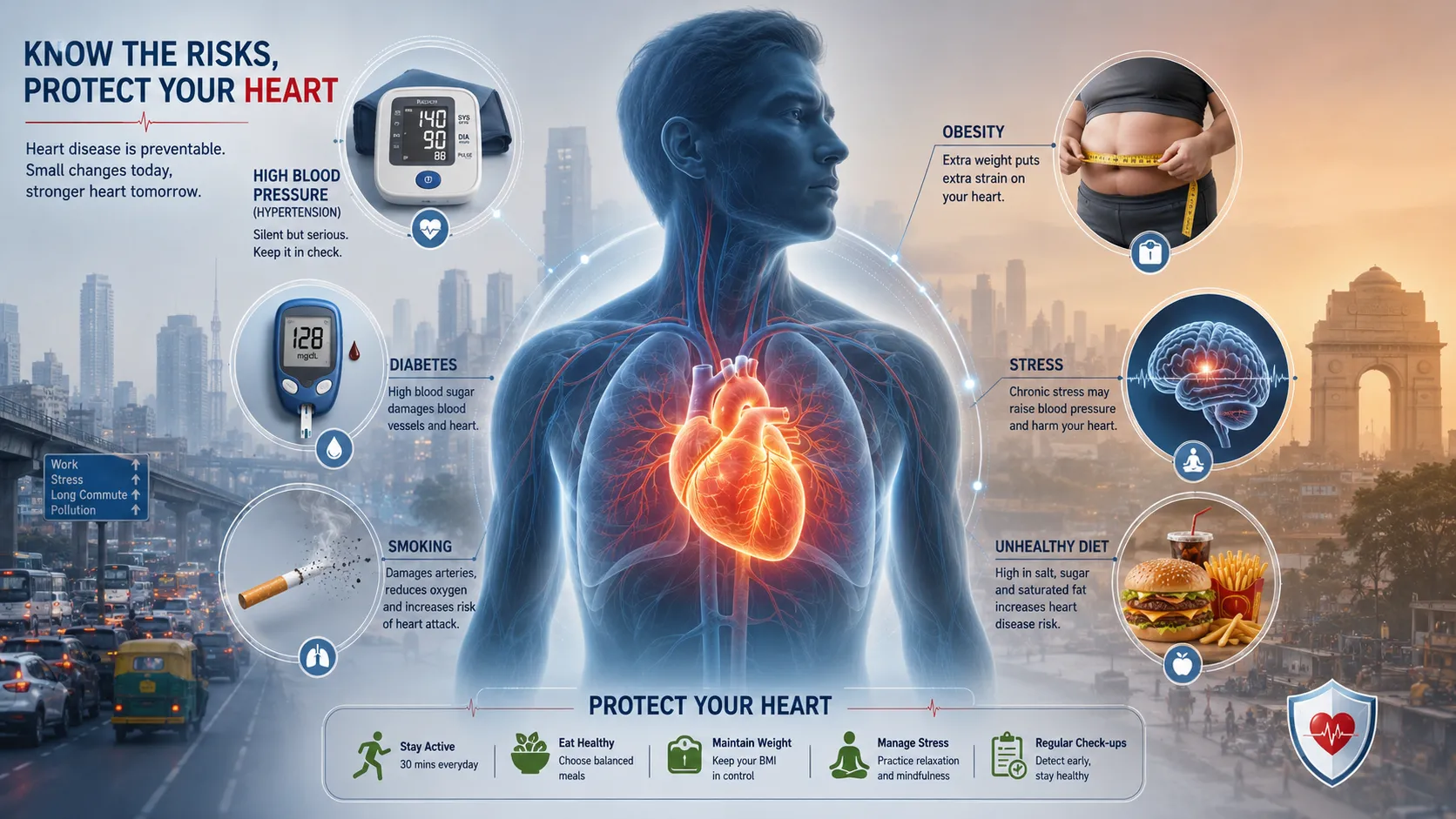
Stopping smoking, adopting a heart-healthy diet, managing blood pressure and blood sugar, maintaining a healthy weight, and regular physical activity are all essential.

Follow-up

Regular cardiology reviews to monitor heart function, medication tolerance, and risk factor control. An echo is typically performed six to eight weeks after a heart attack to assess residual heart function.

Learn more about our cardiac rehabilitation programme.

Meet Our

Cardiology Doctors

Consult expert cardiologists in Hyderabad at Germanten Hospital


Testimonials

What Our Patients Are Saying

  • counter-img1
    26+
    Years of Experience
  • counter-img2
    20K+
    Successful Surgeries
  • counter-img3
    1M+
    Happy Patients
  • counter-img4
    40+
    Global Awards

Success Stories

Book With Us Now

Get an Appointment

Connect with our experts doctors for guidance


Cardiology Hospital Near You in Attapur, Hyderabad

Germanten Hospital is located in Attapur, one of South Hyderabad's most accessible neighborhoods. Patients from across southern and western Hyderabad can reach us within 20 to 30 minutes.

Full address: Germanten Hospital, Attapur, Hyderabad, Telangana 500048. View on Google Maps
Reaching Germanten Hospital from Major Localities:
  • - Mehdipatnam (approx. 8 minutes)
  • - Rajendra Nagar (approx. 10 minutes)
  • - Tolichowki (approx. 7 minutes)
  • - Banjara Hills (approx. 15 minutes)
  • - Jubilee Hills (approx. 18 minutes)
  • - Kondapur & Gachibowli (approx. 25 minutes via PVNR Expressway)
  • - Shamshabad & Airport Road (approx. 30 minutes)
GET ANSWERS

Frequently Asked Questions

For a STEMI (complete blockage), clinical guidelines recommend that primary angioplasty should be performed within 90 minutes of first medical contact, and ideally within 60 minutes of hospital arrival (door-to-balloon time). At Germanten Hospital, our golden-hour protocol targets this 60-minute window. Every 30-minute delay in treatment increases mortality risk, which is why calling emergency services immediately rather than waiting for symptoms to pass is so critical.
Yes. Silent heart attacks and atypical presentations are more common than most people realize, particularly in women, older adults, and people with diabetes. Symptoms such as jaw pain, back pain, unusual fatigue, nausea, or breathlessness without significant chest discomfort can all be presentations of a heart attack. If you have any doubt, seek emergency medical attention.
A heart attack is a circulation problem: a blocked artery cuts off blood supply to part of the heart. The patient is usually conscious. Cardiac arrest is an electrical problem: the heart stops beating and the patient loses consciousness and stops breathing. A heart attack can cause cardiac arrest. CPR can help a patient in cardiac arrest; it does not treat a heart attack.
For patients with STEMI who receive primary angioplasty within the recommended time window, in-hospital survival rates at experienced centers are consistently above 95%. Long-term outcomes depend on the extent of heart muscle damage, adherence to post-discharge medications, and lifestyle modifications. Patients who participate in cardiac rehabilitation after a heart attack have significantly lower rates of second events.
Yes. Germanten Hospital's casualty department in Attapur is open 24 hours a day, 7 days a week, with no appointment required for cardiac emergencies. Our Cath Lab team is on-call for emergency angioplasty at all times. Call +91 9000909073 for immediate assistance.