Heart Failure Treatment in Hyderabad | Germanten Hospital

Heart Failure Treatment in Hyderabad


Advanced Heart Care at Germanten

Cardiology Treatments

Heart Failure Treatment in Hyderabad

Heart failure does not mean the heart has stopped working. It means the heart is not pumping as efficiently as it should, and the body is not getting the blood flow it needs. It is a serious, chronic condition that affects millions of people in India and is a leading cause of hospitalization.

With the right combination of medications, lifestyle changes, device therapy, and specialist follow-up, most patients with heart failure can manage their symptoms well, remain active, and significantly reduce the risk of hospitalization. At Germanten Hospital, our cardiology team provides comprehensive heart failure management tailored to each patient's specific cause and severity of disease.

What is Heart Failure?

Heart failure occurs when the heart muscle is too weak, too stiff, or structurally damaged to fill with or pump blood effectively. This leads to a buildup of fluid in the lungs and body (congestion), which causes the characteristic symptoms of breathlessness, leg swelling, and fatigue.

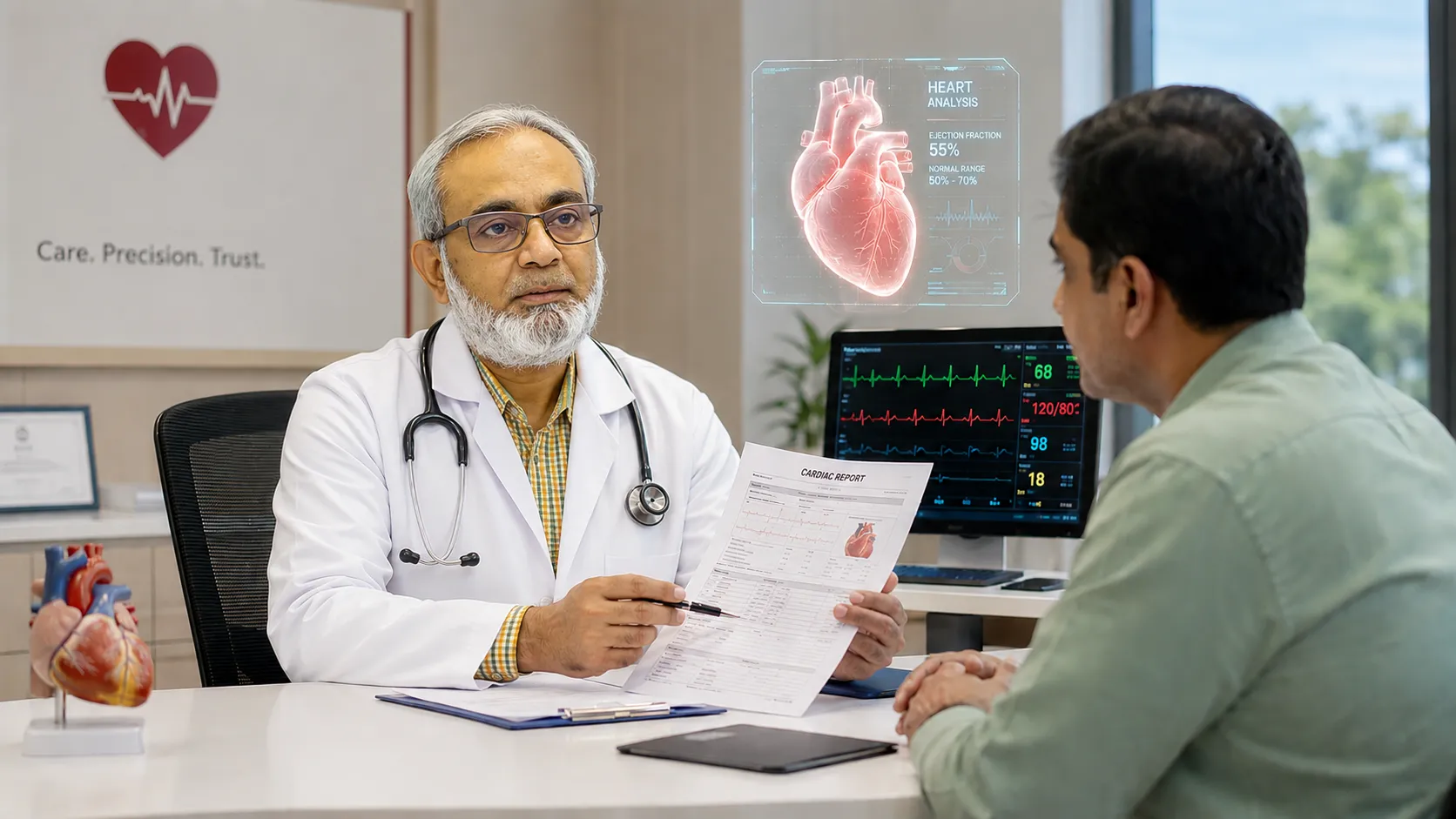
Heart failure is broadly classified into two types based on the heart's ejection fraction (EF), the percentage of blood pumped out of the left ventricle with each beat:

  • HFrEF (Heart Failure with Reduced Ejection Fraction)
    The left ventricle is weak and cannot contract properly. EF is below 40%. Also called systolic heart failure. More common in men and often caused by coronary artery disease or prior heart attack.
  • HFpEF (Heart Failure with Preserved Ejection Fraction)
    The left ventricle is stiff and cannot relax properly to fill with blood, even though it contracts with normal force. EF is 50% or above. More common in older women, diabetics, and hypertensive patients.
  • HFmrEF (Mildly Reduced EF)
    An intermediate category with EF between 40 and 49%. Recognition of this group is important as some treatments proven in HFrEF also benefit these patients.

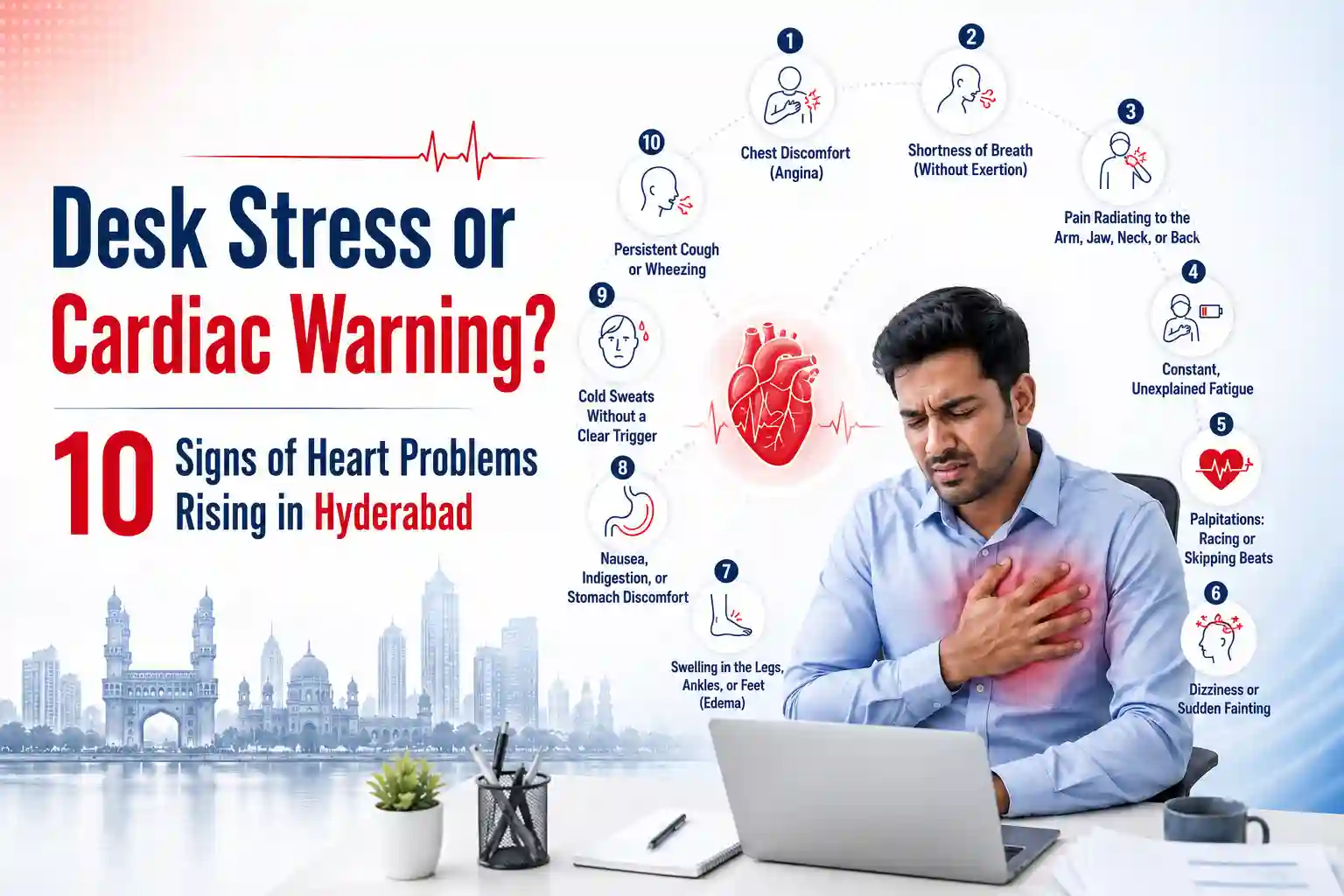
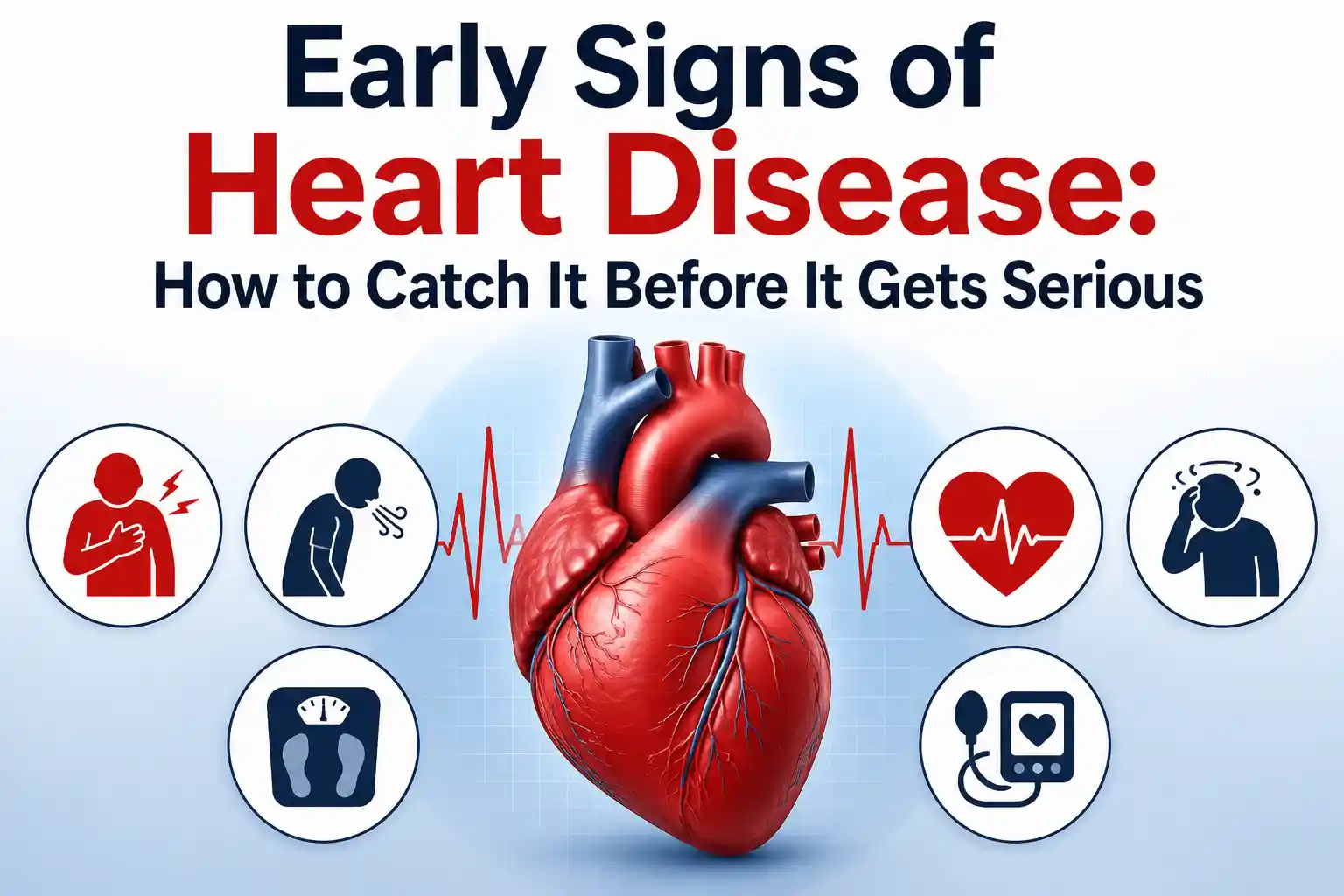
Symptoms of Heart Failure

Symptoms develop as the heart struggles to maintain adequate circulation and fluid begins to accumulate.

  • Breathlessness (dyspnea):
    Initially on exertion, progressing to breathlessness at rest in severe cases. Patients often find they need extra pillows to sleep (orthopnea) or are woken at night by sudden breathlessness (paroxysmal nocturnal dyspnea).
  • Leg and ankle swelling (peripheral edema):
    Fluid accumulation in the lower limbs due to elevated venous pressure. Shoes may feel tight by the end of the day.
  • Fatigue and weakness:
    Persistent tiredness due to reduced oxygen delivery to muscles and organs.
  • Rapid weight gain:
    Sudden weight gain of more than 1 to 2 kg over two to three days usually signals fluid retention and is an important warning sign requiring prompt medical review.
  • Reduced exercise tolerance:
    Activities that were previously manageable, such as climbing stairs or short walks, become exhausting.
  • Persistent cough or wheezing:
    Fluid in the lungs can cause a dry cough or wheezing, sometimes mistaken for asthma.
  • Loss of appetite or nausea:
    Congestion in the gut reduces appetite and can cause nausea.
  • Confusion or difficulty concentrating:
    In severe heart failure, reduced blood flow to the brain can impair cognition, particularly in older adults.

Sudden worsening of breathlessness, inability to lie flat, pink or frothy coughing, or chest pain in a patient with known heart failure is a cardiac emergency. Call +91 9000909073 or come directly to our casualty.

Causes of Heart Failure

Heart failure is not a single disease but a final common pathway of multiple cardiac conditions. Identifying and treating the underlying cause is the most important aspect of management.

  • Coronary artery disease and prior heart attack:
    The most common cause of HFrEF. Damaged or scarred heart muscle from a past heart attack reduces pumping capacity.
  • Hypertension:
    Chronically elevated blood pressure forces the heart to work harder, leading to thickening and eventually weakening of the heart muscle.
  • Cardiomyopathy:
    Primary disease of the heart muscle, which may be dilated (weakened and enlarged), hypertrophic (abnormally thickened), or due to alcohol, viral infection, or chemotherapy.
  • Valve disease:
    Diseased or leaking heart valves increase the workload on the heart chambers, leading to enlargement and eventual failure.
  • Atrial fibrillation:
    Persistent fast and irregular heart rate in AFib can weaken the heart over time (tachycardia-induced cardiomyopathy).
  • Congenital heart defects:
    Structural abnormalities present from birth that place abnormal demands on the heart.
  • Diabetes:
    Diabetic cardiomyopathy affects heart muscle structure and function independently of coronary artery disease.

Diagnosing Heart Failure

  • Clinical Assessment:
    History, examination findings (elevated jugular venous pressure, lung crackles, displaced apex beat, leg edema), and symptom severity grading using the NYHA classification.
  • 2D Echocardiography:
    Echo is the most important investigation. It measures ejection fraction, identifies wall motion abnormalities, assesses valve function, and measures pressures within the heart.
  • Blood Tests:
    BNP or NT-proBNP (biomarkers of cardiac stress that are elevated in heart failure), kidney function, liver function, thyroid function, full blood count, and iron studies.
  • Chest X-Ray:
    Shows heart size and signs of fluid in the lungs (pulmonary edema, pleural effusions).
  • ECG:
    Identifies rhythm disturbances, signs of prior heart attack, and left ventricular hypertrophy.
  • Coronary Angiography:
    In patients with reduced EF, angiography determines whether coronary artery disease is the underlying cause and whether revascularization (angioplasty or bypass) would improve heart function.

Heart Failure Treatment at Germanten

Guideline-Directed Medical Therapy

For HFrEF, four classes of medications have been proven in large clinical trials to reduce mortality and hospitalizations, collectively referred to as the four pillars of heart failure therapy:

  • ACE inhibitors or ARBs (or the newer ARNI, sacubitril/valsartan) to reduce cardiac workload
  • Beta-blockers to lower heart rate and reduce the strain on the heart
  • Mineralocorticoid receptor antagonists (spironolactone, eplerenone) to reduce fluid retention and cardiac remodeling
  • SGLT2 inhibitors (empagliflozin, dapagliflozin) which reduce hospitalizations and mortality in both HFrEF and HFpEF

Diuretics (water tablets) are used to relieve fluid overload and symptoms but do not reduce mortality. Iron supplementation improves exercise tolerance in iron-deficient patients with heart failure.

Device Therapy

Patients with HFrEF and EF below 35% who remain symptomatic despite optimal medical therapy may benefit from cardiac devices. An ICD (implantable cardioverter defibrillator) protects against sudden cardiac death from ventricular arrhythmias, which are more common in weakened hearts. CRT (cardiac resynchronization therapy) uses a specialized pacemaker with leads in both ventricles to coordinate the contraction of the heart walls in patients with electrical conduction delay, improving pumping efficiency and reducing symptoms.

Treating the Underlying Cause

Where the underlying cause is treatable, addressing it is the priority. Patients with coronary artery disease causing heart failure may benefit significantly from revascularization with angioplasty or bypass surgery. Patients with valve disease may need valve repair or replacement. Patients with tachycardia-induced cardiomyopathy from AFib often see dramatic improvement in heart function after rate control or rhythm restoration.

Cardiac Rehabilitation and Self-Management

Structured cardiac rehabilitation is particularly valuable in heart failure, improving exercise capacity, quality of life, and reducing hospital readmissions. Patient education on daily weight monitoring, fluid restriction, salt reduction, and when to seek urgent review is a critical part of long-term management.

Meet Our

Cardiology Doctors

Consult expert cardiologists in Hyderabad at Germanten Hospital


Testimonials

What Our Patients Are Saying

  • counter-img1
    26+
    Years of Experience
  • counter-img2
    20K+
    Successful Surgeries
  • counter-img3
    1M+
    Happy Patients
  • counter-img4
    40+
    Global Awards

Success Stories

Book With Us Now

Get an Appointment

Connect with our experts doctors for guidance


Cardiology Hospital Near You in Attapur, Hyderabad

Germanten Hospital is located in Attapur, one of South Hyderabad's most accessible neighborhoods. Patients from across southern and western Hyderabad can reach us within 20 to 30 minutes.

Full address: Germanten Hospital, Attapur, Hyderabad, Telangana 500048. View on Google Maps
Reaching Germanten Hospital from Major Localities:
  • - Mehdipatnam (approx. 8 minutes)
  • - Rajendra Nagar (approx. 10 minutes)
  • - Tolichowki (approx. 7 minutes)
  • - Banjara Hills (approx. 15 minutes)
  • - Jubilee Hills (approx. 18 minutes)
  • - Kondapur & Gachibowli (approx. 25 minutes via PVNR Expressway)
  • - Shamshabad & Airport Road (approx. 30 minutes)
GET ANSWERS

Frequently Asked Questions

In some cases, yes. If heart failure is caused by a treatable underlying condition, such as a correctable valve problem, a reversible cardiomyopathy from alcohol or chemotherapy, or tachycardia-induced cardiomyopathy from AFib, treatment of the underlying cause can result in significant or complete recovery of heart function. For most patients with established HFrEF, the condition is chronic but manageable. Guideline-directed medical therapy has been shown to improve ejection fraction in many patients over time, a process called reverse remodeling.
Heart failure is a serious condition with significant morbidity and mortality if untreated or inadequately managed. However, outcomes have improved dramatically over the past two decades with modern drug therapy and devices. Many patients with well-controlled heart failure live for many years with good quality of life. The key is early diagnosis, evidence-based treatment, regular specialist follow-up, and active patient participation in self-management.
Sudden leg swelling or a weight gain of more than 1 to 2 kg over two to three days in a patient with known heart failure usually indicates fluid retention and a worsening of heart failure. You should contact your cardiologist promptly or come to Germanten Hospital's casualty if you are also breathless or feel unwell. Do not wait for a scheduled appointment in this situation.
Regular, supervised, moderate-intensity exercise is safe and beneficial for most stable heart failure patients. It improves exercise capacity, quality of life, and reduces hospitalization risk. Vigorous unsupervised exercise in severe heart failure or during acute decompensation is not appropriate. Our cardiac rehabilitation team designs individualized exercise programs for heart failure patients based on their fitness level and cardiac function.