Heart Valve Disease Treatment in Hyderabad | Germanten

Heart Valve Disease Treatment in Hyderabad


Expert Coronary Angioplasty & Stenting Services

Cardiology Treatments

Heart Valve Disease Treatment in Hyderabad

The heart has four valves that open and close with every heartbeat to keep blood flowing in the right direction. When one or more of these valves becomes diseased, blood flow through the heart is disrupted. The heart must work harder to compensate, and over time this leads to cardiac enlargement, reduced pumping function, and eventually heart failure if left untreated.

Heart valve disease is more common than many people realize, affecting an estimated 2 to 3% of the general population and rising sharply in those over 65. In India, rheumatic heart disease, a consequence of untreated streptococcal infections in childhood, remains an important additional cause of valve disease in younger adults. At Germanten Hospital, our cardiology and cardiac surgery teams diagnose and manage the full range of valve conditions, from mild abnormalities requiring monitoring through to severe disease needing surgical or catheter-based intervention.

The Four Heart Valves and Their Function

Understanding which valve is affected and how it is malfunctioning is the foundation of diagnosis and treatment planning.

Mitral Valve

Controls blood flow between the left atrium and left ventricle. The most commonly affected valve in rheumatic heart disease. Disease presents as mitral stenosis (narrowing) or mitral regurgitation (leakage).

Aortic Valve

Controls blood flow from the left ventricle into the aorta and out to the body. The most commonly affected valve in degenerative (age-related) disease. Disease presents as aortic stenosis or aortic regurgitation.

Tricuspid Valve

Controls blood flow between the right atrium and right ventricle. Tricuspid regurgitation is common, often secondary to left-sided valve disease or pulmonary hypertension.

Pulmonary Valve

Controls blood flow from the right ventricle into the pulmonary artery. Pulmonary valve disease in adults is most often congenital in origin.

Types of Heart Valve Disease

Stenosis

The valve leaflets become thickened, stiff, or fused, narrowing the valve opening and restricting forward blood flow. The heart must generate higher pressure to push blood through the narrowed valve.

Regurgitation

Also called insufficiency or incompetence. The valve does not close properly, allowing blood to leak backward with each heartbeat. The heart compensates by pumping a larger volume of blood, eventually leading to enlargement and weakness.

Prolapse

One or both leaflets of the valve bulge backward into the upstream chamber during contraction. Mitral valve prolapse is the most common valve abnormality in the general population. It is often benign but can cause regurgitation when significant.

Atresia

A valve fails to form properly in fetal development, resulting in a completely absent or non-functional valve. This is a congenital defect present from birth and requires surgical correction in childhood or infancy.

Causes of Heart Valve Disease

Degenerative (Age-Related) Disease:

Calcium deposits accumulate on the valve leaflets over decades, causing progressive stiffening. Aortic stenosis from degenerative calcification is the most common valve condition requiring intervention in patients over 65.

Rheumatic Heart Disease:

Damage from rheumatic fever, which occurs as a late complication of untreated streptococcal throat infections. Leads to scarring and fusion of valve leaflets, most commonly affecting the mitral valve. Still a major cause of valve disease in India, particularly in those who grew up without access to antibiotic treatment for throat infections.

Congenital Valve Abnormalities:

Structural defects present from birth, such as a bicuspid aortic valve (two leaflets instead of the normal three). Bicuspid aortic valve affects approximately 1 to 2% of the population and accelerates valve degeneration.

Infective Endocarditis:

A bacterial infection of the heart valve that destroys leaflet tissue and causes acute or chronic regurgitation. A cardiological emergency when acute.

Heart Attack:

A heart attack affecting the papillary muscles that support the mitral valve leaflets can cause sudden severe mitral regurgitation.

Dilated Cardiomyopathy:

Enlargement of the heart chambers stretches the valve annulus (ring), preventing the leaflets from closing properly and causing functional regurgitation without primary valve disease.

Symptoms of Heart Valve Disease

Valve disease often progresses slowly and silently for years. Symptoms typically appear once the disease becomes severe or the heart begins to decompensate.

Breathlessness:

Initially on exertion, progressing to breathlessness at rest and difficulty lying flat as the condition worsens.

Fatigue and reduced exercise tolerance:

The heart's reduced ability to maintain cardiac output leads to early fatigue during activities that were previously manageable.

Heart palpitations:

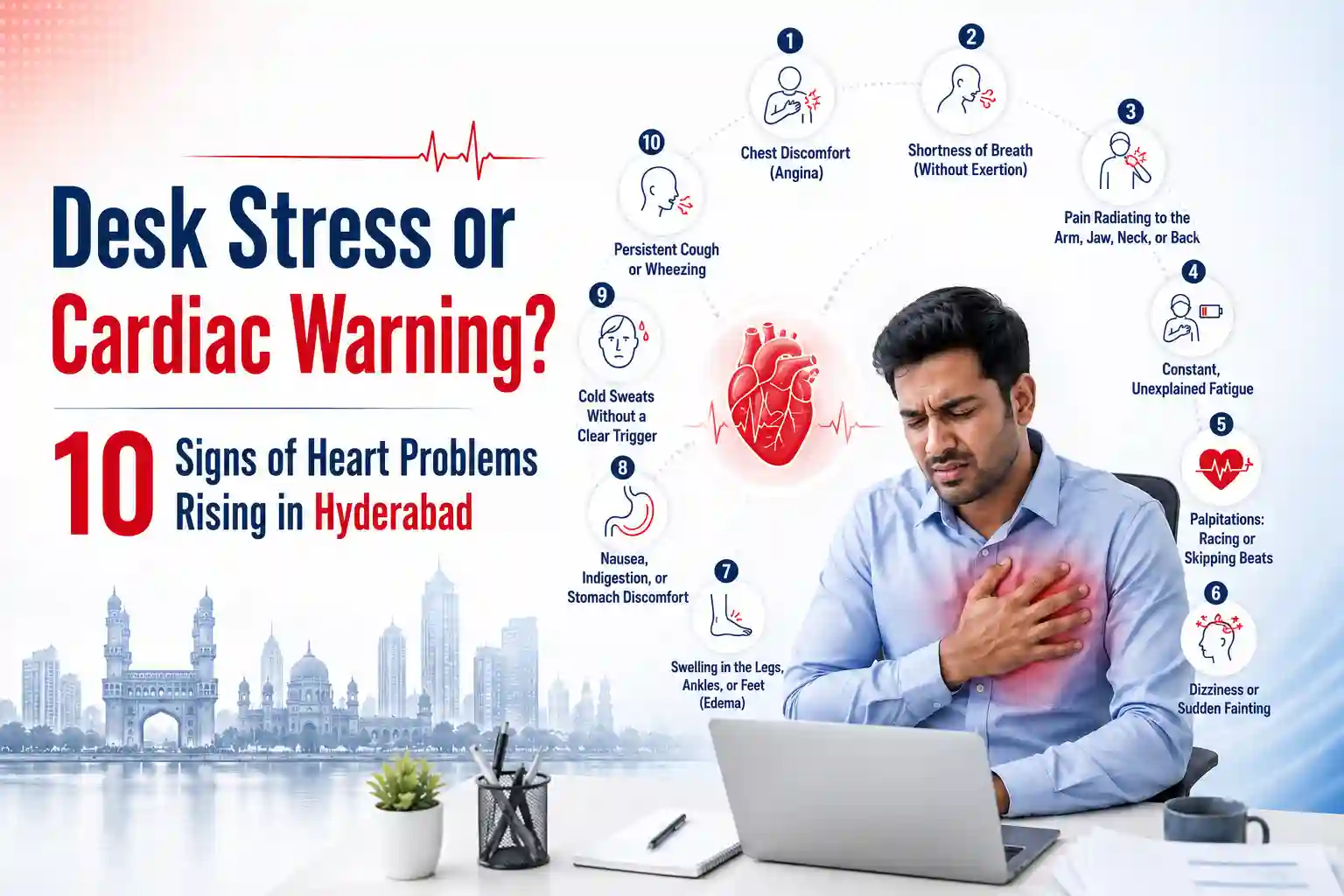
Irregular or rapid heartbeats, particularly atrial fibrillation which commonly develops in patients with mitral valve disease.

Chest pain or pressure:

Particularly in aortic stenosis, where reduced coronary blood flow during exertion can produce angina.

Dizziness or fainting (syncope):

Characteristic of severe aortic stenosis. Fainting on exertion is a serious symptom requiring urgent assessment.

Leg and ankle swelling:

Fluid retention from right-sided heart failure secondary to advanced valve disease.

Heart murmur:

An abnormal sound heard through a stethoscope caused by turbulent blood flow through a diseased valve. Often the first sign detected on a routine check-up, leading to further investigation.

A newly detected heart murmur always warrants echocardiography to determine the underlying cause, severity, and whether any follow-up or treatment is needed. Not all murmurs indicate significant disease, but none should be dismissed without investigation.

Diagnosing Heart Valve Disease

2D Echocardiography with Doppler:

The primary investigation for all valve disease. Echo visualizes valve anatomy, measures the degree of stenosis or regurgitation, assesses chamber size and function, and quantifies pressures across the valve. Serial echos track disease progression over time.

Transoesophageal Echocardiography (TOE):

An ultrasound probe passed into the oesophagus (food pipe) provides higher-resolution images of the mitral valve and left atrium than a standard echo, particularly valuable before valve surgery or when endocarditis is suspected.

CT Angiography:

Provides detailed 3D imaging of valve anatomy and the aortic root. Essential for TAVI planning and for assessing the aorta in bicuspid aortic valve disease.

Cardiac Catheterization:

Coronary angiography is performed before most valve surgery to assess the coronary arteries. In selected patients, direct pressure measurements across the valve during catheterization confirm echo findings.

Cardiac MRI:

Provides highly accurate quantification of regurgitation volumes and chamber function, particularly useful in aortic and mitral regurgitation where the decision to operate depends on precise assessment of left ventricular size and function.

Treatment Options for Heart Valve Disease

Watchful Waiting and Medical Management

Mild to moderate valve disease without symptoms is managed with regular echocardiographic surveillance. The frequency of monitoring depends on the valve affected and the severity of disease. Medications do not halt valve degeneration but are used to manage symptoms such as fluid retention, control heart rate in atrial fibrillation, and optimize cardiac function before and after intervention.

Surgical Valve Repair

Valve repair is preferred over replacement whenever technically feasible, as it preserves the patient's own tissue, avoids the risks of prosthetic valves, and generally delivers better long-term outcomes. Mitral valve repair is particularly amenable to repair in experienced surgical hands, with repair rates above 95% for isolated posterior leaflet prolapse at high-volume centers. Tricuspid valve repair is almost always preferred over replacement.

Surgical Valve Replacement

When repair is not feasible, surgical valve replacement replaces the diseased valve with either a mechanical prosthesis (durable but requires lifelong blood thinning with warfarin) or a biological bioprosthesis (does not require long-term anticoagulation but has limited durability of 15 to 20 years). The choice between mechanical and biological valves depends on patient age, lifestyle, anticoagulation tolerance, and the specific valve being replaced.

TAVI for Aortic Stenosis

For patients with severe aortic stenosis who are elderly, frail, or at elevated surgical risk, TAVI (transcatheter aortic valve implantation) replaces the aortic valve through a catheter in the groin without open-heart surgery. TAVI has now been validated across all surgical risk categories and is increasingly the preferred option for aortic stenosis in older patients.

Balloon Mitral Valvuloplasty

For rheumatic mitral stenosis with favorable valve anatomy (pliable, non-calcified leaflets without significant regurgitation), balloon mitral valvuloplasty is a catheter-based procedure that splits the fused leaflets and widens the valve without surgery. It is the preferred treatment for suitable patients and produces immediate, durable improvement in valve area.

Meet Our

Cardiology Doctors

Consult expert cardiologists in Hyderabad at Germanten Hospital


Testimonials

What Our Patients Are Saying

  • counter-img1
    26+
    Years of Experience
  • counter-img2
    20K+
    Successful Surgeries
  • counter-img3
    1M+
    Happy Patients
  • counter-img4
    40+
    Global Awards

Success Stories

Book With Us Now

Get an Appointment

Connect with our experts doctors for guidance


Cardiology Hospital Near You in Attapur, Hyderabad

Germanten Hospital is located in Attapur, one of South Hyderabad's most accessible neighborhoods. Patients from across southern and western Hyderabad can reach us within 20 to 30 minutes.

Full address: Germanten Hospital, Attapur, Hyderabad, Telangana 500048. View on Google Maps
Reaching Germanten Hospital from Major Localities:
  • - Mehdipatnam (approx. 8 minutes)
  • - Rajendra Nagar (approx. 10 minutes)
  • - Tolichowki (approx. 7 minutes)
  • - Banjara Hills (approx. 15 minutes)
  • - Jubilee Hills (approx. 18 minutes)
  • - Kondapur & Gachibowli (approx. 25 minutes via PVNR Expressway)
  • - Shamshabad & Airport Road (approx. 30 minutes)
GET ANSWERS

Frequently Asked Questions

It depends on which valve is leaking, the degree of leakage, and how long it has been present. Mild mitral or tricuspid regurgitation is extremely common, often incidental, and rarely requires treatment. Moderate to severe aortic or mitral regurgitation imposes a significant volume load on the left ventricle and requires careful monitoring. Severe regurgitation, particularly when it develops acutely, can be life-threatening. The key is regular echocardiographic monitoring to detect progression and intervene before irreversible cardiac damage occurs.
In the early stages, yes. Mild to moderate valve disease without symptoms is typically monitored with regular echo and managed with medications to control symptoms and heart rate. However, there is no medication that repairs a damaged valve or stops disease progression. Once valve disease becomes severe or symptoms develop, intervention (surgical or catheter-based) is the only definitive treatment. Delaying intervention too long can result in irreversible heart muscle damage that persists even after successful valve repair or replacement.
Conventional surgical valve replacement is open-heart surgery performed through a sternotomy (division of the breastbone) under general anesthesia with a heart-lung bypass machine. It is a major operation with a well-established safety profile at experienced centers. In-hospital mortality for isolated valve replacement in low to moderate risk patients is below 2 to 3%. For high-risk elderly patients with aortic stenosis, TAVI offers an equivalent result with a much less invasive approach and significantly faster recovery.
Yes. Atrial fibrillation is a common complication of mitral valve disease, both stenosis and regurgitation, because the diseased valve causes the left atrium to enlarge and develop areas of scarring that predispose to AFib. AFib in the context of mitral stenosis carries a particularly high stroke risk because stagnant blood in the dilated atrium is very prone to clot formation. Anticoagulation is generally indicated in this setting regardless of other risk factors.
Yes. Germanten Hospital's cardiology and cardiac surgery teams manage the full range of valve conditions, from diagnosis and surveillance through to surgical repair, valve replacement, TAVI, and balloon valvuloplasty. Contact us on +91 9000909073 or book a consultation online to arrange a cardiac assessment.