Cardiomyopathy is disease of the heart muscle itself. Unlike coronary artery disease, which affects the arteries supplying the heart, or valve disease, which affects the heart's inlet and outlet valves, cardiomyopathy directly impairs the structure and function of the myocardium, the muscular wall of the heart. This leads to problems with how the heart fills with blood, pumps blood out, or maintains its electrical stability.
Cardiomyopathy can affect people of any age, including children and young adults, and is one of the leading causes of sudden cardiac death in athletes under 35. Early diagnosis is critical both for managing symptoms and for preventing sudden cardiac arrest, which can be the first presentation in some forms. At Germanten Hospital, our cardiologists use advanced echocardiography, cardiac MRI, and genetic evaluation to classify cardiomyopathy precisely and create individualized management plans.
The left ventricle becomes enlarged and weakened, reducing its ability to pump blood effectively. The most common form of cardiomyopathy, accounting for approximately 60% of cases. Ejection fraction is typically below 40%. Leads to heart failure, arrhythmias, and in severe cases, sudden cardiac death.
The heart muscle becomes abnormally thickened, most often in the left ventricle and interventricular septum. The thickened muscle can obstruct blood flow out of the heart and makes the ventricle stiff, impairing filling. The most common inherited cardiac condition, affecting approximately 1 in 500 people. A leading cause of sudden cardiac death in young athletes.
The heart muscle becomes stiff and non-compliant, impairing its ability to relax and fill with blood between heartbeats. Pumping function (ejection fraction) may be relatively preserved. Causes include amyloidosis, sarcoidosis, and haemochromatosis. The rarest and most difficult to treat form.
Fibro-fatty tissue replaces the normal muscle of the right ventricle, creating a substrate for dangerous ventricular arrhythmias. Predominantly inherited. A recognized cause of sudden cardiac death in young people and athletes.
Sudden, temporary weakening of the left ventricle triggered by intense physical or emotional stress. Mimics a heart attack in presentation but coronary arteries are unblocked. Usually fully reversible within days to weeks. More common in post-menopausal women.
Dilated cardiomyopathy developing in the last month of pregnancy or within five months of delivery without a prior identifiable cause. Requires prompt diagnosis and treatment. Cardiac function recovers fully in approximately 50% of patients.
Many cases of cardiomyopathy have a specific identifiable cause, while others are idiopathic (no identifiable cause found despite thorough investigation). Identifying the cause is important because some causes are treatable.
HCM is almost entirely genetic, caused by mutations in genes encoding sarcomere proteins. DCM is familial in approximately 30 to 50% of cases. ARVC is predominantly inherited. Genetic testing and family screening are important in these conditions.
Cardiomyopathy resulting from coronary artery disease and prior heart attack is called ischemic cardiomyopathy. Scarring from infarction reduces the functional heart muscle mass. The most common identifiable cause of DCM in adults over 40.
Chronic heavy alcohol use is directly toxic to heart muscle and a significant cause of DCM. Abstinence, particularly when started early, can lead to substantial or complete recovery of cardiac function.
Viral infection of the heart muscle (myocarditis) can cause acute inflammation followed by chronic dilated cardiomyopathy in some patients. Parvovirus B19 and enteroviruses are among the recognized triggers.
Certain cancer treatments, including anthracycline chemotherapy (doxorubicin) and chest radiation, damage heart muscle directly. Cardio-oncology surveillance is essential during and after treatment.
Amyloidosis (protein deposits in heart muscle) and sarcoidosis (granulomatous inflammation) cause restrictive or mixed cardiomyopathy. Both have specific treatment implications.
Both hypothyroidism and hyperthyroidism can cause cardiomyopathy that may recover with treatment of the thyroid condition.
Persistent fast heart rates, particularly uncontrolled atrial fibrillation, can weaken the heart over months. This is one of the most important causes to identify because cardiac function often recovers dramatically after rate or rhythm control.
Symptoms depend on the type and severity of cardiomyopathy and the degree of resulting cardiac dysfunction.
The most common symptom across all forms. Initially on exertion, progressing to breathlessness at rest in advanced disease.
Reduced cardiac output limits oxygen delivery to muscles during activity.
Arrhythmias, including atrial fibrillation, ventricular tachycardia, and premature beats, are common across all forms of cardiomyopathy.
Fluid retention from congestive heart failure secondary to cardiomyopathy.
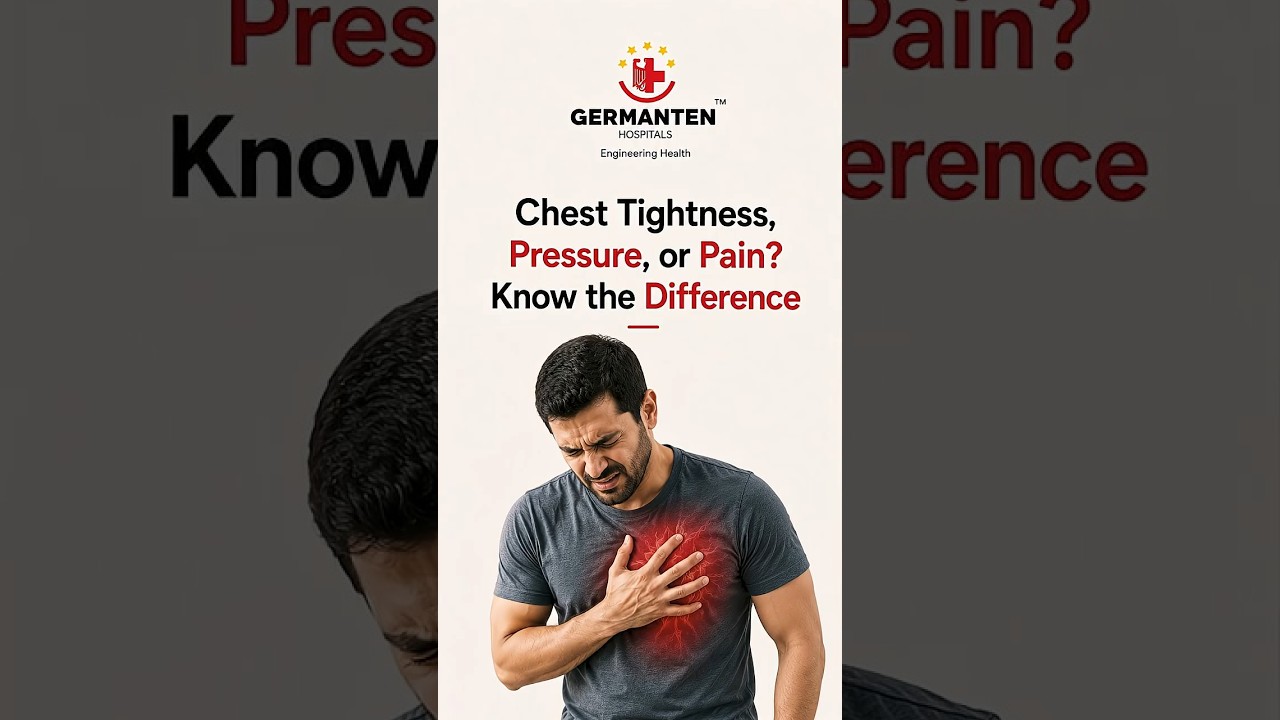
In HCM, obstructed blood flow out of the ventricle and abnormal small vessel disease cause angina-like chest pain.
Particularly significant in HCM and ARVC, where syncope can signal life-threatening ventricular arrhythmias.
The most catastrophic presentation, unfortunately sometimes the first sign in HCM and ARVC, particularly in young athletes during vigorous exercise.
Unexplained fainting during or immediately after exercise in a young person must be evaluated urgently as a possible cardiac cause. This symptom in the context of HCM or ARVC carries significant risk of sudden cardiac death.
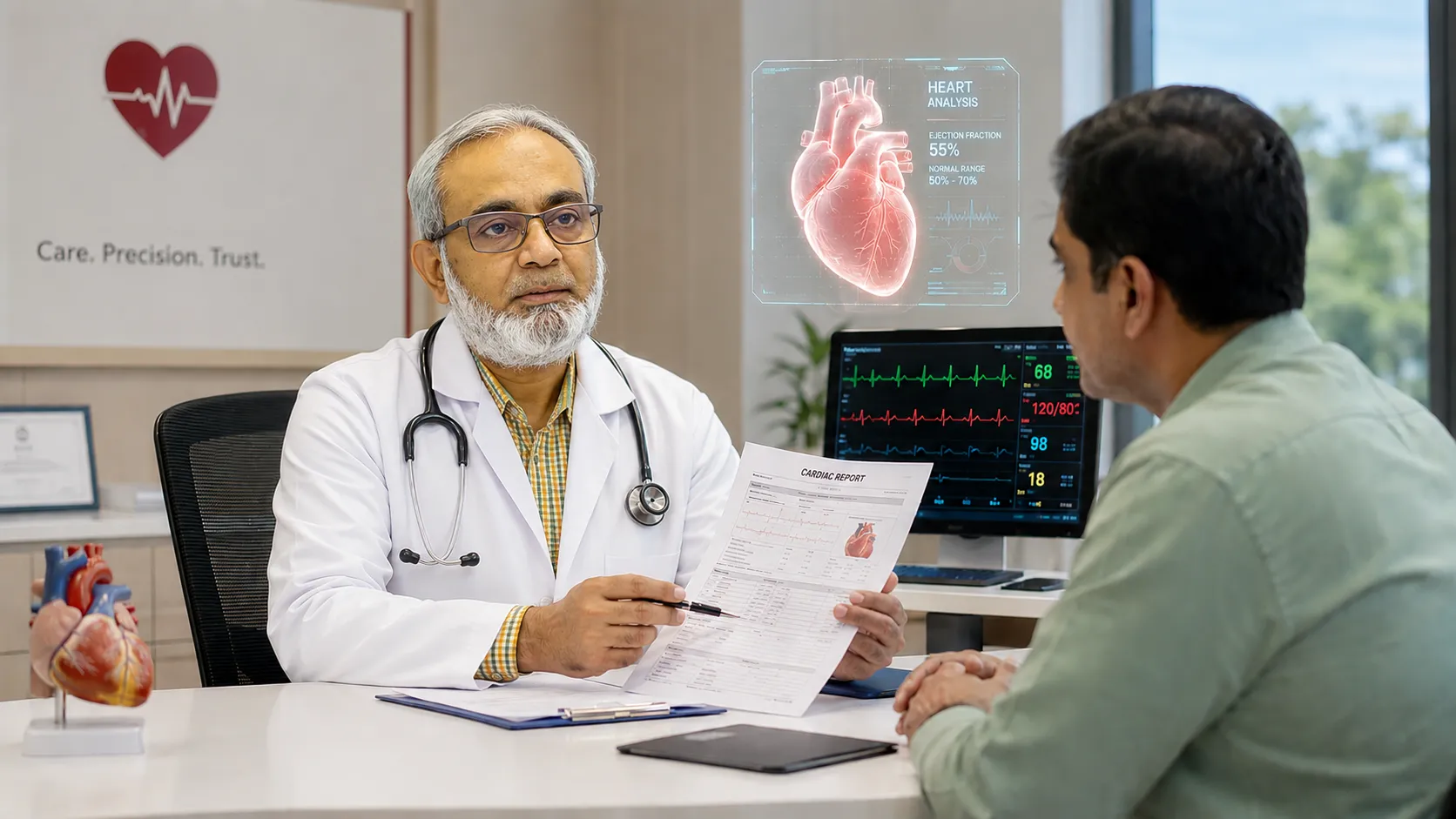
Echo is the cornerstone of cardiomyopathy diagnosis, measuring wall thickness, chamber size, ejection fraction, and identifying obstruction to outflow in HCM. It is the first investigation in any patient with suspected cardiomyopathy.
Provides the most detailed characterization of myocardial structure, identifies fibrosis through late gadolinium enhancement, distinguishes inflammatory from infiltrative causes, and is the gold standard for ARVC diagnosis. Cardiac MRI findings significantly influence prognosis and risk stratification.
Shows characteristic patterns in most forms of cardiomyopathy. HCM produces deep voltage changes. ARVC shows epsilon waves and T-wave inversions in right precordial leads. DCM may show bundle branch block or signs of prior infarction.
24-hour ECG recording to detect arrhythmias including ventricular tachycardia, which directly influences ICD implantation decisions.
BNP or NT-proBNP (cardiac stress marker), troponin, thyroid function, iron studies, serum protein electrophoresis (for amyloidosis), and genetic testing panels for inherited cardiomyopathies.
Performed to exclude coronary artery disease as the cause of reduced cardiac function in patients with DCM, since ischemic cardiomyopathy is treated differently from non-ischemic forms.
In selected cases where infiltrative disease (amyloid, sarcoid) or myocarditis is suspected and non-invasive tests are inconclusive, a small sample of heart muscle can be obtained through a catheter from the right ventricle for pathological analysis.
Where a reversible cause is identified, treating it is the priority. Abstinence from alcohol in alcoholic cardiomyopathy. Rate or rhythm control in tachycardia-induced cardiomyopathy. Thyroid treatment in thyroid-related cases. Specific disease-modifying therapies for cardiac amyloidosis (tafamidis) and cardiac sarcoidosis (corticosteroids). In these cases, cardiac function may recover substantially or completely.
For DCM with reduced ejection fraction, guideline-directed medical therapy for heart failure is the standard of care: the four-pillar regimen of ACE inhibitor or ARNI, beta-blocker, mineralocorticoid receptor antagonist, and SGLT2 inhibitor. These medications reduce hospitalizations, improve ejection fraction through reverse remodeling, and reduce mortality.
For patients with obstructive HCM (significant gradient across the outflow tract causing symptoms), treatment options beyond medications include alcohol septal ablation (a catheter-based procedure that creates a controlled infarction in the thickened septum to reduce obstruction) and surgical myectomy (removal of excess septal muscle through open-heart surgery). Both procedures are highly effective for appropriately selected patients.
Patients with cardiomyopathy and significant risk of sudden cardiac death from ventricular arrhythmias are assessed for ICD (implantable cardioverter defibrillator) implantation. The ICD detects life-threatening ventricular arrhythmias and delivers a shock to restore normal rhythm. In HCM, ICD implantation decisions are guided by a validated risk score incorporating multiple clinical and imaging factors. For DCM with significant conduction delay, CRT (cardiac resynchronization therapy) can improve both symptoms and cardiac function.
Atrial fibrillation is common in all forms of cardiomyopathy and requires anticoagulation and rate or rhythm control. Ventricular arrhythmias in ARVC and DCM may be addressed with antiarrhythmic medications, radiofrequency ablation, and ICD programming in addition to device protection.
For HCM, ARVC, and familial DCM, first-degree relatives (parents, siblings, children) have a 50% chance of carrying the same genetic variant. Family screening with clinical assessment and echocardiography is recommended for all first-degree relatives of an affected individual. In families with an identified pathogenic gene mutation, targeted genetic testing of relatives allows definitive clarification of who is and is not at risk.
Consult expert cardiologists in Hyderabad at Germanten Hospital
“Mr. MD Ibrahim Khan, 55 years old from Hyderabad, was admitted for Anterior Cruciate Ligament (ACL) surgery and was successfully treated at Germanten Hospital, Attapur by Dr. Mir Jawad Zar Khan, MS Orthopaedics, Joint Replacement Surgeon with 20 years of experience.”
“Mr. Abdul Ali, from Kenya, was suffering from knee pain. He visited Germanten Hospitals Hyderabad and was operated on by the top orthopaedist in Hyderabad, Dr. Mir Jawad Zar Khan. After the treatment, he is now able to lead a normal life. Before going back to his country, he shared his experience with the hospital.”
“Mr. Vishwanath Rao from Hyderabad approached Dr. Mir Jawad Zar Khan with severe knee pain. Dr. Jawad diagnosed his knee and suggested knee replacement surgery. After the surgery, Vishwanath Rao is now walking painlessly and without support. He and his family are grateful to Dr. Mir Jawad Zar Khan and Germanten Hospital.”
“Mr. Afeef from Hyderabad met with an accident, and his right-hand bone was fractured. He was taken to Germanten Hospital and treated by Dr. Mir Jawad Zar Khan, the best orthopedic surgeon in Hyderabad. After the surgery, he is now leading a normal life and is grateful to Dr. Jawad and the Germanten Hospital team.”
“Mr. Abdul Ali, 70 years old, was unable to walk due to osteoarthritis for 10 years. One of his nephews suggested Dr. Mir Jawad Zar Khan. He was diagnosed and suggested knee replacement surgery, which was successfully performed on 6th October 2019. Now, he walks without pain and support and is very grateful to Dr. Mir Jawad Zar Khan.”
“After pain in his hip made daily life difficult, Mr. Rabul Islam turned to the orthopedic expert at Germanten Hospital for help. Dr. Mir Jawad Zar Khan, MD of Germanten Hospital and Senior Orthopedic & Spine surgeon, performed total hip replacement surgery on Rabul Islam. Now he is enjoying life pain-free.”
Mr. Vishwanath Rao from Hyderabad, underwent Knee Replacement Surgery
Mr. MD Ibrahim Khan, 55 years old from Hyderabad, underwent ACL Surgery at Germanten Hospital.
Mr. Gulshan Kumar from Hyderabad, underwent Total Knee Replacement Surgery at Germanten Hospital.
Mrs. Deepika Rawat underwent ACL Reconstruction Surgery at Germanten Hospital.
Mr. Anil Ahuja, 65 years old from New Delhi, underwent Total Knee Replacement Surgery at Germanten Hospital.
Mr. Rabul Islam from Assam, underwent ACL Surgery at Germanten Hospital.
Mr. Abdul Ali, 70 years old from Dubai, underwent Knee Replacement Surgery at Germanten Hospital.
Mr. Afeef from Hyderabad, underwent Bone Fracture Surgery at Germanten Hospital.
Mr. Ibrahim, 25 years old from Dubai, underwent ACL Surgery at Germanten Hospital.
Mr. Abdul Ali, 20 years old from Kenya, underwent ACL Surgery at Germanten Hospital.
Connect with our experts doctors for guidance
Germanten Hospital is located in Attapur, one of South Hyderabad's most accessible neighborhoods. Patients from across southern and western Hyderabad can reach us within 20 to 30 minutes.