Echo Test, ECG, Holter & Troponin Test: A Complete Guide to Cardiac Diagnosis
Aug 18, 2026
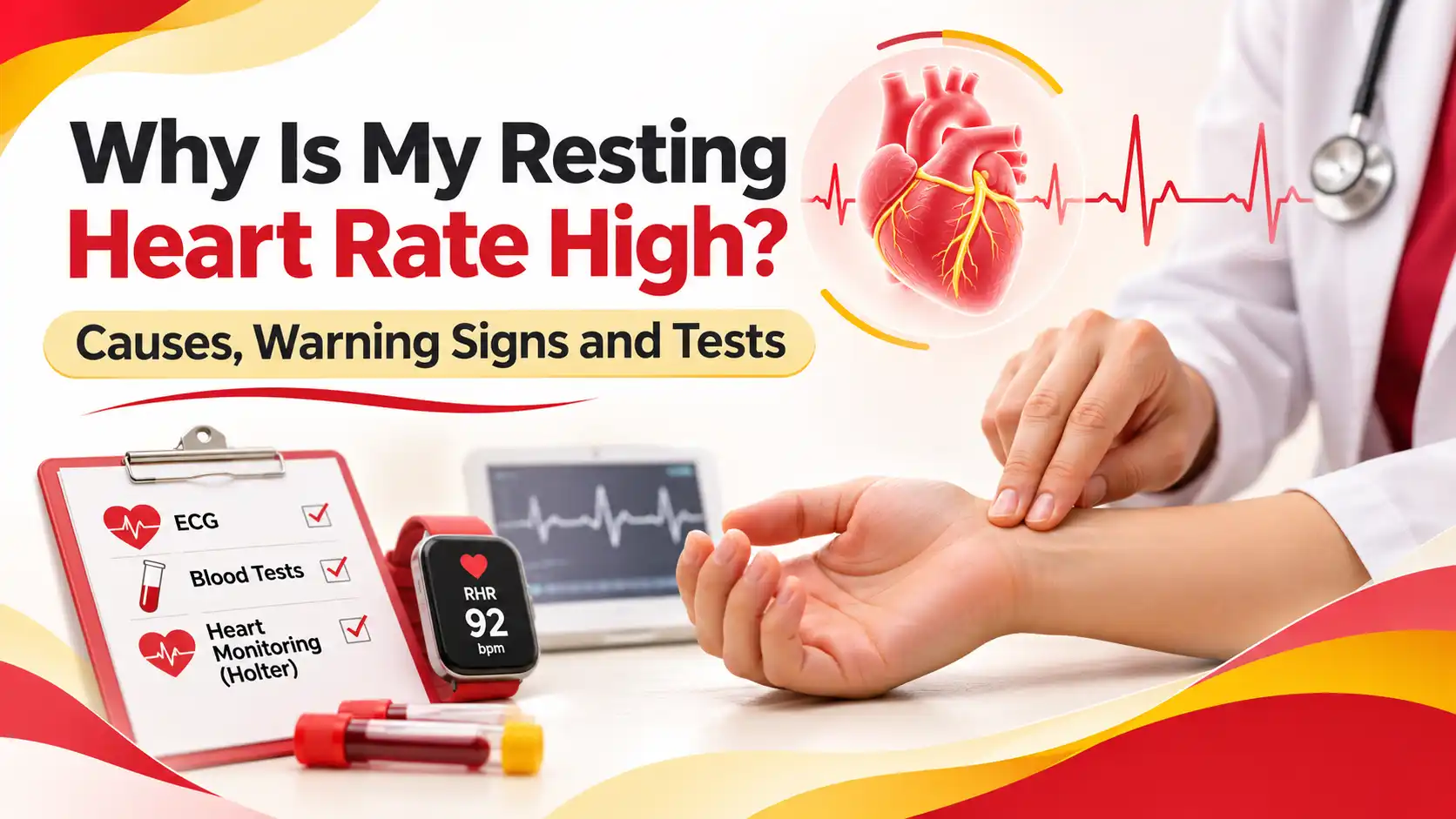
Image Disclaimer: AI-generated illustration for educational purposes.*
You sit down, check your pulse and see a number that looks higher than usual. Perhaps your watch has sent an alert, or you can feel your heart beating quickly. It is reasonable to wonder what changed.
High heart rate causes range from exercise, stress, fever and dehydration to anaemia, thyroid problems and abnormal heart rhythms. A single reading cannot tell you which applies. The useful questions are whether you were truly at rest, whether the rate settles, whether the rhythm feels regular and whether you have other symptoms.
A resting heart rate above 100 beats per minute in an adult is called tachycardia. It can be a temporary response to illness, pain, anxiety, caffeine or dehydration, but it can also signal a medical condition or heart rhythm problem. If your resting pulse stays high, keeps recurring or comes with symptoms, arrange a medical assessment. Seek emergency help for chest pain, severe breathlessness or fainting.
For most adults, a resting heart rate is generally 60 to 100 beats per minute. “Resting” matters: a reading taken after climbing stairs, rushing to work, drinking coffee or becoming anxious about the number is not the same as one taken when you are calm and sitting or lying down.
Your usual pattern matters too. A pulse of 95 may fall within the general range but be noticeably higher than your normal reading. On the other hand, a brief reading above 100 after activity does not automatically mean you have a heart condition.
Heart rate can vary with age, physical fitness, medicines and health conditions. The adult range should not be used to judge a child’s pulse. If you have a known heart condition or take a medicine that affects heart rate, ask your clinician what readings are expected for you.
Before deciding that your resting heart rate is high, take a repeat measurement under calmer conditions:
A smartwatch can help you notice a pattern, but its alert does not identify the cause of a fast heartbeat. If a wearable reports repeated high readings, check your pulse manually when possible and share the readings with a clinician.
Do not keep checking every minute. A short record of readings and symptoms is usually more useful than a long series taken while you are worried.
A fast pulse is a finding, not a diagnosis. Sometimes the heart is responding appropriately to what the body needs. At other times, the electrical rhythm of the heart needs assessment.
Your heart rate normally rises during physical activity. Emotional stress, fear and pain can also increase it. Lack of sleep may make palpitations more noticeable.
If the reading falls after you rest and the trigger passes, that information is helpful. Still, do not assume anxiety is the cause of every recurring episode. Stress and a heart rhythm problem can produce similar sensations.
A fever or infection can make the heart beat faster. Dehydration can also contribute, particularly after vomiting, diarrhoea, heavy sweating or poor fluid intake.
If you have a condition that requires a fluid restriction, such as some forms of heart failure, follow your existing medical advice. Do not suddenly increase your fluid intake to treat a fast pulse without checking what is appropriate for you.
Coffee, strong tea, energy drinks, nicotine and alcohol may trigger a faster or more noticeable heartbeat in some people. Certain medicines, including some cold remedies and asthma treatments, may also affect heart rate.
Bring a list of prescription medicines, over-the-counter products and supplements to your appointment. Do not stop a prescribed medicine on your own because you suspect it is causing the reading.
Anaemia can make the heart work harder to deliver oxygen around the body. An overactive thyroid can increase heart rate. Low blood pressure, bleeding, lung conditions and other illnesses may also be involved.
These causes cannot reliably be separated by a pulse reading alone. Your symptoms, examination and selected tests help a clinician work out what is happening.
Sometimes a fast heartbeat starts in the heart’s electrical system. One example is supraventricular tachycardia, or SVT, which may begin and end suddenly. Atrial fibrillation can cause an irregular pulse, although people experience it differently.
A fast rhythm does not always feel dramatic, and a pounding heartbeat does not always mean the rate is dangerously high. Recording when an episode starts, how long it lasts and whether the pulse feels regular helps your doctor choose the right test.
No. Heart rate is the number of beats per minute. Palpitations are the sensation of noticing your heartbeat. You may describe palpitations as racing, pounding, fluttering or skipped beats.
You can have a fast pulse without noticing it. You can also feel a forceful or irregular heartbeat when the average rate is within the usual range. That is why a description of what you felt can be as useful as the number on a watch.
If your pulse feels irregular, mention that specifically. A heart-rate number alone does not show the electrical pattern behind each beat.
Yes. Heart rate and blood pressure measure different things. A normal blood pressure reading does not rule out fever, anaemia, dehydration or an abnormal rhythm as a reason for a fast pulse.
Equally, a high pulse does not by itself prove that your blood pressure is high. If you measure both at home, record the readings with the time and any symptoms. Your clinician can interpret them together.
Seek emergency medical help immediately if a rapid heartbeat occurs with chest pain or pressure, severe shortness of breath, fainting or a feeling that you may pass out. Do not wait for a smartwatch reading to change before seeking help.
Arrange a medical appointment if:
A single number is only one part of the decision. The pattern and accompanying symptoms matter.
The assessment begins with a conversation. Your clinician may ask when you first noticed the fast pulse, what you were doing, whether it felt regular, how long it lasted and whether you had symptoms such as dizziness or chest discomfort.
They may review your medicines and check your pulse, blood pressure and other signs of illness. Testing depends on what they find.
An electrocardiogram records the heart’s electrical activity at the time of the test. It can help identify a fast or irregular rhythm if that rhythm is present during the recording.
If you need an ECG test in Hyderabad, tell the team about any episodes that happened before the appointment. A normal ECG between episodes may still need follow-up when symptoms keep recurring.
If your symptoms come and go, a clinician may recommend a monitor that records your heart rhythm over a longer period. A Holter monitor test in Hyderabad can help match a recorded rhythm with the time you felt palpitations, dizziness or another symptom.
The choice of monitor depends partly on how often episodes happen. Tell your clinician if they occur daily, weekly or less often.
Blood tests may be used to check for possible contributors such as anaemia, thyroid problems or changes in electrolytes. Some people need additional heart tests based on their history, examination or ECG findings.
The aim is to find why the rate is high. Treating the number without understanding its cause may miss the problem that needs attention.
If you feel well and are waiting for a routine assessment, keep a simple symptom record. Write down:
Take the record and your medication list to the appointment. If you have a wearable that stores a rhythm recording, ask your clinician whether it would be useful to share it.
Avoid trying to treat an unexplained fast pulse with someone else’s heart medicine. If severe symptoms develop, seek urgent help rather than continuing to monitor it at home.
Treatment depends on the cause. A pulse that rises with a fever may improve when the illness is treated. A medicine-related increase may require a review of that medicine. Anaemia or a thyroid condition needs its own assessment and care.
An abnormal heart rhythm may need monitoring, medicines or a procedure, depending on the specific rhythm and the person’s health. Some episodes need no rhythm treatment after evaluation; others require prompt care. There is no single treatment that suits every high reading.
For recurring palpitations or an identified rhythm condition, arrhythmia treatment in Hyderabad begins with finding the rhythm and discussing the options that fit your diagnosis.
A reading of 100 beats per minute is at the upper end of the usual adult resting range. Its meaning depends on whether you were truly at rest, whether it persists and whether you have symptoms. Ask a clinician about repeated readings that are high for you.
Yes. Anxiety can temporarily increase heart rate and make your heartbeat more noticeable. If episodes recur, feel irregular or come with other symptoms, do not assume anxiety is the only cause.
Yes. Dehydration can contribute to a faster pulse. If you have been told to limit fluids because of a medical condition, ask your care team how to manage both your fluid plan and the new symptom.
Heart rate and blood pressure are different measurements. A normal blood pressure reading does not explain or rule out a fast pulse. Repeated high readings at rest deserve assessment, particularly if you have symptoms.
Yes. An ECG records the rhythm during a short period, so it may look normal between episodes. If symptoms continue, your clinician may recommend longer rhythm monitoring.
Seek emergency medical help if a fast heartbeat occurs with chest pain or pressure, severe breathlessness, fainting or a feeling that you may pass out.
A high resting pulse can have a temporary explanation, but repeated readings or sudden episodes deserve attention. Check the pulse after resting, note whether it feels regular and record any symptoms. Medical assessment can identify whether the cause is an illness, a medicine or a heart rhythm condition.
Book a Heart Rhythm Consultation
This article is for general educational purposes only and does not replace professional medical advice. Consult a qualified healthcare professional for personalised guidance.