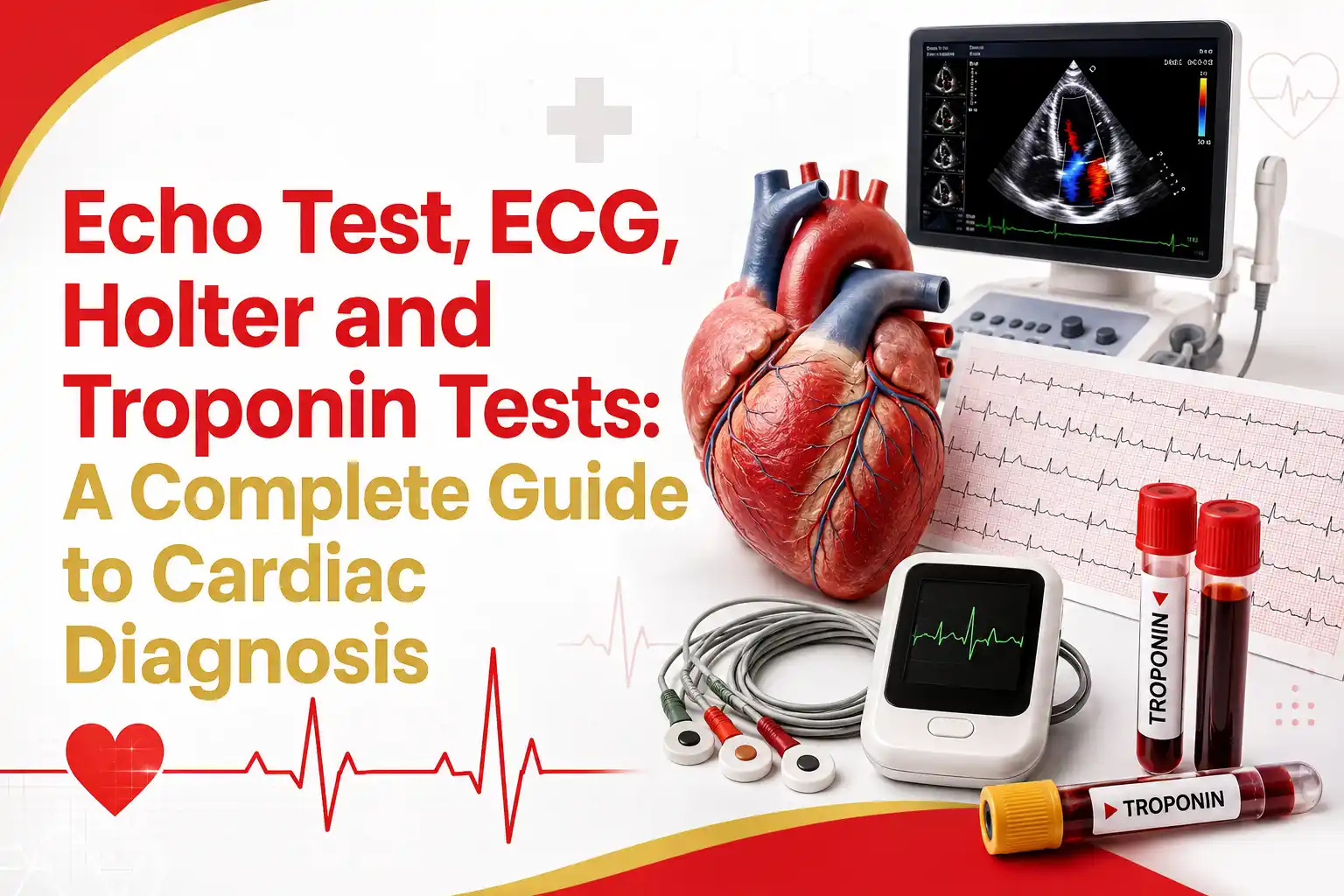
Echo Test, ECG, Holter & Troponin Test: A Complete Guide to Cardiac Diagnosis
Aug 18, 2026
If you are searching for how to check heart blockage at home, the most important answer is this: no symptom checklist, smartwatch, blood pressure monitor or home test can confirm or rule out a blocked coronary artery. These may help you notice a problem, but diagnosis requires a medical assessment and, when appropriate, heart tests.
The next step depends on what is happening now. New or severe chest discomfort needs urgent attention. Recurring discomfort during activity needs a timely appointment. If you feel well but are concerned about your risk, a doctor can help decide whether you need testing at all.
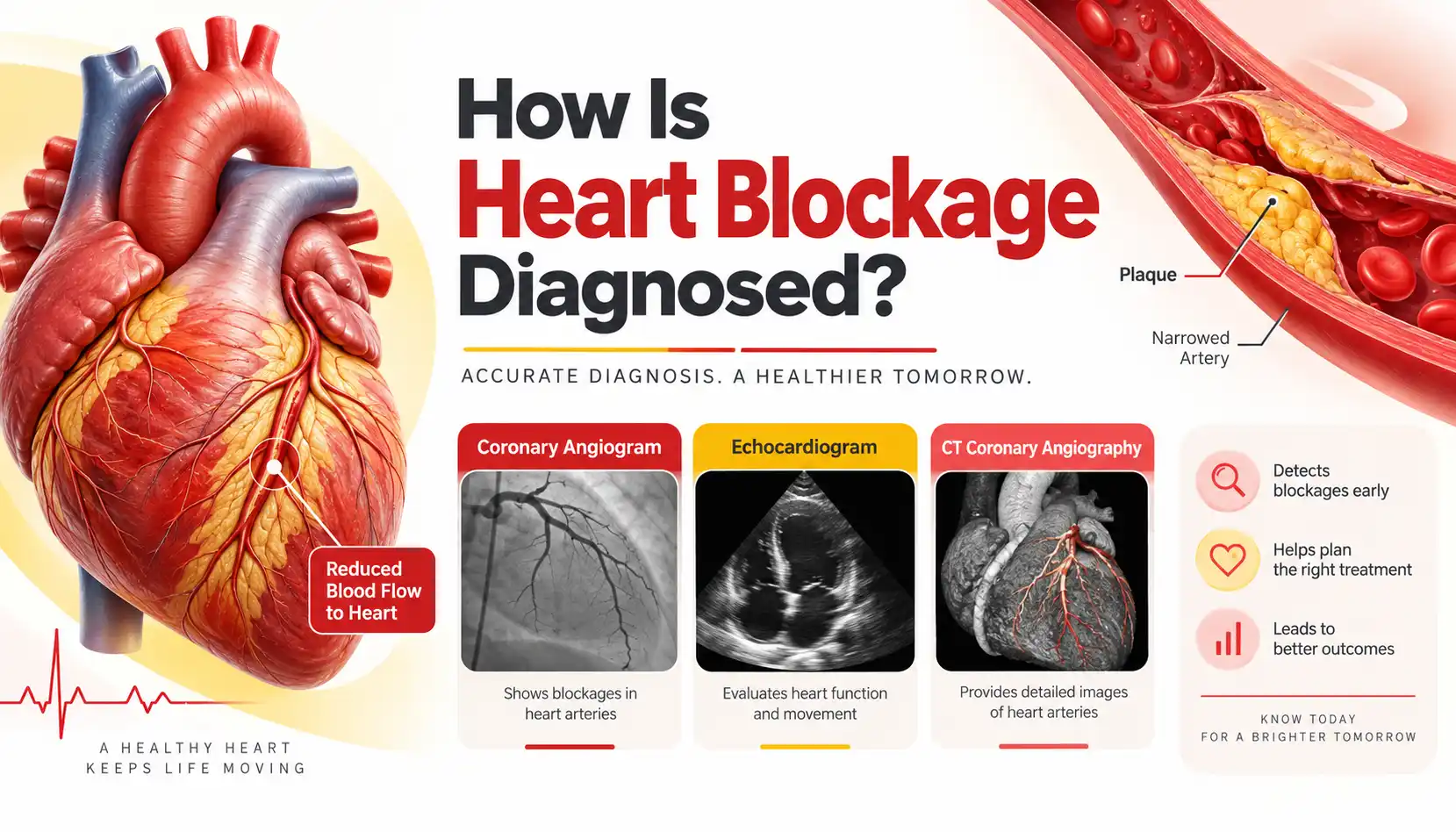
People often use heart blockage to describe narrowing in a coronary artery, the blood vessels that supply the heart muscle. Fatty deposits called plaque can build up in an artery wall over time. This is known as coronary artery disease. If blood flow becomes limited, a person may develop chest discomfort or breathlessness, particularly during exertion.
A heart attack is different from gradual narrowing. It can occur when blood flow is suddenly reduced or stopped, often after a clot forms at a damaged plaque. It needs an emergency assessment.
There is another easily confused term: heart block. That refers to a problem with the heart's electrical signals, not a blocked coronary artery. An ECG may help identify an electrical heart block, but it cannot show the coronary arteries directly.
You cannot diagnose coronary artery blockage at home. What you can do is notice patterns that are worth discussing with a clinician:
Make a note of when symptoms occur, how long they last and what you were doing at the time, but do not delay urgent care to complete a symptom diary.
A normal pulse, blood pressure or oxygen reading does not rule out coronary disease or a heart attack. Likewise, being able to walk around or having symptoms that come and go does not make chest discomfort safe to ignore. Some people with coronary disease have few symptoms or none until a complication occurs.
Seek emergency medical help immediately for new, severe or persistent chest pressure or pain, particularly if it comes with breathlessness, sweating, nausea, faintness, or pain in the arm, back, neck or jaw. Symptoms may also ease and return. Do not wait for an outpatient test or try to diagnose yourself with a home device.
If symptoms are not happening now but recur with exertion, arrange a prompt clinical assessment. Tell the appointment team about the chest symptoms rather than booking a test on your own.
The assessment starts with a conversation, not a scan. A clinician will ask what the discomfort feels like, where it occurs, whether activity brings it on, how long it lasts and whether the pattern has changed. They will also consider conditions such as diabetes, high blood pressure and high cholesterol, along with smoking history, family history, medicines and previous heart problems.
An examination and initial tests help determine two things: could this be an immediate emergency, and what further testing, if any, would answer the clinical question? A person with active chest pain may need a different pathway from someone attending a planned appointment for stable symptoms.
There is no single "best heart blockage test" for everyone. The choice depends on symptoms, clinical risk and previous results. It also depends on practical considerations: for example, whether someone can exercise, and whether a test involving contrast dye is suitable for them.
An electrocardiogram (ECG) records the heart's electrical activity. It can identify certain rhythm problems and signs that may suggest reduced blood flow or a heart attack. For someone with chest pain, it is an important early test.
But an ECG does not directly show a coronary blockage. A normal result cannot, by itself, rule out coronary artery disease or a heart attack. If the symptoms remain concerning, a clinician may repeat the ECG and order other tests. If you have been advised to arrange a routine ECG test in Hyderabad , ask how its result will be interpreted alongside your symptoms.
When a heart attack is suspected, clinicians may measure troponin, a substance that can rise when heart muscle is injured. The result is interpreted with symptoms, ECG findings and sometimes repeat blood samples.
A troponin test does not serve as a general at-home or routine test for chronic artery narrowing. Cholesterol and blood-sugar tests help assess risk and guide prevention, but they do not show exactly where an artery is narrowed.
A stress test assesses how the heart responds when it works harder. This may involve walking on a treadmill while the team monitors your ECG, symptoms and blood pressure. Other types of stress testing may use imaging or medicines when appropriate.
A stress test can provide evidence that the heart muscle may not be receiving enough blood during exertion. It does not directly produce a picture of the inside of a coronary artery. Its usefulness depends on the individual, and it is not something to arrange or perform while experiencing potentially emergency chest symptoms.
CT coronary angiography, often shortened to CTCA or CCTA, uses a CT scanner and contrast given through a vein to create images of the coronary arteries. It can show plaque and areas of narrowing without placing a catheter into an artery.
A clinician may consider it for selected people whose symptoms and risk profile make anatomical imaging helpful. It is not automatically the right test for everyone. Before the scan, the team may ask about previous contrast reactions, kidney problems and other relevant health factors. If this test has been recommended, the CT coronary angiography in Hyderabad service page can help you prepare questions for your care team.
A coronary calcium score is a different CT test. It estimates calcium in the artery walls and can help with some prevention decisions; it does not establish how much a particular artery is blocked. The two tests should not be treated as interchangeable.
During invasive coronary angiography, a specialist guides a thin catheter through an artery, usually from the wrist or groin, and uses contrast and X-rays to examine blood flow through the coronary arteries. It can show the location and extent of significant narrowing.
A cardiologist may recommend it when the situation is high-risk, when other findings call for a closer assessment or when a procedure to restore blood flow may be needed. Because it is invasive, it has considerations that differ from a CT scan. Having coronary artery disease does not automatically mean you need an angiogram or a stent. Your team should explain why a test is being recommended and what its result might change.
Rather than requesting a particular scan, explain the problem you want assessed. A useful starting point is:
"I get chest tightness when I walk uphill, and it settles when I stop. Do I need an assessment for coronary artery disease?"
Bring any previous ECG or scan reports and a current medicine list. If the symptoms have become more frequent, occur at rest or feel different from before, say so clearly; that change may affect how quickly you need care.
For non-emergency concerns, a coronary artery disease evaluation in Hyderabad can help determine whether testing is appropriate and which test is likely to be useful. The aim is not to collect as many tests as possible. It is to reach a reliable answer and agree on the right next step.
A report is only one part of a diagnosis. Your cardiologist will interpret it alongside your symptoms, risk factors and other findings. A result showing plaque does not always mean a procedure is needed. Care may include managing blood pressure, cholesterol or diabetes, changing relevant habits, taking prescribed medicines, or considering a procedure in selected cases.
Equally, if symptoms continue despite an initial reassuring test, tell your doctor. They can decide whether another explanation or further assessment is needed. Do not stop prescribed medicine or assume a single "normal" result closes the question without discussing it with your care team.
There is no reliable way to check for heart blockage at home. Symptoms can tell you when to seek help, while a clinical assessment determines whether an ECG, blood test, stress test, CT coronary angiography or invasive angiography is needed. If you have possible heart-attack symptoms now, seek emergency care. For recurring but non-emergency symptoms, arrange a cardiology assessment and explain exactly what you have been experiencing.
No. You can notice symptoms and record when they occur, but a home device or symptom checklist cannot confirm or rule out a blocked coronary artery. New or severe chest symptoms need urgent medical assessment.
No. An ECG records electrical activity; it does not directly image the coronary arteries. A clinician interprets it alongside your symptoms and may recommend other tests if concern remains.
CT coronary angiography and invasive coronary angiography can show coronary artery narrowing. They are different tests, and the right choice depends on your symptoms, risk and clinical situation.
A stress test can suggest that blood flow to the heart muscle is reduced during exertion. It does not directly show the inside of an artery or measure every blockage.
No. CT coronary angiography uses a CT scanner and contrast through a vein. Invasive coronary angiography uses a catheter placed into an artery. Your cardiologist can explain which, if either, is appropriate.
No. Heart block is a problem with the heart's electrical conduction system. A blocked coronary artery is a blood-flow problem. They require different assessments.
New, severe or persistent chest discomfort, especially with breathlessness, sweating, nausea, faintness, or pain in the arm, back, neck or jaw, needs immediate emergency medical help. Do not wait for a routine appointment or a home reading.
Image Disclaimer: AI-generated illustration for educational purposes.
Medical Disclaimer: This article is for general informational and educational purposes only and should not be considered medical advice, diagnosis, or treatment. Please consult a qualified healthcare professional for personalized medical guidance.