Echo Test, ECG, Holter & Troponin Test: A Complete Guide to Cardiac Diagnosis
Aug 18, 2026
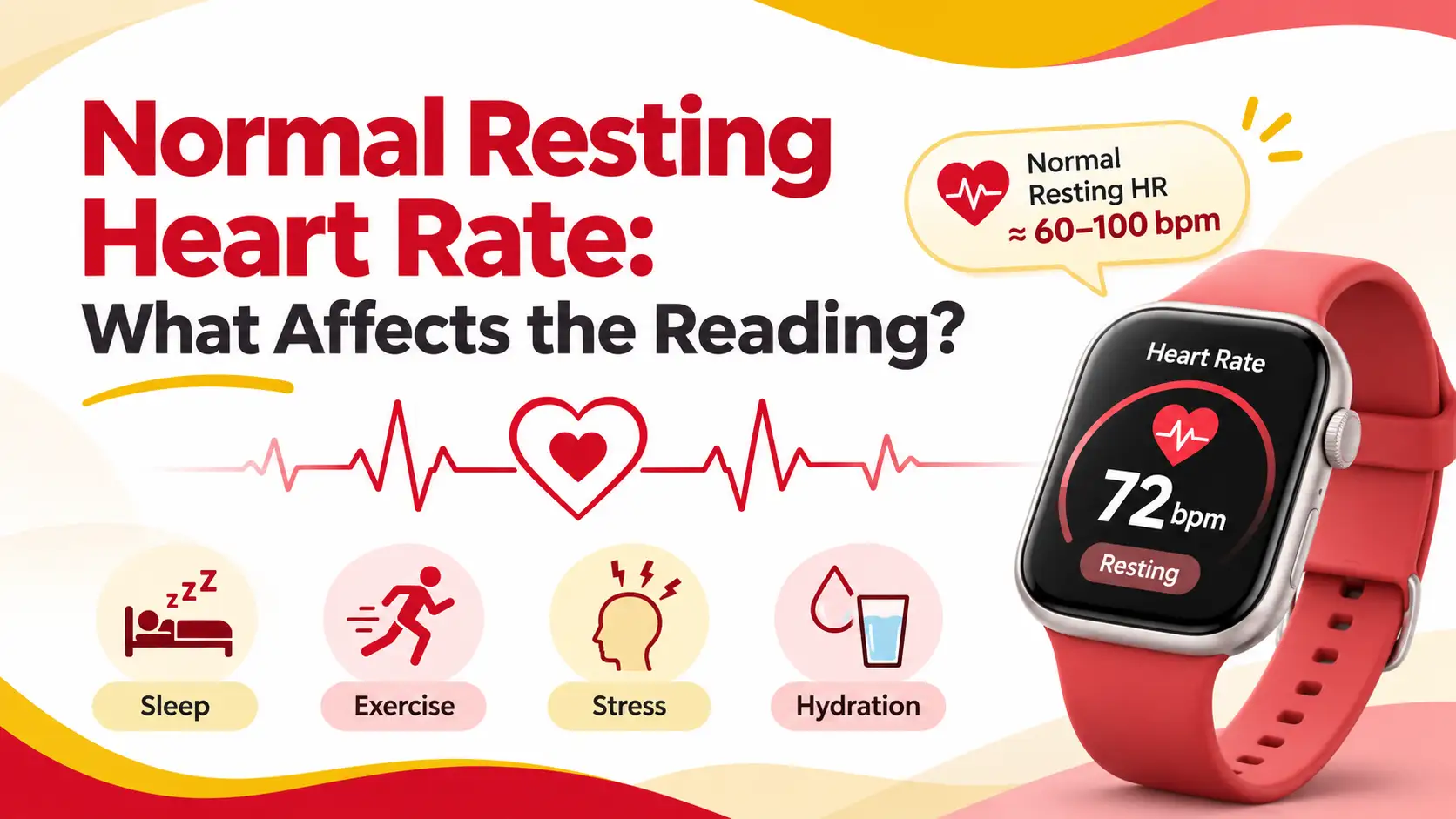
Image Disclaimer: AI-generated illustration for educational purposes.*
You check your pulse one morning and see 68 beats per minute. The next day it is 82. Is one reading better than the other?
A normal heart beat is not a fixed number that stays the same all day. Your heart rate changes with activity, sleep, stress, body temperature, medicines and the way you measure it. The first step is to make sure you are comparing readings taken under similar conditions. The next is to notice your usual pattern and any symptoms, rather than judging your health from one number.
For most adults, a normal resting heart rate is 60 to 100 beats per minute when sitting or lying calmly and feeling well. A physically active person may have a lower rate. Children generally have different ranges. A reading outside the adult range is not automatically a diagnosis, but a persistent change, an irregular pulse or symptoms such as dizziness should be discussed with a clinician.
Heart rate is the number of times your heart beats in one minute. It is measured in beats per minute, or bpm. When you feel the beats at your wrist, you are checking your pulse.
The usual adult resting range of 60 to 100 bpm is a guide, not a score to aim for. An adult who regularly measures 78 bpm while relaxed does not need to reach 60 bpm to have a “good” reading. Similarly, a number within the range does not tell you whether the rhythm is regular or whether every aspect of heart health is normal.
Resting is the important word. A pulse measured just after walking, climbing stairs, drinking coffee or receiving a stressful message may be higher than your true resting rate. To compare readings, check them when you have been still and calm.
If you have a known heart condition or take medicine that changes your pulse, ask your clinician what range and monitoring schedule apply to you.
The 60 to 100 bpm adult range should not be applied to a newborn or young child. Heart rates are generally faster in younger children. The following are broad resting ranges, not cutoffs for diagnosing a child at home.
| Age | Broad resting pulse range |
|---|---|
| Newborn, 0 to 1 month | 70 to 190 bpm |
| Infant, 1 to 11 months | 80 to 160 bpm |
| Child, 1 to 2 years | 80 to 130 bpm |
| Child, 3 to 4 years | 80 to 120 bpm |
| Child, 5 to 6 years | 75 to 115 bpm |
| Child, 7 to 9 years | 70 to 110 bpm |
| Age 10 years and older, including adults | 60 to 100 bpm |
A child’s rate can change with fever, activity or distress. If a child looks unwell, has trouble breathing, faints or has another concerning symptom, seek medical advice based on the child’s condition rather than waiting to compare the pulse with a table.
For adults, age alone does not provide a personalised “correct” number. Fitness, medicines, health conditions and symptoms still matter.
A useful reading starts with consistent timing and technique.
You do not need to measure your pulse repeatedly throughout the day unless your care team has asked you to. A few readings taken in a consistent way are easier to interpret than many readings taken under different conditions.
If you cannot feel the pulse clearly, reposition your fingers rather than pressing hard. If a device displays a surprising number, a calm manual check can give you another reading to discuss with your clinician.
Your pulse rises during physical activity because your muscles need more blood and oxygen. It does not return to its resting level the instant you stop. If you take a reading immediately after exercise, label it as an after-exercise reading, not a resting one.
People who train regularly may have a lower resting pulse because their heart can pump efficiently. Some well-trained athletes have resting rates below 60 bpm without symptoms. A low reading in someone who does not usually have one deserves different consideration.
Fitness can affect your usual pattern over time. It does not mean that you should try to lower your pulse quickly or compare your number with an athlete’s.
Heart rate commonly slows during sleep. A wearable may therefore show a lower overnight number than the pulse you count while awake. Those two readings were taken under different conditions.
For a useful personal comparison, measure at roughly the same time and in the same state. If you track morning readings, compare them with other calm morning readings rather than with an exercise session or an overnight minimum.
Anxiety, excitement, fear and pain can increase heart rate. Even worrying about an unexpected device alert may affect the next measurement.
That does not mean every change should be dismissed as stress. If you have repeated episodes of a racing, pounding or irregular heartbeat, describe them to a clinician, particularly when they happen without an obvious trigger.
A raised body temperature can increase heart rate. Heat and dehydration may affect a reading too. A pulse taken when you are ill or after heavy sweating may differ from your usual baseline.
Record that context. If you have been given a fluid limit for a medical condition, do not change it on your own to respond to a pulse reading. Ask your care team what is appropriate.
Some medicines slow heart rate; others may raise it or make beats more noticeable. Caffeine and nicotine can also affect some people’s readings.
Keep a list of prescriptions, over-the-counter products and supplements if you are discussing a change with your doctor. Do not stop or adjust a prescribed medicine based only on a home pulse reading.
Hormonal changes can affect heart rate. Heart rate often rises during pregnancy, so a pregnant person should discuss a persistent change or concerning symptoms with their maternity care team rather than relying on a general adult number alone.
Conditions such as anaemia, thyroid disease or a heart rhythm problem may also affect the pulse. A number cannot identify which cause applies. A clinician may ask about symptoms and recommend tests if the pattern warrants them.
Yes. A faster heart rate during exercise is an expected response to activity. The 60 to 100 bpm resting range is not an exercise target.
Exercise heart-rate targets depend on factors including age, fitness, medicines and health conditions. A formula or chart found online may give a broad estimate, but it may not fit someone taking heart-rate-lowering medicine or living with a cardiac condition.
If you are starting exercise after a period of inactivity, or you have symptoms during activity, ask your clinician what level is suitable. Do not use a resting number to decide how hard to exercise.
These questions are common because a single number feels easy to interpret. Context changes the answer.
The pattern often tells you more than one result. If your usual calm morning pulse has changed substantially and stays changed, make a note of it even if the new number remains within the broad range.
Not necessarily. Rate is how many beats occur in a minute. Rhythm describes the timing and pattern of those beats.
For example, a device may display a rate within the usual adult range while you feel that the beats are uneven or seem to skip. An irregular pulse can have several explanations, and the displayed number alone cannot identify one.
If you notice a new irregular pattern, recurring palpitations or episodes that begin and end suddenly, tell your clinician. A brief ECG test in Hyderabad may help assess the rhythm if it is present during the recording. When episodes come and go, your clinician may consider Holter monitoring in Hyderabad to record the rhythm for longer.
A smartwatch or fitness tracker can help you notice trends and keep a record of readings. Its number or alert is not a diagnosis. It may also be showing a reading taken during sleep, movement or another situation that you would not call true rest.
If an alert surprises you, note the time, how you felt and what you were doing. When practical, sit quietly and check your wrist pulse manually. Share repeated alerts or an irregular rhythm notification with a clinician.
Do not ignore symptoms because a watch shows a number in the normal range. Equally, do not assume one unexpected alert means you have a heart condition.
Arrange a medical review if your resting pulse is consistently faster or slower than usual, feels newly irregular, or is accompanied by recurring palpitations, weakness or dizziness. Mention any relevant medicines and bring a short record of readings taken under similar conditions.
Seek emergency medical help if a sudden major change in heart rate occurs with chest pain or pressure, severe breathlessness, fainting or a feeling that you may pass out. Do not delay care to collect more readings.
If you are concerned about a persistent change or an irregular pulse, arrhythmia care in Hyderabad can help determine whether the pattern needs an ECG, longer monitoring or another assessment.
For most adults, a normal resting heart rate is 60 to 100 beats per minute when sitting or lying calmly and feeling well. Your usual pattern, medicines and symptoms also matter.
Yes, 80 beats per minute is within the general adult resting range. A clinician can help interpret a persistent change from your usual rate or a reading accompanied by symptoms.
No. A rate below 60 may occur during sleep or in a well-trained athlete, and some medicines can lower it. If a low rate is new for you or comes with dizziness, weakness or fainting, seek medical advice.
The broad adult resting guide of 60 to 100 beats per minute applies to both women and men. Individual factors, including fitness, medicines, hormones and pregnancy, can affect a person’s reading.
Resting heart rate can vary with sleep, stress, illness, hydration, medicines and how or when you measure it. Compare readings taken under similar conditions and discuss a persistent change with a clinician.
No. Heart rate counts beats per minute, while rhythm describes how evenly the beats occur. Tell a clinician if your pulse feels newly irregular or you have recurring palpitations, even when the rate is within the usual range.
Seek emergency medical help if a sudden major change in heart rate occurs with chest pain or pressure, severe breathlessness, fainting or a feeling that you may pass out.
A normal resting heart rate is a range, not one perfect number. For a useful reading, check your pulse when calm and compare it with measurements taken under similar conditions. Notice changes from your usual pattern and how you feel. If the pulse is persistently different or irregular, discuss it with a clinician.
For personalised advice about your pulse and heart health, book a cardiology consultation in Hyderabad.
Book a Heart Rhythm Consultation
Medical Note: This article is for general educational purposes only and does not replace professional medical advice. Consult a qualified healthcare professional for personalised guidance.